GS-441524 Treatment Protocol for FIP
GS-441524 is one of the most commonly discussed antiviral drugs in feline infectious peritonitis (FIP) treatment research and clinical use. For cats with suspected or confirmed FIP, whether to use GS-441524, which formulation to choose — oral or injectable — and how to determine the dosage and treatment duration usually depend on the cat’s FIP type, clinical stability, body weight, presence of ocular or neurological signs, and follow-up laboratory changes.
Overview
During treatment, cat owners should closely monitor the cat’s energy level, appetite, body weight, body temperature, changes in abdominal or pleural fluid, and blood test results. A commonly used treatment course is continuous administration for 12 weeks, or 84 days, but the specific protocol should be adjusted based on veterinary evaluation and the cat’s response to treatment.
When using GS-441524 for FIP, product source, accurate dosing, continuous treatment, and regular follow-up testing are very important. Cats with ocular FIP or neurological FIP may require higher doses or closer monitoring. All treatment-related decisions should be made under the guidance of a qualified veterinarian. This content is for educational reference only and does not replace veterinary diagnosis or treatment advice.
GS-441524
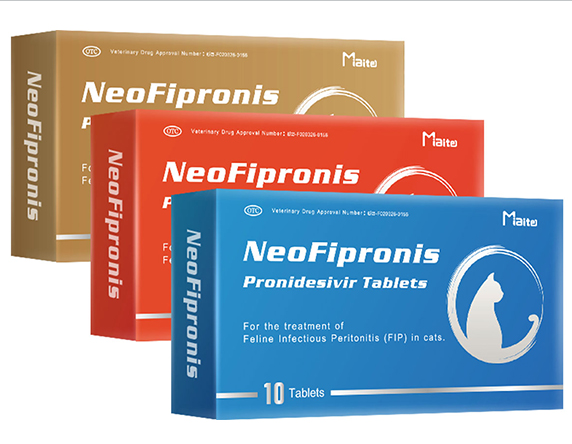
This is the most commonly used treatment for all forms FIP, as well as the most documented.
GS-441524 is available in many countries in compounded oral formulations. Injectable and oral formulations are also found on the black market and are often used by pet owners.
Oral GS-441524 dosages are roughly double the SC equivalent.
Oral GS-441524 Dosages
The typical protocol is 12 weeks (84 days) of continuous treatment with the following oral dosages:
Sub-Cutaneous Administration
For sub-cutaneous administration, dosages are as follows:
Ocular and Neurological FIP
Ocular and neurological cases in particular may require higher doses as there is variation between cats in the amount of GS-441524 that crosses the blood/brain barrier -- ranging from about 7% to 21%.
Please note that many black market suppliers label their products by an estimated bioavailable dose, a dose equivalent, or other means. Click here for more info.
A recent study has shown that a shorter course of therapy may be sufficient for some cats. A larger study is currently in progress to validate this for a larger cohort of cats.