
GS-441524 Research Library
Educational summaries of GS-441524 and FIP research, including key treatment studies, oral formulation information, antiviral comparisons, monitoring evidence, safety data, pharmacology, approval status, and regulated access updates for cat owners and veterinary professionals.
Research Library Overview

GS-441524 Research Library is an educational resource designed to help cat owners, caregivers, and veterinary professionals better understand the research background of GS-441524 and feline infectious peritonitis (FIP).
FIP was once considered one of the most difficult and devastating diseases in cats. With the development of antiviral research, GS-441524 has become one of the most widely discussed compounds in FIP treatment.
This Research Library organizes key topics related to GS-441524, FIP antiviral treatment, oral formulations, treatment monitoring, safety, pharmacology, and approval status.
1. GS-441524 Research Overview
GS-441524 is a nucleoside analogue that has been widely discussed in relation to FIP treatment research. It is closely related to remdesivir and has been studied for its antiviral activity against feline coronavirus-associated disease.
Research on GS-441524 helped change the way many veterinarians and cat owners understand FIP. Instead of being viewed only as a fatal condition, FIP is now increasingly discussed as a disease where antiviral treatment may be possible when diagnosis, dosing, monitoring, and product quality are properly managed.
2. Key Studies on GS-441524 and FIP

Several important studies helped establish GS-441524 as one of the most discussed antiviral compounds for FIP. These studies are often referenced when discussing treatment duration, treatment response, survival, relapse, and different forms of FIP.
For cat owners, research findings should not be interpreted as a simple one-size-fits-all treatment plan. Individual cats may differ in body weight, disease type, clinical stability, bloodwork, ocular involvement, neurological signs, and response to treatment.
3. Oral GS-441524 Research
Oral GS-441524 has become an important topic because many cat owners prefer oral treatment over injections. Oral tablets may reduce injection pain and stress, and they can be easier for many owners to administer at home.
However, oral treatment still requires careful planning. Dose concepts may differ from injectable formulations, and treatment decisions should consider body weight, FIP type, disease severity, absorption, ocular signs, neurological signs, and veterinary monitoring.
4. FIP Antiviral Treatment Studies
GS-441524 is not the only antiviral discussed in FIP treatment research. Other compounds, such as GC376, remdesivir, molnupiravir, and combination approaches, have also appeared in FIP-related studies and treatment discussions.
Understanding these antiviral options can help cat owners better understand how FIP treatment has developed over time, and why veterinary guidance is important when considering first-line treatment, rescue treatment, poor response, relapse, or suspected antiviral resistance.
5. Treatment Monitoring Evidence
FIP treatment is not only about starting medication. Monitoring is one of the most important parts of treatment management.
During treatment, cat owners and veterinarians often monitor clinical signs, body weight, appetite, fever, fluid changes, eye signs, neurological signs, and laboratory values.
6. Safety and Pharmacology
Safety is a major part of GS-441524 education. Cat owners often focus on whether a product contains GS-441524, but safety also depends on dose accuracy, product quality, treatment monitoring, and veterinary oversight.
Pharmacology topics may include dose concepts, oral absorption, injectable versus oral exposure, blood-brain barrier considerations, ocular and neurological FIP, and why some cats may require closer monitoring.
7. Approval Status and Regulated Access
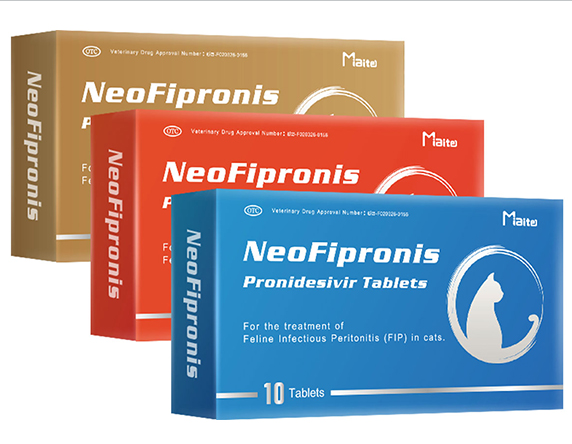
Access to GS-441524 varies by country and region. In some places, GS-441524 may be available through compounding pharmacies or veterinary channels. In other regions, cat owners may encounter products from unclear or unregulated sources.
Where available, regulated, traceable, and officially registered products should generally be preferred over black-market options with unclear source, uncertain concentration, or limited quality documentation.
In Laos, GS-441524 has been officially registered for FIP under the trade name NeoFipronis® and the generic name Pronidesivir. This provides a regulated GS-441524 oral tablet option for cats with FIP.