How to Give Oral GS-441524
Feline Infectious Peritonitis (FIP) is a fatal viral disease caused by certain strains of feline coronavirus. It poses a significant challenge to veterinarians and cat owners due to its complex symptoms and limited treatment options. Recent advances, particularly the introduction of GS-441524, have provided hope for effective management of FIP. This article offers comprehensive guidance on administering oral GS-441524, focusing on dosage, administration techniques, monitoring, and safety considerations. Additionally, it highlights Miaite NeoFipronis (Pronidesivir) GS-441524, a breakthrough oral treatment approved by authorities, and its crucial role in managing FIP.
Understanding Feline Infectious Peritonitis (FIP)
FIP manifests in two primary forms: wet (effusive) and dry (non-effusive). The wet form is characterized by fluid accumulation in the abdomen or thoracic cavity, whereas the dry form involves granulomatous lesions in various organs. Common symptoms include:
Loss of appetite
Lethargy
Fever
Ascites (fluid buildup)
Pleural effusion (fluid around lungs)
Lymphadenopathy (swollen lymph nodes)
Inflammatory granulomas
Nerve damage
Uveitis (eye inflammation)
The disease’s progression is often rapid and fatal, making timely intervention critical. Traditional treatments offered limited success, but recent antiviral therapies have changed the landscape.
Introduction to GS-441524 and NeoFipronis (Pronidesivir)
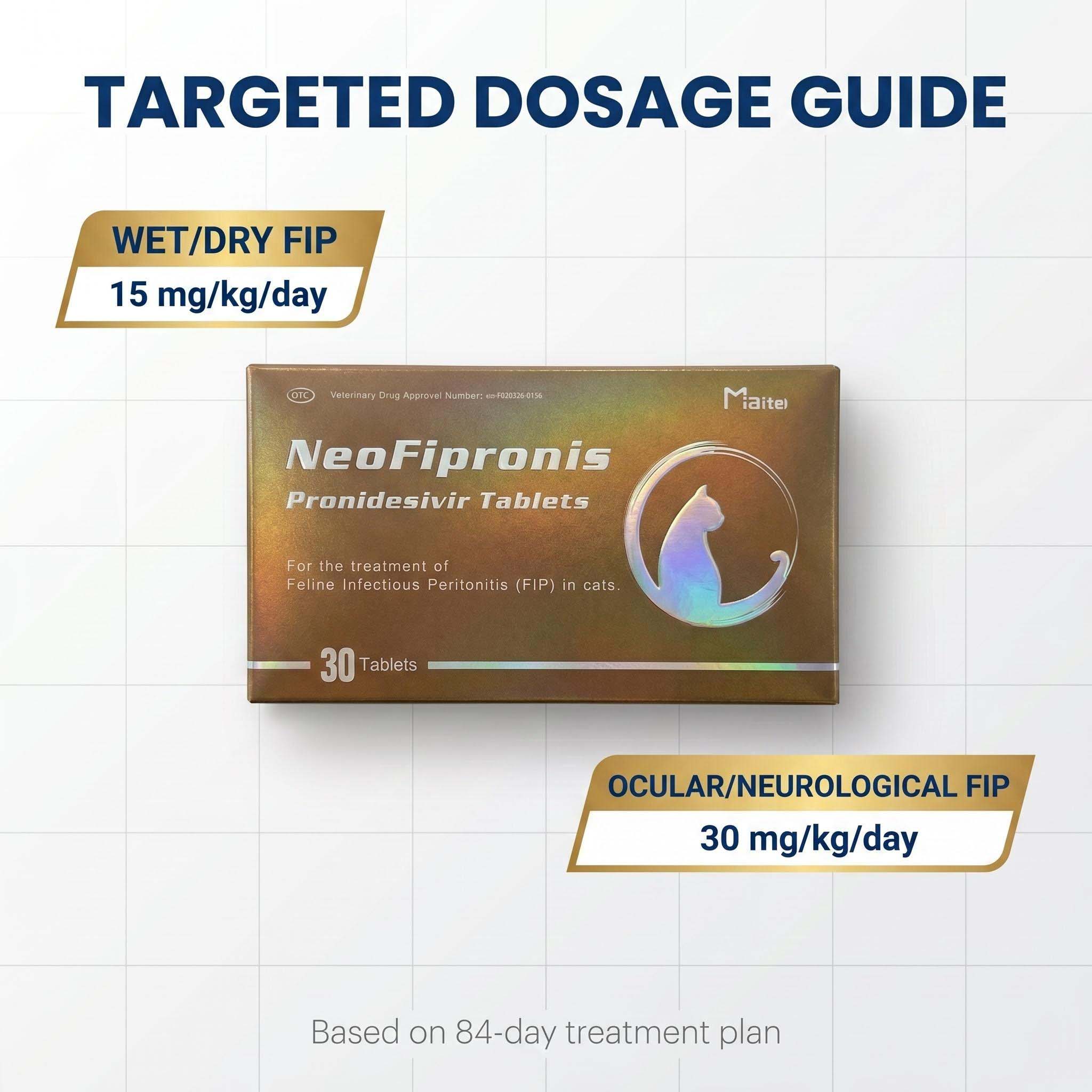
GS-441524 is a nucleoside analog that inhibits coronavirus replication by targeting the viral RNA-dependent RNA polymerase. Its effectiveness against FIP has been well-documented in recent studies. Miaite NeoFipronis (Pronidesivir) GS-441524 is particularly noteworthy as it is the first orally approved medication specifically targeting FIP.
Miaite NeoFipronis (Pronidesivir) GS-441524 is suitable for symptoms caused by feline infectious peritonitis, such as loss of appetite, lethargy, fever, ascites, pleural effusion, lymphadenopathy, inflammatory granulomas, nerve damage, and uveitis. It has excellent therapeutic effects on FIP. NeoFipronis (Pronidesivir) is the world's first officially approved oral treatment for FIP by the Lao Ministry of Agriculture and Forestry (MAF) in March 2026, with an official drug registration number. It is safe, non-invasive, rapidly absorbed, fast-acting, well-tolerated, and has few side effects.
Administering Oral GS-441524
Successful treatment hinges on proper administration. Follow these steps to ensure effective therapy:
1. Dosage Determination
The typical dosage for cats is 15mg/kg body weight, administered once daily. However, exact dosing may vary based on the severity of symptoms, age, weight, and veterinarian recommendations.
Always adhere to the prescribed dosage; higher doses may escalate side effects, while lower doses might reduce efficacy.
2. Preparing the Medication
NeoFipronis (Pronidesivir) comes in tablet form, making it easier to administer orally.
3. Ensuring Full Dose Intake
If the cat resists, divide the dose into smaller portions and give gradually.
Keep consistent administration time daily to maintain stable blood levels.
4. Monitoring and Adjustments
Regularly assess the cat’s response, noting changes in appetite, activity, and symptom severity.
Follow up with the veterinarian for dose adjustments or additional testing.
Safety and Precautions
While NeoFipronis (Pronidesivir) GS-441524 is considered safe and well-tolerated, some precautions should be observed:
Side Effects: Mild, transient side effects may include lethargy, decreased appetite, or gastrointestinal upset.
Drug Interactions: Consult a veterinarian before combining with other medications.
Pregnancy and Nursing: Use under veterinary supervision, as safety data for pregnant or lactating cats is limited.
Duration of Treatment: Treatment duration varies; typically, therapy continues for 12-24 weeks or until clinical remission.
Regular veterinary check-ups, including blood work and imaging, help track progress and detect any adverse effects early.
Additional Supportive Care
Medication alone may not fully resolve FIP; supportive care enhances recovery:
Maintain hydration with subcutaneous fluids if dehydration occurs.
Ensure proper nutrition, possibly with appetite stimulants.
Minimize stress and provide a comfortable environment.
Control secondary infections if present.
Conclusion
Administering oral GS-441524, particularly NeoFipronis (Pronidesivir), offers a promising solution for cats suffering from FIP. Correct dosage, proper administration techniques, and close veterinary supervision can maximize treatment success. The approval of NeoFipronis (Pronidesivir) as the world’s first officially sanctioned oral drug for FIP signifies a major advancement in feline medicine, providing hope for many pet owners and veterinarians alike.
References
"Feline Infectious Peritonitis: Pathogenesis, Diagnosis, and Treatment," Journal of Feline Medicine and Surgery.
"GS-441524: The New frontier in FIP Management," Veterinary Pharmacology.
"NeoFipronis (Pronidesivir): First Oral Treatment for FIP," March 2026 Official Drug Registration Document, Lao Ministry of Agriculture and Forestry.
"Antiviral Strategies for FIP," Comparative Veterinary Research.