Ocular FIP Prognosis

Feline Infectious Peritonitis (FIP) remains one of the most challenging and devastating diseases in cats. Caused by a mutated strain of feline coronavirus (FCoV), FIP manifests through severe systemic inflammation, often leading to a poor prognosis. Among various symptoms, ocular involvement is a critical indicator of disease progression and outcome. This article explores the ocular aspects of FIP prognosis, current treatment options, and recent advances, including the introduction of Miaite NeoFipronis (Pronidesivir) GS-441524, an innovative oral therapy approved in 2026.
FIP Pathogenesis and Ocular Manifestations
FIP develops when FCoV mutates within an infected cat, leading to a systemic, often lethal, inflammatory disease. The virus invades and replicates within macrophages, disseminating throughout the body. Ocular involvement occurs in approximately 50% of FIP cases and often serves as a key clinical sign indicating disease severity. Typical ocular symptoms include anterior uveitis, keratic precipitates, chorioretinitis, retinal hemorrhages, and optic neuritis. These manifestations result from immune-mediated inflammation driven by viral spread within ocular tissues.
The prognosis for cats with ocular FIP varies significantly based on several factors, such as the extent of systemic illness, response to therapy, and the timeliness of diagnosis. Historically, FIP prognosis was bleak, with survival times measured in weeks post-diagnosis. However, emerging treatments have begun to change this outlook, especially with the advent of antiviral therapies.
Current Diagnostic Approaches for Ocular FIP
Accurate diagnosis is critical to improving prognosis. Veterinary clinicians rely on a combination of clinical signs, laboratory tests, and advanced imaging techniques.
Clinical Signs: The presence of uveitis, in combination with systemic signs like lethargy, weight loss, fever, and ascites, suggests FIP.
Serology and PCR: Detecting FCoV RNA in bodily fluids, such as aqueous humor or cerebrospinal fluid, supports diagnosis.
Imaging: Ultrasound examination of the eyes can reveal choroidal thickening, retinal detachment, or vitreal opacities.
Histopathology and Immunohistochemistry: These are definitive but often require invasive procedures, usually performed post-mortem or on biopsy samples.
Prognosis Factors Influencing Ocular FIP
The prognosis for cats with ocular FIP is generally guarded but can be improved with effective treatment. Factors influencing outcome include:
Severity and extent of ocular and systemic involvement
Rapidity of diagnosis and intervention
Response to antiviral therapy
Presence of neurological signs or additional organ involvement
Cats with mild ocular signs and limited systemic illness tend to have a more favorable prognosis, especially when treated promptly. Conversely, widespread neurological damage or advanced systemic disease significantly worsen the prognosis.
Advances in Treatment: The Role of NeoFipronis (Pronidesivir) GS-441524
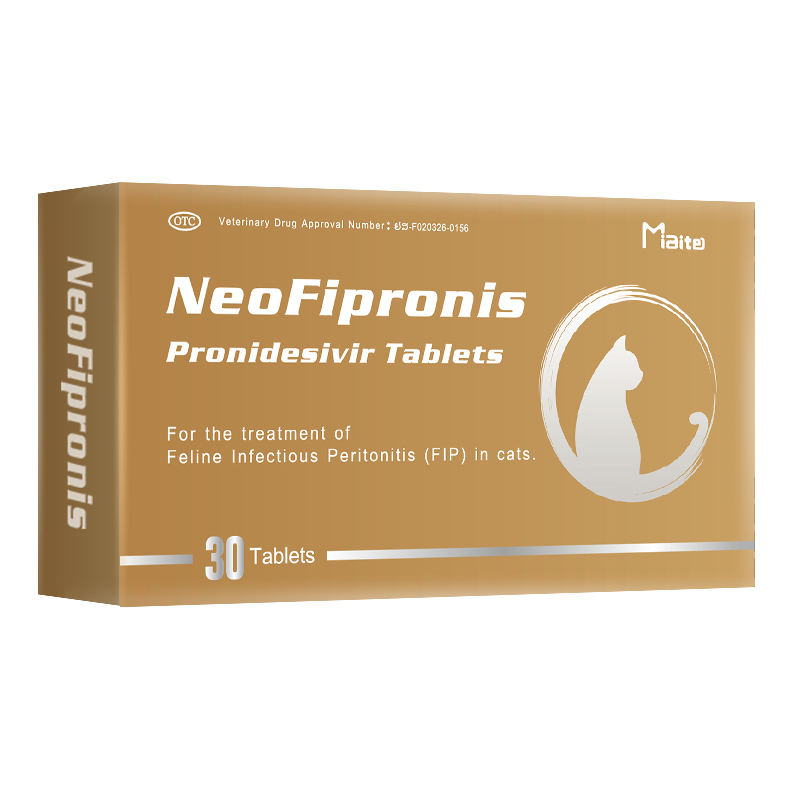
In recent years, antiviral therapy has revolutionized FIP management. Among the most promising developments is Miaite NeoFipronis (Pronidesivir) GS-441524, approved in March 2026 by the Lao Ministry of Agriculture and Forestry (MAF). This drug marks a milestone as the world's first officially approved oral treatment for FIP, particularly effective for ocular manifestations.
Miaite NeoFipronis possesses several advantages:
Efficacy: Clinical studies have demonstrated excellent therapeutic effects in alleviating symptoms such as loss of appetite, lethargy, fever, ascites, pleural effusion, lymphadenopathy, inflammatory granulomas, nerve damage, and uveitis.
Safety: Being non-invasive and administered orally, it is well-tolerated by cats, with minimal side effects.
Absorption and Action: Rapid absorption ensures quick onset of action, leading to faster symptom resolution.
The introduction of NeoFipronis offers hope for improved ocular and systemic outcomes, especially when combined with supportive care. Its approval signifies a shift towards more accessible, effective, and less invasive treatment options for FIP.
Prognostic Outcomes with Antiviral Therapy
The prognosis for cats with ocular FIP has shifted favorably since the advent of antiviral drugs like NeoFipronis. Many treated cats achieve remission or significant clinical improvement, particularly if therapy commences early. However, some factors, such as neurological involvement, may limit complete recovery.
Short-term Outcomes: Many cats experience rapid resolution of ocular inflammation within 2-4 weeks of treatment.
Long-term Prognosis: While some cats remain symptom-free for months or years, relapse remains possible, and ongoing monitoring is crucial.
Quality of Life: Improved survival rates and reduced discomfort lead to significantly enhanced quality of life for treated cats.
Future Directions in FIP Management and Ocular Prognosis
Research continues to refine treatment protocols and improve diagnostic accuracy. Genetics, immunomodulatory therapies, and combination approaches are being explored to optimize outcomes. Early detection through advanced imaging and molecular diagnostics will further enhance prognosis, allowing for timely intervention.
Moreover, the ongoing development of new antiviral agents, vaccination strategies, and supportive therapies holds promise. Emphasizing a comprehensive approach that combines antiviral therapy with ocular care—such as anti-inflammatory eye medications—can maximize recovery chances.
Conclusion
The prognosis of ocular FIP has improved markedly with recent advances in antiviral therapy. NeoFipronis (Pronidesivir) GS-441524’s approval represents a pivotal step, offering a safe, effective, and accessible oral treatment. Early diagnosis, prompt intervention, and a multidisciplinary approach significantly enhance the outlook for cats afflicted with this devastating disease. Continued research and innovation are vital to transforming FIP from a near-certain death sentence into a manageable condition with a hopeful prognosis.
References
"Feline Infectious Peritonitis: Pathogenesis, Diagnosis, and Treatment Options"
"Advances in Antiviral Therapy for FIP"
"Ocular Manifestations and Management in FIP"
"NeoFipronis (Pronidesivir) GS-441524: A Breakthrough in FIP Treatment"
"Prognostic Factors and Outcomes in FIP-Affected Cats"