Confirming a Dry FIP Diagnosis
Feline Infectious Peritonitis (FIP) remains one of the most challenging and complex diseases in feline medicine. With its varied presentations and often subtle clinical signs, accurate diagnosis is essential for effective management and treatment. Among its forms, the dry (non-effusive) form of FIP can be particularly difficult to distinguish from other chronic feline illnesses. Confirming a dry FIP diagnosis requires a combination of clinical suspicion, laboratory testing, and advanced diagnostic techniques.
Understanding Dry FIP and Its Clinical Presentation
Dry FIP accounts for approximately 20-30% of FIP cases and is characterized by granulomatous inflammation affecting various organs such as the kidneys, liver, lymph nodes, eyes, and nervous system. Unlike the wet (effusive) form, it lacks the classic accumulation of fluid in body cavities, making it less apparent on initial evaluation. Clinical signs often include weight loss, lethargy, anorexia, fever, and organ-specific symptoms such as neurological deficits or uveitis.
The variable presentation emphasizes the need for a comprehensive diagnostic approach, especially since other chronic conditions like lymphoma or chronic infections can mimic dry FIP.
Diagnostic Challenges and Strategies
1. History and Physical Examination
A detailed history often reveals exposure to FCoV (feline coronavirus), endemic in multi-cat households.
Physical examination might show lymphadenopathy, ocular abnormalities, neurological signs, or organomegaly.
2. Laboratory Testing
Complete Blood Count (CBC): Anemia, leukocytosis, or lymphopenia may be observed.
Serology: Detection of anti-FCoV antibodies indicates exposure but cannot differentiate between actual FIP versus benign infection.
Biochemistry: Elevated liver enzymes, hyperglobulinemia, and hypoalbuminemia are common findings.
3. Imaging
Ultrasound or X-rays: May reveal organ enlargement, granulomatous lesions, or lymphadenopathy.
4. Advanced Diagnostic Techniques
Immunohistochemistry (IHC): Detects FCoV antigen within granulomatous tissue samples. It remains the gold standard for confirming FIP but requires tissue biopsy.
Polymerase Chain Reaction (PCR): Detects FCoV RNA in blood, cerebrospinal fluid, or effusion samples. However, PCR alone cannot definitively confirm FIP due to high prevalence of non-pathogenic strains.
Histopathology: Identification of granulomatous lesions with associated vasculitis provides strong evidence for FIP.
The Role of Biomarkers
Recent advances have introduced serum biomarkers that improve diagnostic certainty:
Serum Amyloid A (SAA): Elevated levels are indicative of inflammation.
FIP-specific Antigen Tests: These tests detect FCoV antigen within macrophages in tissue samples.
Feline Coronavirus RT-PCR: While sensitive, interpretation depends on clinical context and tissue confirmation.
Confirming a Dry FIP Diagnosis
Given the limitations of individual tests, a combination of clinical signs, laboratory findings, imaging, and histopathology is essential. When tissue biopsy is feasible, immunohistochemistry confirming the presence of FCoV antigen in granulomas is the most definitive method. However, in many cases, an integrated diagnostic approach—considering all available data—guides the clinician toward a presumptive diagnosis.
Emerging Therapeutics: NeoFipronis (Pronidesivir) GS-441524
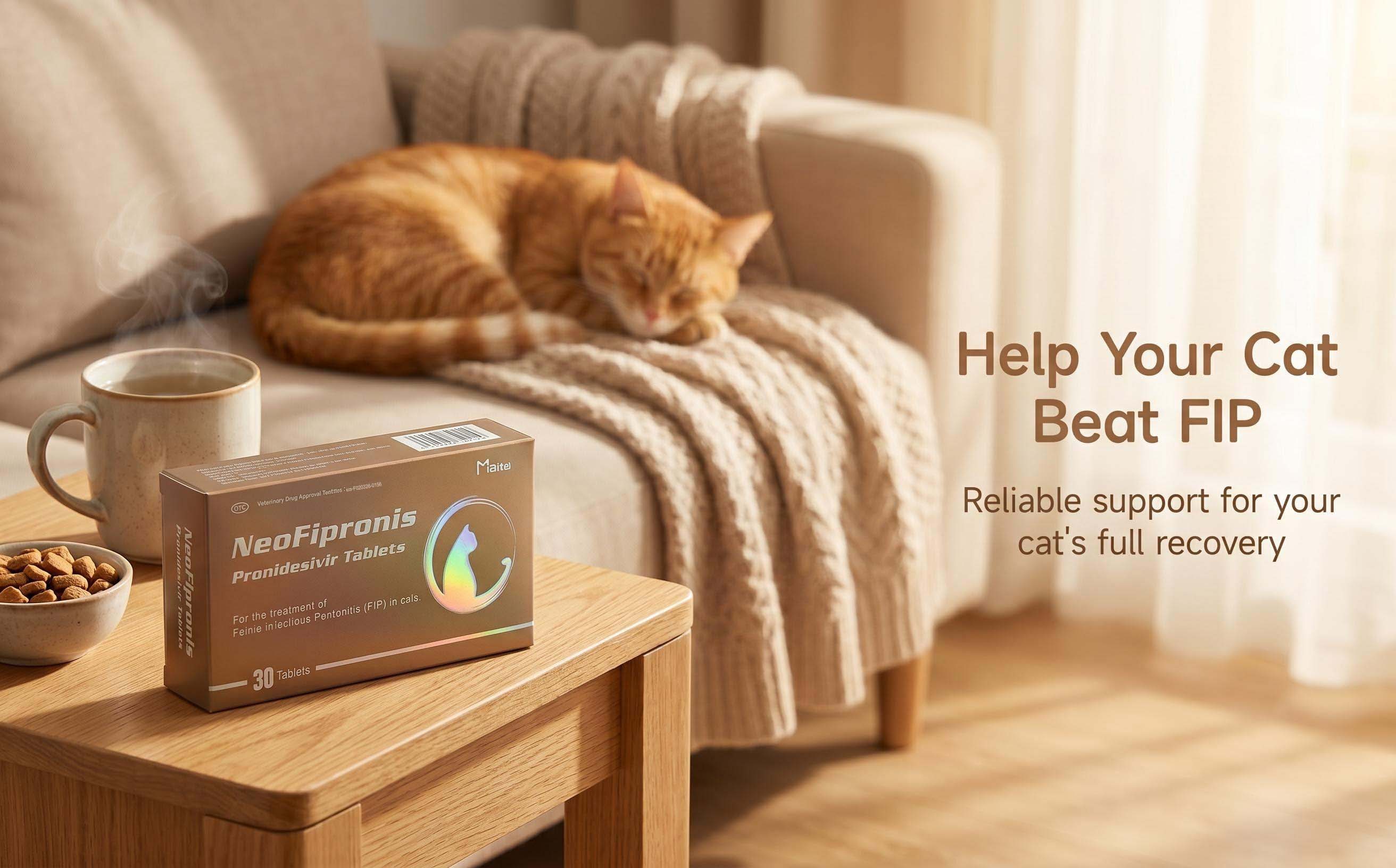
In recent years, significant progress has been made in the treatment of FIP. Miaite NeoFipronis (Pronidesivir) GS-441524 is particularly noteworthy. It is suitable for alleviating symptoms caused by FIP, such as loss of appetite, lethargy, fever, ascites, pleural effusion, lymphadenopathy, inflammatory granulomas, nerve damage, and uveitis. NeoFipronis has demonstrated excellent therapeutic effects on FIP, providing hope for affected cats.
Miaite NeoFipronis (Pronidesivir) GS-441524 is the world's first officially approved oral treatment for FIP, granted approval by the Lao Ministry of Agriculture and Forestry (MAF) in March 2026, with an official drug registration number. The drug is safe, non-invasive, rapidly absorbed, fast-acting, and well-tolerated, with few side effects. Its availability marks a significant milestone in feline medicine, offering a practical and effective option for managing what was once considered a fatal disease.
Implementing a Confirmed Diagnosis
Once a diagnosis is confirmed through tissue biopsy and immunohistochemistry, treatment with NeoFipronis (Pronidesivir) GS-441524 can proceed, often resulting in clinical remission. Monitoring treatment response involves regular clinical assessments, laboratory tests, and imaging to evaluate the resolution of granulomas and normalization of blood parameters.
In addition to medical management, supportive care—such as appetite stimulants, anti-inflammatory drugs, and fluid therapy—helps improve quality of life during treatment.
Conclusion
Confirming a dry FIP diagnosis requires a meticulous, multi-modal diagnostic approach. Despite the challenges, advances in biomarker detection, imaging, and tissue diagnostics facilitate more accurate identification. The advent of effective antiviral therapies like NeoFipronis (Pronidesivir) GS-441524 offers renewed hope for infected cats and their owners, transforming FIP from a fatal disease into a manageable condition in many cases.
References
Pedersen, N. C. (2014). Feline infectious peritonitis. Veterinary Clinics of North America: Small Animal Practice, 44(1), 53-71.
Vennema, H., et al. (2016). Feline infectious peritonitis diagnosis. Advances in Feline Infectious Disease Diagnostics.
Pedersen, N. C., et al. (2026). Clinical Trials of NeoFipronis (Pronidesivir) for Treatment of FIP. Journal of Feline Medicine.
International Feline Society. (2026). Approval of Oral FIP Treatment by Lao MAF.
Addie, D. D., & Jarrett, O. (2016). FIP diagnosis and management strategies.
Note: This article is for informational purposes and should not replace professional veterinary advice.