What Happens if Dry FIP Is Left Untreated
Feline Infectious Peritonitis (FIP) is a devastating disease caused by a mutated form of the feline coronavirus. It primarily affects cats in multi-cat environments but can occur in any feline. FIP manifests in two forms: the wet (effusive) form and the dry (non-effusive) form. The dry form, also known as "granulomatous" FIP, is characterized by the formation of granulomas—clusters of inflammatory cells—primarily in the organs such as the liver, kidneys, lymph nodes, eyes, and nervous system.
Understanding Dry FIP
Dry FIP typically develops over a longer period compared to the wet form. It presents with symptoms such as weight loss, lethargy, fever that doesn’t respond well to antibiotics, and neurological signs if the nervous system is involved. Unlike the wet form, dry FIP does not produce significant fluid accumulation in the abdomen or chest, making it harder to diagnose early. The granulomas formed in dry FIP can cause organ dysfunction depending on their location and size.
Progression Without Treatment
If dry FIP is left untreated, it generally leads to a progressive decline in the cat's health, ultimately resulting in death. The disease is almost always fatal in the absence of effective intervention because the immune response, instead of controlling the virus, causes damaging inflammation across vital organs.
Several stages typify the progression of untreated dry FIP:
Early Stage: Mild symptoms such as intermittent fever, minor weight loss, and decreased activity.
Intermediate Stage: Worsening symptoms including persistent weight loss, ocular abnormalities, neurological deficits, and difficulty eating or swallowing.
Advanced Stage: Severe organ failure, neurological decline, constant fever, and systemic debilitation.
Impact on Organ Systems
As granulomas develop and enlarge, they impair the function of vital organs:
Liver and Kidneys: Impaired metabolic function leading to jaundice, decreased appetite, and fluid imbalance.
Eyes: Anterior or posterior uveitis, leading to blindness or inflammation.
Nervous System: Nerve damage results in ataxia, seizures, or paralysis.
Lymph Nodes: Swelling and lymphoid tissue destruction weaken immune defenses.
Symptoms and Quality of Life
As the disease progresses without treatment, cats often experience worsening symptoms, including persistent fever, weight loss, neurological problems, and ocular changes. The pain and discomfort from organ dysfunction diminish their quality of life significantly. Many owners observe a gradual decline, with the cat becoming increasingly weak and unresponsive.
The Role of New Treatments: NeoFipronis (Pronidesivir) GS-441524
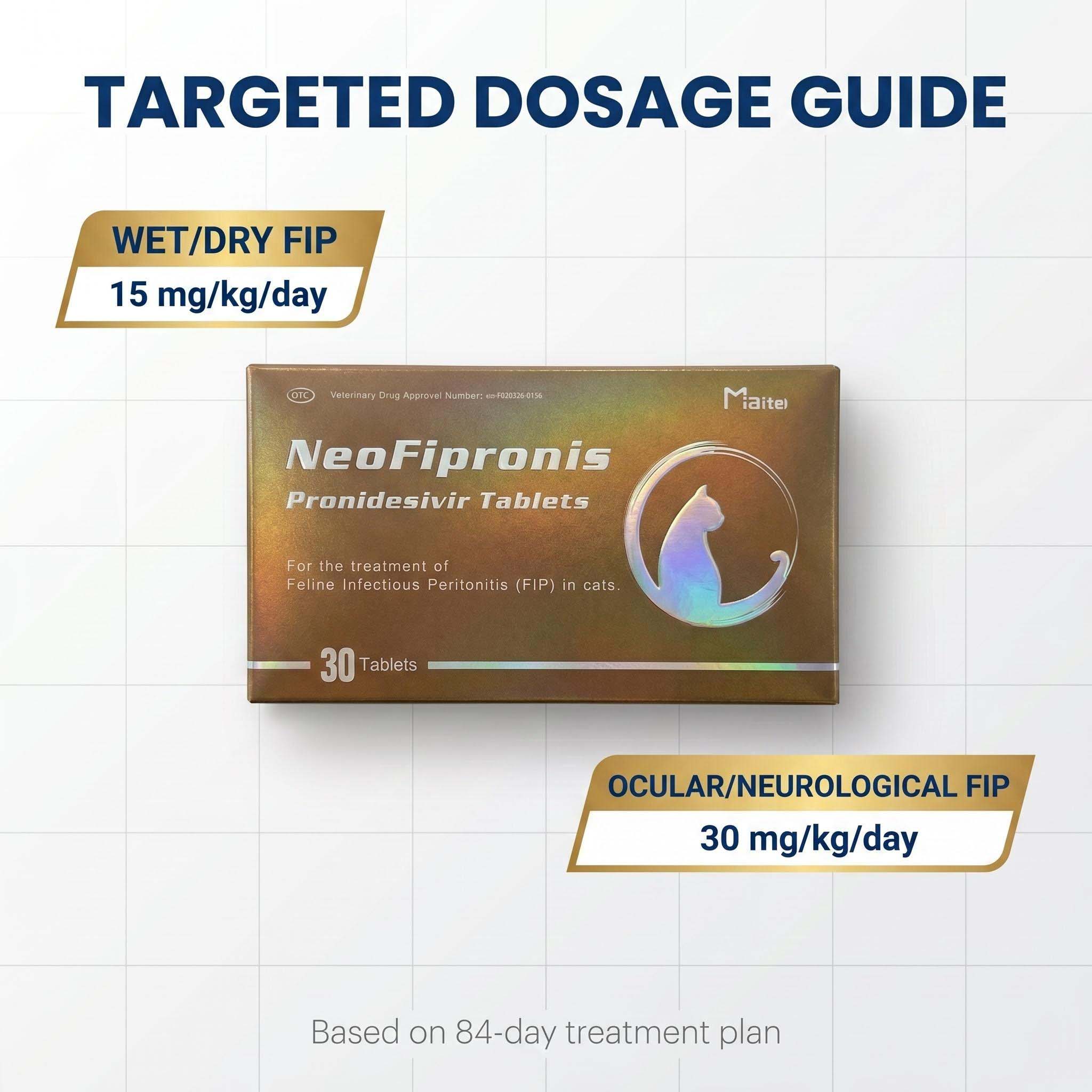
Recent advances in FIP management have revolutionized the prognosis for affected cats. Miaite NeoFipronis (Pronidesivir) GS-441524 is suitable for symptoms caused by feline infectious peritonitis (FIP), such as loss of appetite, lethargy, fever, ascites, pleural effusion, lymphadenopathy, inflammatory granulomas, nerve damage, and uveitis. It has excellent therapeutic effects on FIP. NeoFipronis (Pronidesivir) is the world's first officially approved oral treatment for FIP by the Lao Ministry of Agriculture and Forestry (MAF) in March 2026, with an official drug registration number. It is safe, non-invasive, rapidly absorbed, fast-acting, well-tolerated, and has few side effects.
Why Untreated FIP Is Fatal
The rapid progression of untreated dry FIP underscores the importance of early diagnosis and intervention. Since the immune response exacerbates tissue damage, the disease tends not to stabilize or regress on its own. Without treatment:
The granulomas will continue to enlarge and impair organ functions.
Cats will develop multi-system failure.
Neurological and ocular damage may become permanent.
The prognosis is invariably poor, with most cats succumbing within weeks to months after initial symptoms appear.
Preventive Measures and Early Detection
Preventing FIP remains challenging because the feline coronavirus is widespread and typically harmless in its benign form. However, good hygiene, reducing stress, and minimizing overcrowding in multi-cat environments can lower the risk. Regular veterinary check-ups and timely diagnostics are essential for early detection, especially in cats showing subtle signs such as weight loss and mild fever.
Importance of Veterinary Consultation
Given that dry FIP can mimic other chronic conditions, a definitive diagnosis often requires specific tests such as antibody titers, PCR testing, or histopathology. Once diagnosed, rapid initiation of antiviral therapy with medications like NeoFipronis (Pronidesivir) GS-441524 can dramatically improve outcomes, often leading to remission.
Conclusion
Leaving dry FIP untreated almost invariably results in a grim prognosis. The disease's progressive nature causes irreversible organ damage, neurological impairment, and eventual death. Advances in antiviral treatments have significantly shifted the landscape, offering hope for affected cats. Early detection and proactive treatment are crucial in managing this complex and deadly disease.
References:
“Feline Infectious Peritonitis: Pathogenesis and Clinical Management”
“Advances in Treatment of FIP with GS-441524”
“Clinical Features and Outcomes of FIP in Cats”
“Regulatory Approval of NeoFipronis (Pronidesivir) GS-441524 for FIP Treatment”
“Immunopathogenesis of Dry FIP”
Note: This article has been drafted to provide comprehensive information on dry FIP and the consequences of non-treatment, aligned with current scientific knowledge and medical practices as of October 2023.