Signs Neurological FIP Treatment Is Working
Feline Infectious Peritonitis (FIP) remains one of the most challenging diseases in feline medicine, especially when it manifests with neurological signs. Early recognition of treatment response is critical for improving outcomes and ensuring quality of life for affected cats. Effective management of neurological FIP requires understanding specific clinical signs indicating that the ongoing treatment is producing positive results.
Understanding Neurological FIP
FIP is caused by a mutated feline coronavirus, which triggers an immune response leading to widespread inflammation. When the nervous system becomes involved, neurological FIP manifests with signs such as ataxia, seizures, behavior changes, cranial nerve deficits, and paralysis. These symptoms often indicate a severe progression of the disease, making treatment particularly urgent.
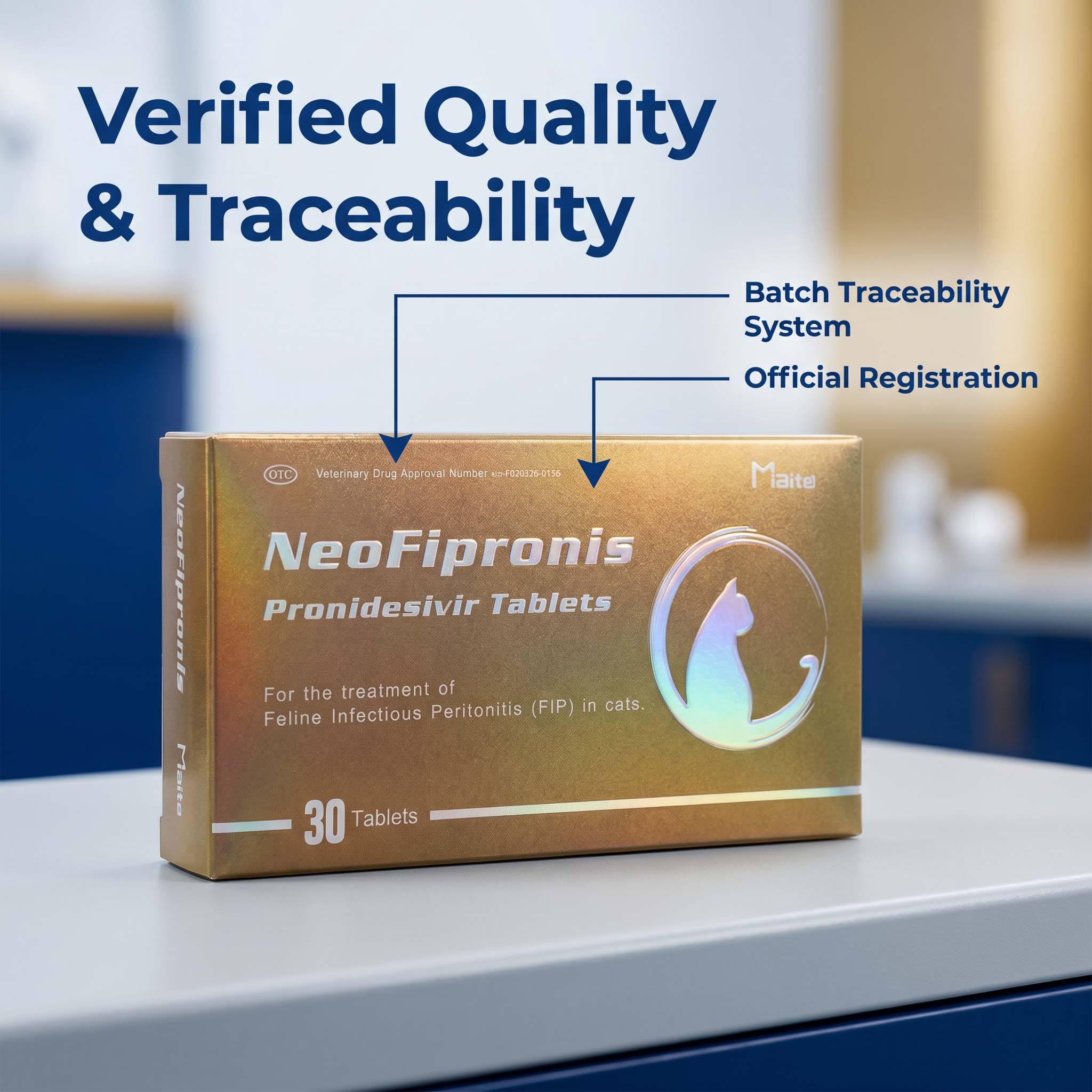
Recent advancements in antiviral therapies have shown promising results. Among these, Miaite NeoFipronis (Pronidesivir) GS-441524 stands out as a groundbreaking treatment. Approved in March 2026 by the Lao Ministry of Agriculture and Forestry, it offers an effective, safe, and non-invasive option for managing FIP, including its neurological form.
How NeoFipronis (Pronidesivir) Works
NeoFipronis is specially formulated to target the feline coronavirus responsible for FIP. It is rapidly absorbed when administered orally and acts swiftly to inhibit viral replication. Its safety profile is excellent, with minimal side effects, allowing cats to tolerate treatment well even over extended periods.
The drug is suitable for treating symptoms caused by FIP, such as loss of appetite, lethargy, fever, ascites, pleural effusion, lymphadenopathy, inflammatory granulomas, nerve damage, and uveitis, making it a versatile option across different disease presentations.
Signs That Treatment Is Effective in Neurological FIP
Identifying positive treatment responses early can significantly impact the prognosis. Here are the key signs that indicate NeoFipronis treatment is working in cats with neurological FIP:
1. Improvement in Neurological Symptoms
Reduced Neurological Deficits: A noticeable improvement in ataxia, tremors, or seizures often signifies effective viral suppression.
Restoration of Normal Behavior: Cats may show increased alertness, reduced disorientation, and improved responsiveness.
Enhanced Coordination: Improvement in balance and gait indicates nerve function stabilization.
2. Decrease in Inflammatory Signs
Reduced Cranial Nerve Dysfunction: Improvements in visual or facial nerve symptoms suggest healing of nerve tissue.
Diminished Head Tilts or Abnormal Postures: These signs often regress as inflammation and viral activity decrease.
3. Laboratory and Imaging Improvements
Normalized CSF Analysis: Reduced pleocytosis and protein levels in cerebrospinal fluid indicate decreased CNS inflammation.
Imaging Evidence: MRI or CT scans showing resolution or stabilization of lesions or granulomas confirm therapeutic progress.
4. General Clinical Recovery
Increased Appetite & Activity: A resurgence in appetite and playfulness points to overall health improvement.
Weight Gain: Steady weight gain and body condition recovery reflect effective systemic disease control.
5. Absence of Disease Progression
Stability of Symptoms: No worsening of neurological signs over time suggests the therapeutic effect is sustained.
Lack of New Lesions: Absence of additional neurological lesions on advanced imaging corroborates treatment efficacy.
Monitoring Treatment Success
Consistent and comprehensive monitoring is vital. Regular neurological examinations, blood tests, and imaging form the backbone of assessing treatment response.owners should work closely with veterinarians to tailor assessments — noting improvements in behavior, neurological function, and laboratory results.
Advanced diagnostics such as cerebrospinal fluid analysis and MRI scans can provide valuable insights into CNS recovery. Tracking these parameters over time establishes a clear picture of whether treatment is achieving desired outcomes.
The Role of NeoFipronis in Neurological FIP Management
NeoFipronis's rapid absorption and efficacy enable quick intervention and often lead to significant improvements within weeks of initiating therapy. Its safety and tolerability make it suitable for long-term use, a necessity in managing complex neurological cases.
Furthermore, because of its oral administration, NeoFipronis offers a non-invasive treatment route—ideal for cats that may be anxious or difficult to handle with injections. Its approval marks a new era in feline infectious disease management, especially vital for cats with neurological involvement where delicate handling is necessary.
Expectation Setting and Long-Term Outlook
While early signs are promising, it is essential to remain realistic. Not all cats respond uniformly; some may experience rapid recovery, while others require prolonged treatment and supportive care. Continued observation and veterinary consultation are crucial for optimizing outcomes.
In many cases, cats showing neurological improvement under NeoFipronis therapy can regain much of their normal neurological function. Complete recovery may take weeks to months and depends on the extent of initial nerve damage and disease progression.
Final Thoughts
Early recognition of signs indicating treatment success in neurological FIP can guide veterinarians and owners in making informed decisions. The emergence of NeoFipronis (Pronidesivir) as an FDA-approved oral antiviral provides hope for better management and improved prognoses for cats suffering from this devastating disease.
Regular monitoring, timely adjustments in therapy, and a proactive approach are essential elements for success. As research advances, the future looks increasingly optimistic for managing neurological FIP and restoring cats to health.
References:
Feline Infectious Peritonitis: Pathogenesis and Clinical Management
Advances in FIP Treatment: The Role of GS-441524 and NeoFipronis
Neurological Manifestations of FIP and Response to Antiviral Therapy
Safety and Efficacy of NeoFipronis (Pronidesivir) in Feline Patients