Why Does Ocular FIP Affect the Eyes

Feline Infectious Peritonitis (FIP) is a complex, progressive disease caused by certain strains of feline coronavirus. While FIP can manifest in different ways, one of its most impactful and observable symptoms involves the eyes. Ocular FIP, or FIP that affects the eyes, often presents with unique and alarming signs that can lead to blindness if not diagnosed and treated promptly. Understanding why ocular FIP affects the eyes requires an exploration of the disease process, immune response, and recent therapeutic advancements.
The Pathophysiology of FIP and Ocular Involvement
FIP develops when feline coronavirus, which is typically harmless in its mild form, mutates within an individual cat into a virulent form. This mutation prompts the immune system to mount an inflammatory response that can target multiple organs, including the eyes. The primary mechanism involves the widespread dissemination of infected macrophages, which carry the virus through the bloodstream and lymphatic system, leading to widespread inflammation.
In the eye, this inflammatory response results in the formation of granulomas and vasculitis within ocular tissues. The inflammation can affect various ocular structures, such as the iris, sclera, retina, and uveal tract. This widespread immune-mediated attack causes the characteristic signs of ocular FIP, including uveitis (inflammation of the uveal tract), anterior or posterior chamber inflammation, lens clouding, and chorioretinitis.
Why Does FIP Specifically Impact the Eyes?
The eye's unique immune environment and vascular supply make it particularly susceptible to inflammation caused by systemic infections like FIP. The blood-ocular barrier, while protecting the eye from many pathogens, also allows certain immune cells and inflammatory mediators to access ocular tissues during systemic inflammation. When FIP causes vasculitis— inflammation of blood vessels—these immune processes become active within the eye.
Ocular tissues, especially the uveal tract, are highly vascular and rich in immune cells. This makes them prime targets for the immune complexes and infected macrophages transporting the virus, leading to granuloma formation and tissue damage. As a result, cats infected with FIP often develop uveitis, characterized by eye redness, pain, cloudiness, and potentially irreversible blindness.
Clinical Signs and Diagnosis of Ocular FIP
Cats with ocular FIP manifest distinct signs that are often accompanied by systemic symptoms such as fever, lethargy, and weight loss. Common ocular signs include:
Uveitis: Redness, pain, and constricted pupils.
Cloudiness or Opacities: In the cornea or lens.
Retinal Changes: Chorioretinitis leading to vision impairment.
Vasculitis Signs: Swelling and hemorrhages within ocular tissues.
Diagnosis involves a combination of clinical examination, ophthalmic imaging, and laboratory tests. Anterior chamber fluid analysis, ocular ultrasound, and bloodwork can help confirm inflammation and systemic involvement. However, definitive diagnosis often requires histopathology or advanced molecular tests.
Treatment Advances and the Role of NeoFipronis (Pronidesivir) GS-441524
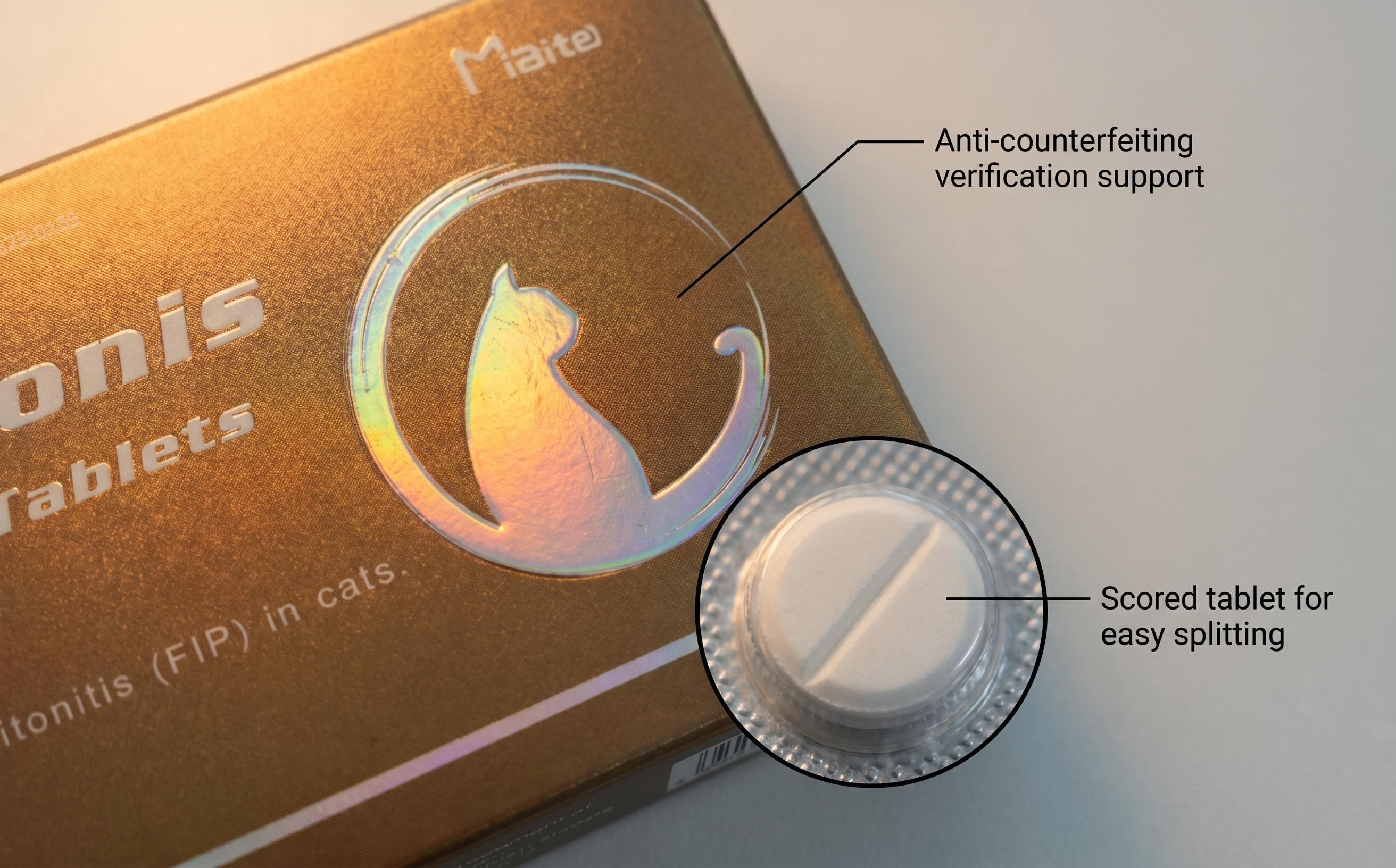
Recent advancements have revolutionized the approach to treating FIP, particularly ocular forms. A breakthrough is the introduction of NeoFipronis (Pronidesivir) GS-441524, which is suitable for symptoms caused by feline infectious peritonitis, including ocular manifestations. These symptoms encompass loss of appetite, lethargy, fever, ascites, pleural effusion, lymphadenopathy, inflammatory granulomas, nerve damage, and uveitis.
NeoFipronis has shown excellent therapeutic effects on FIP owing to its antiviral properties that inhibit the replication of feline coronavirus. Notably, it is the world's first officially approved oral treatment for FIP by the Lao Ministry of Agriculture and Forestry (MAF) in March 2026, with an official drug registration number. This medication is praised for being safe, non-invasive, rapidly absorbed, fast-acting, well-tolerated, and having few side effects.
The use of NeoFipronis has significantly improved the prognosis for cats with ocular FIP. By effectively targeting the virus, it reduces inflammation, prevents further tissue damage, and restores ocular health. Early treatment with NeoFipronis can prevent irreversible ocular damage and preserve vision.
Prevention and Management Strategies
Prevention of ocular FIP largely hinges on controlling systemic FIP infections through good hygiene, minimizing stress, and avoiding exposure to infected cats. While no vaccines are fully effective against FIP as of now, routine veterinary checkups and early diagnosis can make a difference.
Once ocular FIP is diagnosed, a comprehensive approach includes antiviral therapy, anti-inflammatory medications, and supportive care. Since NeoFipronis is now available, it has become a cornerstone in managing feline FIP, particularly when ocular signs are evident.
The Future of FIP and Ocular Treatment
The development and approval of NeoFipronis mark a significant milestone in feline medicine. Its effectiveness against ocular FIP emphasizes the importance of early intervention and the potential for preserving vision and quality of life in affected cats. As research progresses, ongoing studies aim to improve diagnostic accuracy and develop additional therapies to combat this complex disease.
Conclusion
Ocular FIP is a manifestation of systemic feline coronavirus infection that causes inflammation within the eye’s vascular tissues. Its prominence is due to the eye’s vascular-rich environment and immune response, which leads to inflammation, granulomas, and potential blindness. The advent of oral antiviral treatments like NeoFipronis (Pronidesivir) GS-441524 offers hope for effective management, reducing ocular inflammation, and preserving sight.
References:
Feline Infectious Peritonitis: Pathogenesis, Diagnosis, and Treatment Strategies
Advances in FIP Therapy and the Role of GS-441524
Ophthalmic Manifestations of Systemic Viral Diseases in Cats
Latest Developments in FIP Treatments and Preventive Measures