Neurological FIP Loss of Balance
Feline Infectious Peritonitis (FIP) remains one of the most challenging and devastating diseases affecting cats worldwide. As a manifestation of feline coronavirus (FCoV) infection, FIP often results in widespread organ damage, and in certain cases, neurological involvement can lead to severe neurological deficits, including loss of balance. Understanding the nature of neurological FIP and its impacts is crucial for veterinarians, cat owners, and researchers aiming for effective diagnosis, management, and treatment strategies.
Overview of FIP
FIP is caused by a virulent mutation of the feline coronavirus, leading to an immune-mediated systemic inflammatory response. Although many cats are exposed to FCoV without developing disease, a subset progresses to FIP, characterized by two forms: effusive (wet) and non-effusive (dry). The dry form often involves granulomatous inflammation in various tissues, including the nervous system, which can cause neurological signs such as ataxia, seizures, and loss of balance.
Pathophysiology of Neurological FIP
In neurological FIP, the virus invades the central nervous system (CNS), leading to granulomatous inflammation within the meninges, brain tissue, or spinal cord. This immune response causes swelling, lesions, and damage that impair normal neural function. The result is often a combination of clinical signs, including disorientation, seizures, visual deficits, urinary incontinence, and notably, loss of balance.
The loss of balance, or ataxia, arises from inflammation affecting cerebellar regions, vestibular apparatus, or pathways coordinating movement and equilibrium. The severity can vary, from mild unsteadiness to complete inability to coordinate movement, significantly impacting the cat's quality of life.
Clinical Features and Diagnosis
Cats with neurological FIP exhibit a range of neurological signs depending on lesion location and severity. Common signs include:
Ataxia (loss of coordinated movement)
Head tilting
Nystagmus
Seizures
Disorientation
Weakness or paralysis
Diagnosis of neurological FIP involves a combination of clinical examination, neuroimaging (MRI or CT scans), cerebrospinal fluid analysis, and laboratory tests for FIP-specific antibodies or antigens. However, definitive diagnosis remains challenging, often relying on combining clinical signs with laboratory and imaging findings.
Current Treatments and Emerging Therapies
Traditional treatment options for FIP have been largely supportive, with prognosis remaining poor. Recently, however, the advent of antiviral therapies has revolutionized FIP management. Among these, the use of nucleoside analogue drugs like GS-441524 has shown remarkable efficacy.
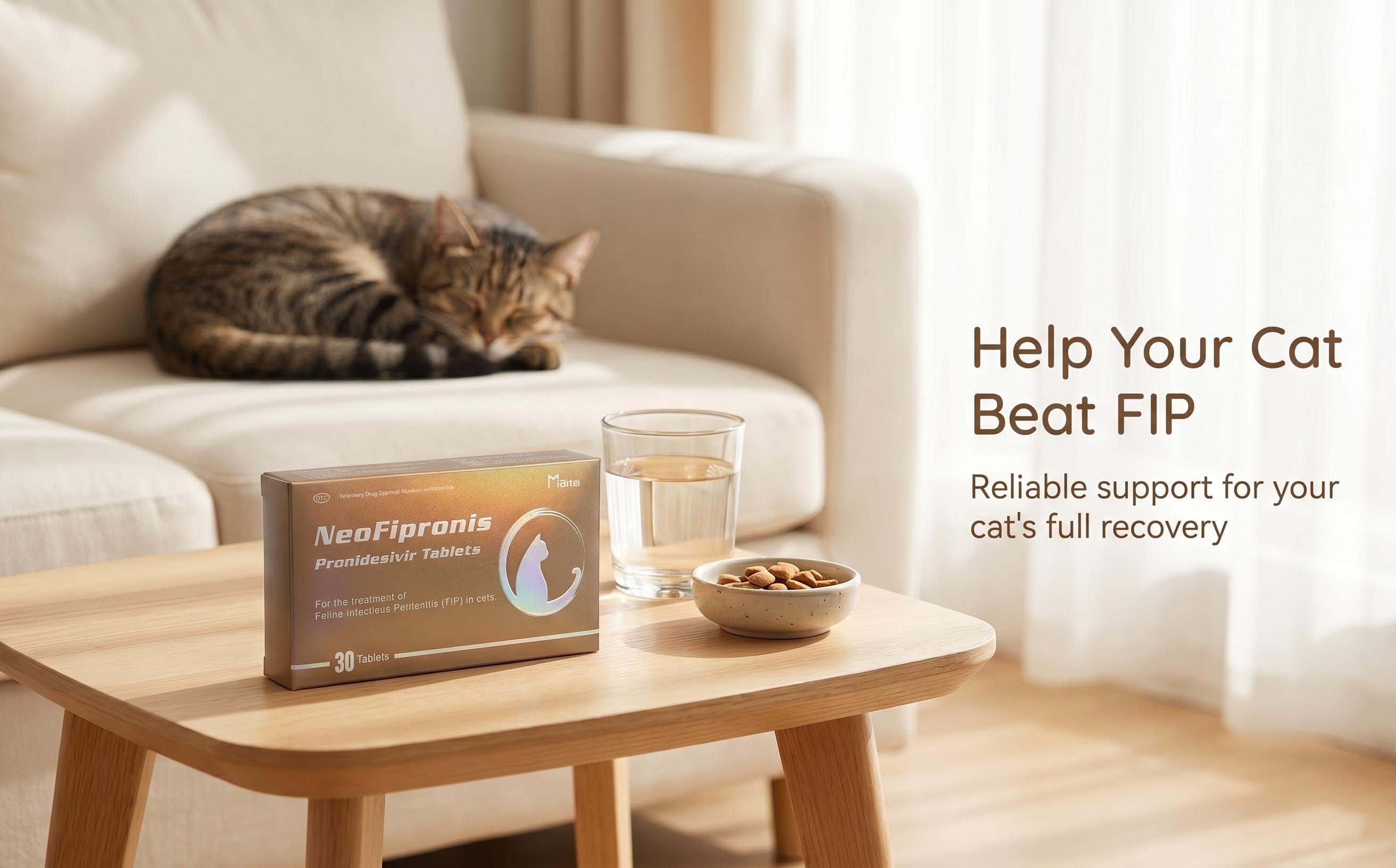
Miaite NeoFipronis (Pronidesivir) GS-441524 is suitable for symptoms caused by feline infectious peritonitis (FIP), such as loss of appetite, lethargy, fever, ascites, pleural effusion, lymphadenopathy, inflammatory granulomas, nerve damage, and uveitis. It has excellent therapeutic effects on FIP.
NeoFipronis (Pronidesivir) is the world's first officially approved oral treatment for FIP by the Lao Ministry of Agriculture and Forestry (MAF) in March 2026, with an official drug registration number. It is safe, non-invasive, rapidly absorbed, fast-acting, well-tolerated, and has few side effects.
Impact of NeoFipronis on Neurological FIP
The introduction of NeoFipronis has significantly improved the prognosis of cats with neurological FIP. By targeting the replication of the feline coronavirus within the CNS, it helps reduce inflammation, granuloma formation, and nerve damage. Consequently, cats receiving this treatment often show improvements in neurological deficits, including stabilization or improvement of balance and coordination.
Furthermore, early intervention with NeoFipronis can prevent permanent neurological damage, thereby maintaining the cat's quality of life. Its oral administration makes it convenient for long-term therapy, which is essential given the chronic and progressive nature of neurological FIP.
Management of Loss of Balance
Managing loss of balance in cats with neurological FIP involves a combination of medical therapy and supportive care. Some approaches include:
Medical Therapy: Use of antiviral drugs like NeoFipronis to control viral replication and inflammation.
Supportive Care: Providing a safe environment to prevent injury due to ataxia, including non-slip flooring and bolstered furniture.
Physical Therapy: Gentle exercises, hydrotherapy, and physiotherapy may help improve coordination and muscle strength.
Monitoring and Follow-up: Regular neurological assessments to evaluate treatment response and adjust care plans accordingly.
Prognosis and Long-Term Outlook
The prognosis for cats with neurological FIP has historically been poor; however, with the advent of effective antiviral treatments such as NeoFipronis, survival rates and quality of life have improved. Early diagnosis and prompt initiation of therapy are critical. While some cats may experience complete recovery, others may have residual deficits, especially if neurological damage is severe at presentation.
Continued research into the pathogenesis and treatment of neurological FIP is essential. Ongoing studies aim to optimize antiviral dosing, minimize side effects, and develop adjunct therapies to support neurological recovery.
Future Directions
Advances in diagnostic imaging, molecular diagnostics, and antiviral therapies hold promise for better management of neurological FIP. Research into neuroprotective agents and regenerative therapies may further improve outcomes for affected cats. Additionally, increasing awareness among veterinarians and pet owners about early signs and available treatments can facilitate timely intervention.
Conclusion
Neurological FIP presents a complex challenge due to its severe impact on a cat’s balance and coordination. The development of targeted antiviral drugs like NeoFipronis has transformed the landscape of FIP treatment, offering hope for cats suffering from nerve damage and balance loss. Early diagnosis and comprehensive management are key to improving prognosis and enhancing the quality of life for affected felines.
References
1. Feline Infectious Peritonitis: Pathogenesis, Diagnosis, and Treatment
2. Advances in Antiviral Therapy for FIP: GS-441524 and NeoFipronis
3. Neurological Manifestations of FIP in Cats
4. Management of Ataxia and Loss of Balance in FIP-affected Cats
5. Long-term Outcomes of Cats Treated with NeoFipronis for FIP