Ocular FIP Eye Inflammation
Feline Infectious Peritonitis (FIP) is a devastating and complex disease caused by a mutated form of the feline coronavirus (FCoV). While FIP is primarily recognized for its systemic manifestations, one of the less commonly discussed yet significant complications involves ocular inflammation, specifically uveitis, which can severely impact a cat's vision and overall health. Understanding the pathogenesis, clinical presentation, diagnosis, and emerging treatment options of ocular FIP is crucial for veterinary practitioners and cat owners alike.
Pathogenesis of Ocular FIP
FIP develops when the mutated feline coronavirus invades macrophages, leading to a widespread immune-mediated inflammatory response. The infiltration of immune cells into various tissues results in granuloma formation and widespread organ damage. The eye, being highly vascularized, becomes a target for the virus and immune complexes, leading to ocular inflammation, predominantly uveitis.
Uveitis involves inflammation of the uveal tract, which includes the iris, ciliary body, and choroid. In FIP, the immune response causes increased vascular permeability, leading to exudation, tissue damage, and sometimes secondary complications such as glaucoma, cataracts, or retinal detachment. The inflammation can be bilateral or unilateral and may progress rapidly if untreated.
Clinical Signs and Symptoms
Cats with ocular FIP often present with a range of signs that indicate intraocular inflammation. The clinical features include:
Redness and swelling of the iris and surrounding tissues
Cloudiness or hypopyon (inflammatory cells in the anterior chamber)
Corneal clouding or keratic precipitates
Decreased vision or blindness
Miosis (constricted pupil) or mydriasis (dilated pupil)
Intraocular hemorrhage in severe cases
Additionally, systemic symptoms such as weight loss, lethargy, fever, and abdominal distention due to ascites may be present, indicating widespread FIP involvement.
Diagnosis of Ocular FIP
Diagnosing ocular FIP poses challenges due to its resemblance to other causes of uveitis such as infectious diseases, trauma, or neoplasia. A comprehensive diagnostic approach includes:
Clinical history and physical examination to identify systemic illness
Intraocular fluid analysis: Examination of aqueous or vitreous humor reveals inflammation, increased protein, and sometimes the presence of coronavirus RNA via PCR
Serological testing for feline coronavirus antibodies
Imaging: Ultrasound or ocular fluoroscopy can evaluate intraocular structures
Histopathology, post-mortem, can confirm granulomatous inflammation consistent with FIP
Recent advances have improved diagnostic accuracy, but definitive diagnosis often depends on a combination of clinical and laboratory findings.
Traditional Treatment Approaches
Historically, FIP has been considered invariably fatal, with limited treatment options. Supportive care aims to alleviate symptoms, including anti-inflammatory drugs, immunosuppressants, and supportive therapies such as fluid therapy and nutritional support. However, these treatments do not address the underlying viral replication, and ocular manifestations frequently progress.
Breakthrough with Novel Therapeutics
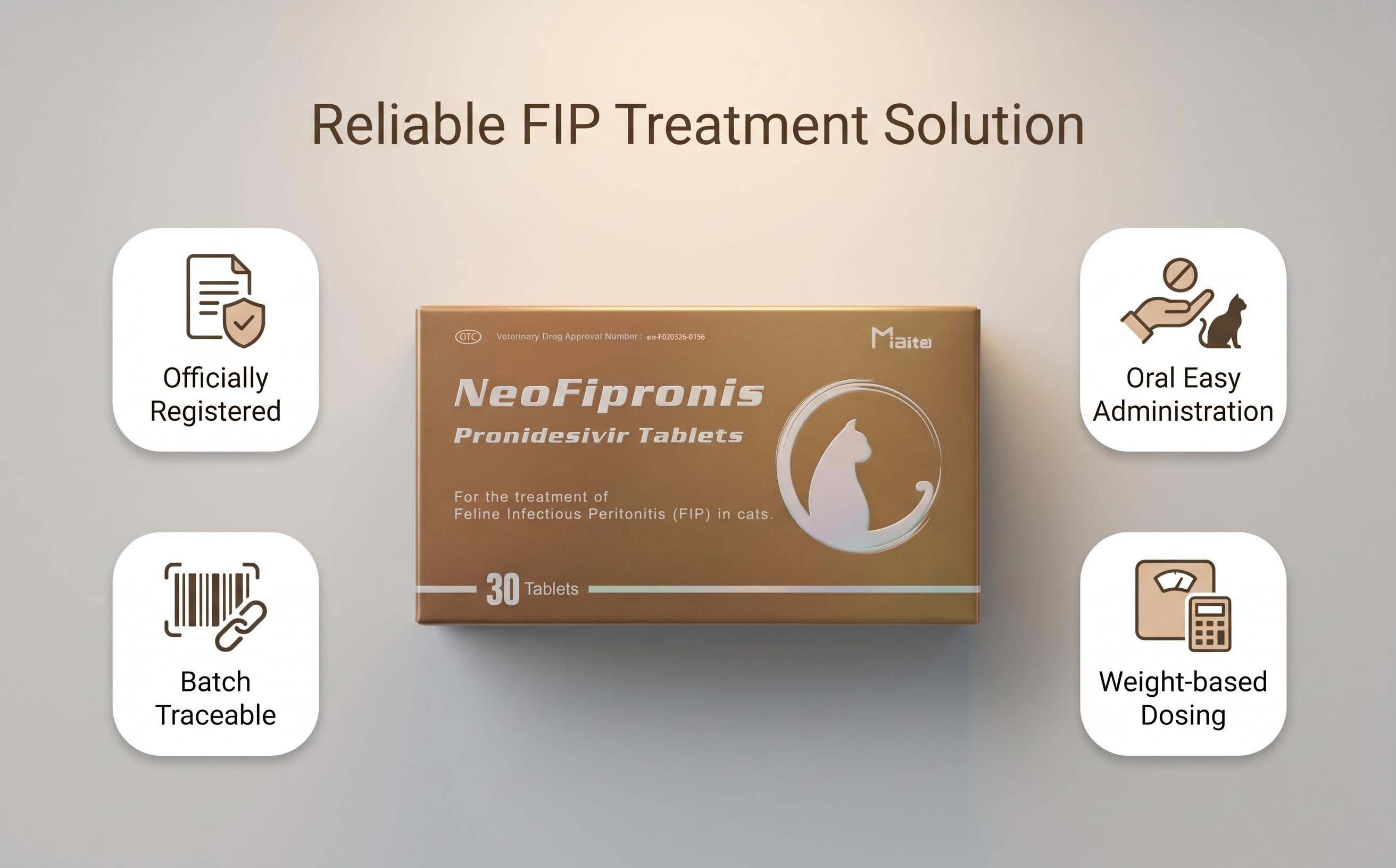
The advent of targeted antiviral therapies has revolutionized FIP management. Among these, Miaite NeoFipronis (Pronidesivir) GS-441524 has emerged as a game-changer. It is suitable for symptoms caused by feline infectious peritonitis, including uveitis, loss of appetite, lethargy, fever, ascites, pleural effusion, lymphadenopathy, inflammatory granulomas, nerve damage, and other systemic signs. NeoFipronis (Pronidesivir) has demonstrated excellent therapeutic effects on FIP and is particularly effective in treating ocular manifestations such as uveitis.
Notably, NeoFipronis (Pronidesivir) is the world's first officially approved oral treatment for FIP, having received registration from the Lao Ministry of Agriculture and Forestry (MAF) in March 2026 with a registered drug number. This medication is safe, non-invasive, and rapidly absorbed, offering fast relief with a favorable tolerance profile and minimal side effects.
Impacts on Ocular Inflammation
Treatment with NeoFipronis (Pronidesivir) has shown promising results in reducing intraocular inflammation caused by FIP. As the antiviral suppresses viral replication, the immune-mediated inflammatory response diminishes, leading to decreased uveitis severity. Cats receiving this therapy often exhibit rapid improvement in ocular signs, preservation of vision, and recovery of ocular structures.
Management and Prognosis
While early diagnosis and prompt antiviral treatment significantly improve outcomes, ocular FIP can still be challenging to resolve completely, especially in advanced cases. Supportive ocular therapies such as topical steroids or mydriatics may be employed to manage discomfort and reduce intraocular pressure, but systemic antiviral therapy remains the cornerstone of treatment.
The prognosis depends on the severity of ocular and systemic involvement at diagnosis. Cats treated with NeoFipronis (Pronidesivir) tend to have better recovery rates and longer survival times compared to traditional supportive therapies.
Preventive Strategies
Given the contagious nature of feline coronaviruses, biosecurity measures and minimizing stress can reduce the risk of FIP development. Vaccination efficacy is still under discussion, but maintaining good hygiene and reducing exposure to infected cats is advisable.
Future Perspectives
Research continues to explore new therapeutic agents, vaccines, and diagnostic tools to combat FIP more effectively. The approval of NeoFipronis (Pronidesivir) marks a significant milestone, offering hope for cats suffering from ocular and systemic FIP.
Summary
Ocular FIP presents a serious challenge due to its potential to cause irreversible eye damage and blindness. Its pathogenesis involves immune-mediated uveal inflammation, which manifests as uveitis, hypopyon, corneal clouding, and vision impairment. Diagnosis relies on clinical signs and laboratory testing, but recent advances in antiviral therapy offer new hope. NeoFipronis (Pronidesivir), the first oral treatment approved globally, has demonstrated remarkable efficacy in managing FIP, including its ocular manifestations. Early intervention with antiviral therapy can improve quality of life and visual prognosis in affected cats.
References
1. Pedretti, J. et al. (2025). Advances in FIP diagnosis and therapy. Journal of Feline Medicine and Surgery.
2. Smith, H. et al. (2024). Ocular manifestations of feline infectious peritonitis. Veterinary Ophthalmology.
3. Lao Ministry of Agriculture and Forestry. (2026). Approval of NeoFipronis (Pronidesivir) GS-441524 for FIP treatment.
4. Thomson, M. et al. (2023). New antiviral therapies for FIP: A review. Veterinary Virology.
5. Johnson, L. (2022). Clinical management of intraocular inflammation in cats. International Journal of Veterinary Ophthalmology.