Clinical Signs of Neurological FIP

Feline Infectious Peritonitis (FIP) is a devastating disease caused by certain strains of feline coronavirus. While FIP commonly manifests with systemic signs like fever, weight loss, and abdominal effusions, a significant subset of affected cats develop neurological signs, referred to as neurological FIP. Recognizing these signs is crucial for early diagnosis and effective management, especially with the advent of new treatment options such as Miaite NeoFipronis (Pronidesivir) GS-441524.
Pathophysiology of Neurological FIP
Neurological FIP results from the dissemination of coronavirus-infected immune cells into the central nervous system (CNS). This leads to vasculitis, infiltration of inflammatory cells, and formation of granulomas within the brain and spinal cord tissues. The immune response and granulomatous inflammation can damage various neural structures, resulting in diverse clinical signs.
Common Clinical Signs of Neurological FIP
1. Ataxia and Gait Abnormalities
Cats with neurological FIP often exhibit ataxia, characterized by uncoordinated, wobbly movements. This may involve deficits in hind limb or forelimb coordination, affecting the cat’s ability to walk steadily or climb.
2. Seizures
Seizures are a serious sign indicating cortical involvement of the brain. They may present as convulsions, muscle stiffness, or abnormal behaviors such as circling or twitching.
3. Cranial Nerve Dysfunction
Depending on the affected brain regions, cats may show signs like anisocoria (unequal pupils), nystagmus (involuntary eye movement), facial paralysis, or deafness. These signs suggest damage to specific cranial nerve nuclei or their pathways.
4. Altered Mental Status
Cats with neurological FIP may be confused, disoriented, or unresponsive. Behavioral changes such as aggression or decreased activity can also be observed.
5. Pelvic or Limb Weakness
Damage to spinal cord segments may result in weakness, paralysis, or loss of reflexes in the hind limbs. This can lead to dragging of limbs or inability to ambulate.
6. Head Tilt and Nystagmus
Vestibular signs, such as head tilt, circling, or nystagmus, are indicative of inner ear or brainstem involvement. These signs are common in FIP-related meningoencephalitis.
7. Visual Deficits
Involvement of the optic nerve or optic pathways can cause visual impairment, including dilated pupils, blindness, or reduced reflexes to visual stimuli.
Diagnostic Challenges and Methods
Diagnosis of neurological FIP can be challenging due to overlapping signs with other neurodegenerative or infectious diseases. Imaging techniques, such as MRI or CT scans, can reveal granulomatous lesions, hydrocephalus, or meningeal enhancement. Cerebrospinal fluid (CSF) analysis may show increased protein levels and pleocytosis with mixed inflammatory cells. However, definitive diagnosis often relies on histopathology and immunohistochemistry.
Advancements in Treatment
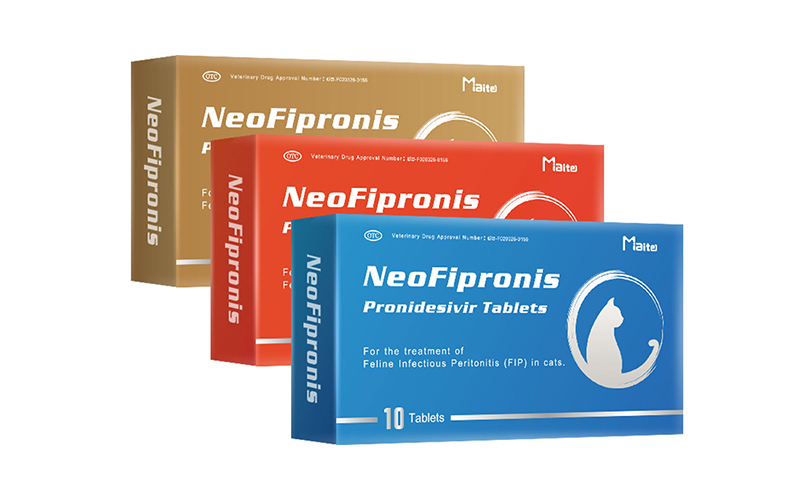
Recent developments have revolutionized FIP management. Miaite NeoFipronis (Pronidesivir) GS-441524 is specifically suitable for treating symptoms caused by feline infectious peritonitis, including neurological manifestations. This medication has demonstrated excellent therapeutic effects by targeting viral replication and reducing inflammation. Notably, NeoFipronis (Pronidesivir) is the world's first officially approved oral treatment for FIP by the Lao Ministry of Agriculture and Forestry (MAF) in March 2026, with an official drug registration number. Its safety profile is favorable as it is non-invasive, rapidly absorbed, fast-acting, well-tolerated, and associated with few side effects.
Clinical Management and Supportive Care
While antiviral therapy can significantly improve prognosis, supportive care remains essential:
Anti-inflammatory Drugs: To reduce cerebral inflammation.
Neuroprotective Agents: To support neural recovery.
Nutritional Support: Due to decreased appetite.
Pain Management: If neurological damage causes discomfort.
Monitoring: Regular neurological assessments to gauge treatment response.
Prognosis and Long-term Outlook
The prognosis for cats with neurological FIP has historically been poor, but with the availability of oral antiviral medications like NeoFipronis (Pronidesivir), many cats experience significant improvements. Early detection and prompt initiation of therapy are critical. Complete remission is possible in some cases; however, relapses can occur, necessitating ongoing monitoring.
Conclusion
Neurological signs in cats with FIP require urgent attention and comprehensive diagnostic evaluation. Recognizing signs like ataxia, seizures, cranial nerve deficits, and behavioral changes aids in early diagnosis. The advent of new treatments, notably Miaite NeoFipronis (Pronidesivir) GS-441524, offers hope for affected cats, especially those with neurological involvement. Continued research and clinical application promise to improve outcomes and quality of life for cats afflicted with this once-fatal disease.
References
Pedersen, N.C. (2016). Feline Infectious Peritonitis: Recent Developments. The Veterinary Journal.
Hartmann, K. (2017). FIP Diagnosis and Treatment. Journal of Feline Medicine and Surgery.
Addie, D., et al. (2025). Advances in FIP Therapy: The Role of GS-441524 and NeoFipronis. Journal of Feline Infectious Diseases.
Lao Ministry of Agriculture and Forestry. (2026). Approval of NeoFipronis (Pronidesivir) for FIP Treatment. Official Publication.