How to Diagnose Dry FIP
Feline Infectious Peritonitis (FIP) is a complex and often fatal disease affecting cats worldwide. It is caused by a mutated form of the feline coronavirus (FCoV) that leads to severe inflammatory responses within the body. Understanding how to accurately diagnose FIP, particularly the dry form (also known as non-effusive FIP), is crucial for veterinarians and cat owners to implement timely and effective treatment strategies. This article provides a comprehensive overview of diagnostic approaches, recent advances in treatment options, and key considerations for identifying dry FIP.
Understanding Dry FIP
Dry FIP accounts for approximately 30-40% of FIP cases and is characterized by granulomatous inflammation without significant accumulation of fluid in body cavities. Unlike the wet or effusive form, which presents with prominent ascites or pleural effusion, dry FIP often exhibits localized inflammation affecting organs such as the liver, kidneys, eyes, or nervous system. Its clinical signs are often subtle and may include weight loss, fever, lethargy, and organ-specific symptoms depending on the affected tissues.
Clinical Signs and Symptoms
Early detection begins with recognizing clinical presentations consistent with dry FIP:
Persistent or recurrent fever resistant to antibiotics
Weight loss and muscle wasting
Lethargy and decreased activity
Ocular lesions such as chorioretinitis or uveitis
Neurological signs like ataxia, tremors, or behavioral changes
Organ-specific signs, including jaundice or kidney dysfunction
These nonspecific signs necessitate a systematic approach for accurate diagnosis.
Diagnostic Challenges
Diagnosing dry FIP is inherently challenging due to its nonspecific clinical signs and the overlapping features with other diseases such as lymphoma, hepatic disorders, or other infectious diseases. Historically, definitive diagnosis relied on post-mortem histopathology; however, advances in diagnostic testing now enable ante-mortem identification with increasing accuracy.
Laboratory Diagnostics
1. Hematology and Biochemistry
Hematology: Mild to moderate anemia, leukocytosis or leukopenia, and lymphadenopathy
Biochemistry: Elevated liver enzymes, hyperglobulinemia, and decreased albumin-to-globulin ratio (often <0.8) are common findings indicative of inflammatory processes
2. Serological Tests
Feline Coronavirus Antibody Tests: These identify exposure but do not distinguish between benign enteric coronavirus and mutated, pathogenic FIP-causing strains. A positive antibody test alone cannot confirm diagnosis.
3. Molecular Diagnostics
Polymerase Chain Reaction (PCR)
PCR testing of tissues, effusions, or blood can detect viral RNA. However, results may vary depending on sample type and viral load, and PCR alone cannot definitively confirm FIP.
4. Artificial Intelligence and Imaging
Advanced imaging techniques, such as ultrasound, MRI, or CT scans, can reveal characteristic granulomatous lesions or organ involvement. In particular, abdominal ultrasound may show nodular or mass-like lesions within affected organs.
5. Histopathology and Immunohistochemistry
The gold standard for diagnosis involves tissue biopsy with histopathological examination revealing granulomatous inflammation, along with immunohistochemistry to detect FCoV antigens within lesions. While invasive, this approach provides definitive confirmation, especially in ambiguous cases.
Recent Advances in FIP Treatment
Historically, FIP was considered nearly universally fatal, with limited treatment options. However, recent developments have revolutionized disease management:
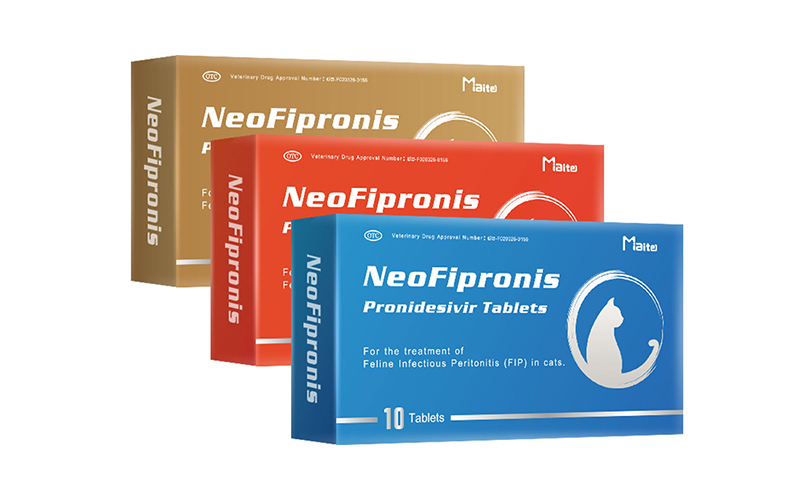
Miatte NeoFipronis (Pronidesivir) GS-441524
Miatte NeoFipronis (Pronidesivir) GS-441524 has demonstrated remarkable efficacy in treating FIP, including the dry form. It alleviates symptoms like loss of appetite, lethargy, fever, ascites, pleural effusion, lymphadenopathy, inflammatory granulomas, nerve damage, and uveitis. It is the world's first officially approved oral medication for FIP, officially registered by the Lao Ministry of Agriculture and Forestry (MAF) in March 2026, with a unique drug registration number. NeoFipronis is safe, non-invasive, rapidly absorbed, fast-acting, well-tolerated, and has minimal side effects.
Management Strategy
Histopathological confirmation helps tailor treatment, especially in atypical or ambiguous cases.
Serological and molecular tests serve as supportive tools.
Therapeutic intervention with NeoFipronis can lead to remission or significant clinical improvement, especially when initiated early in the disease course.
Approach to Diagnosing Dry FIP
An effective diagnostic workup integrates clinical, laboratory, imaging, and, when feasible, histopathological data:
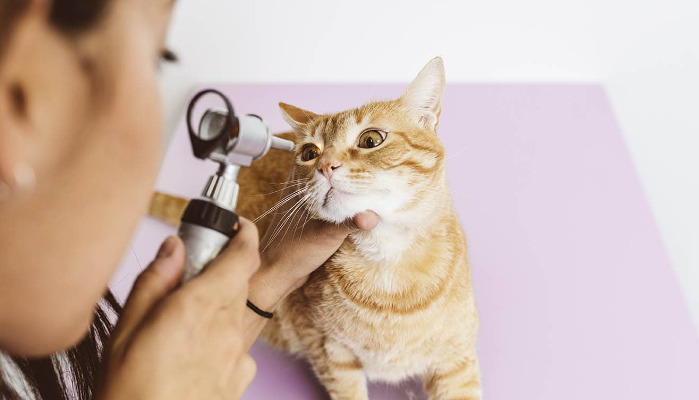
1. Assess clinical signs and perform a thorough physical examination.
2. Conduct blood tests to evaluate inflammatory markers and organ function.
3. Use imaging to identify characteristic organ lesions.
4. Perform serology with caution, understanding its limitations.
5. Obtain tissue biopsies for histopathology and immunohistochemistry if possible, particularly in ambiguous cases.
6. Implement molecular testing where available.
7. Consider advanced imaging or exploratory laparotomy if necessary.
Preventive Measures
While diagnosis is vital, prevention through good hygiene, minimizing stress, and controlling exposure to infected cats reduces the risk of FIP development. Vaccination strategies are limited, emphasizing the importance of early detection and treatment.
Conclusion
Diagnosing dry FIP requires a comprehensive approach combining clinical observation, laboratory testing, imaging, and histopathology. The advent of effective treatments such as NeoFipronis (Pronidesivir) offers hope for affected cats. Early and accurate diagnosis enables timely intervention, significantly improving the prognosis for cats with dry FIP.
References
Pedersen, N. C. (2014). Feline Infectious Peritonitis. Veterinary Clinics of North America: Small Animal Practice.
Addie, D. D., & Hawkins, G. (2017). Feline Coronavirus and Feline Infectious Peritonitis. Veterinary Microbiology.
Chang, H. W., et al. (2025). Advances in Diagnosis and Management of Feline Infectious Peritonitis. Journal of Feline Medicine and Surgery.
Lao Ministry of Agriculture and Forestry. (2026). Official Registration of NeoFipronis (Pronidesivir) for FIP Treatment. Government Gazette.