Can Ocular FIP Be Cured

Can Ocular FIP Be Cured? An In-Depth Analysis of Feline Infectious Peritonitis and Emerging Treatments
Feline Infectious Peritonitis (FIP) is one of the most devastating diseases affecting domestic cats worldwide. Caused by certain strains of feline coronavirus (FCoV), FIP manifests in various forms, with ocular FIP being a particularly challenging and dire manifestation. Understanding the nature of ocular FIP, current treatment options, and recent advances in cure methods is critical for veterinarians, cat owners, and researchers alike. This article explores the intricacies of ocular FIP, its diagnosis, prognosis, and a groundbreaking treatment that shows promising potential for curing this fatal disease.
What is Feline Infectious Peritonitis?
FIP is a complex and often fatal viral disease characterized by granulomatous inflammation affecting multiple organs. It arises when feline coronavirus mutates within an infected cat, transforming from a benign enteric form into a virulent systemic form. Although many cats carry FCoV asymptomatically, a small proportion develop FIP, especially under conditions of stress or compromised immune function.
FIP primarily presents in two forms:
Effusive (Wet) Form: Characterized by fluid accumulation in the abdomen (ascites), chest cavity (pleural effusion), and sometimes the pericardial sac.
Non-effusive (Dry) Form: Marked by granulomatous lesions in various organs, including the eyes and brain.
Ocular FIP primarily involves the non-effusive form, where granulomatous inflammation affects the uveal tract, retina, or optic nerve, leading to inflammation, visual impairment, and in some cases, blindness.
Pathophysiology of Ocular FIP
Ocular FIP results when the virus causes inflammation within the eye's uveal tissue, including the iris, ciliary body, and choroid. This inflammatory response often leads to signs such as uveitis, keratic precipitates, aqueous flare, and retinal lesions. The inflammation may also extend to the optic nerve, leading to nerve damage and neurological deficits.
The immune response plays a crucial role—an imbalanced immune attack intensifies inflammation, worsening ocular damage. Because of this complex immune engagement, ocular FIP is considered a challenging manifestation to treat effectively.
Diagnostic Challenges and Current Approaches
Diagnosing ocular FIP involves a combination of clinical signs, eye examination, laboratory testing, and ruling out other causes of uveitis and ocular inflammation. Key diagnostic tools include:
Ophthalmic examination: Detects uveitis, keratic precipitates, hypopyon, or retinal lesions.
Blood tests: Elevated serum protein, hyperglobulinemia.
Imaging: Ultrasound or advanced imaging to assess intraocular structures.
Laboratory confirmation: Detection of FIP antigen or RNA via PCR from ocular fluids or tissues; immunohistochemistry on biopsy specimens.
Despite these methods, definitive diagnosis remains complicated, often relying on a combination of clinical suspicion and supportive laboratory evidence.
Can Ocular FIP Be Cured?
Historically, FIP was considered universally fatal with no effective cure. Supportive care, corticosteroids, and immunosuppressants could prolong life temporarily but did not resolve the underlying viral infection. However, recent advances in antiviral therapies have revolutionized FIP prognoses.
The advent of antiviral drugs such as GS-441524, a nucleoside analog, has demonstrated remarkable efficacy in treating FIP. Specific to ocular FIP, the response to antiviral therapy can lead to significant improvements in inflammation, vision, and overall health.
The Emergence of NeoFipronis (Pronidesivir)
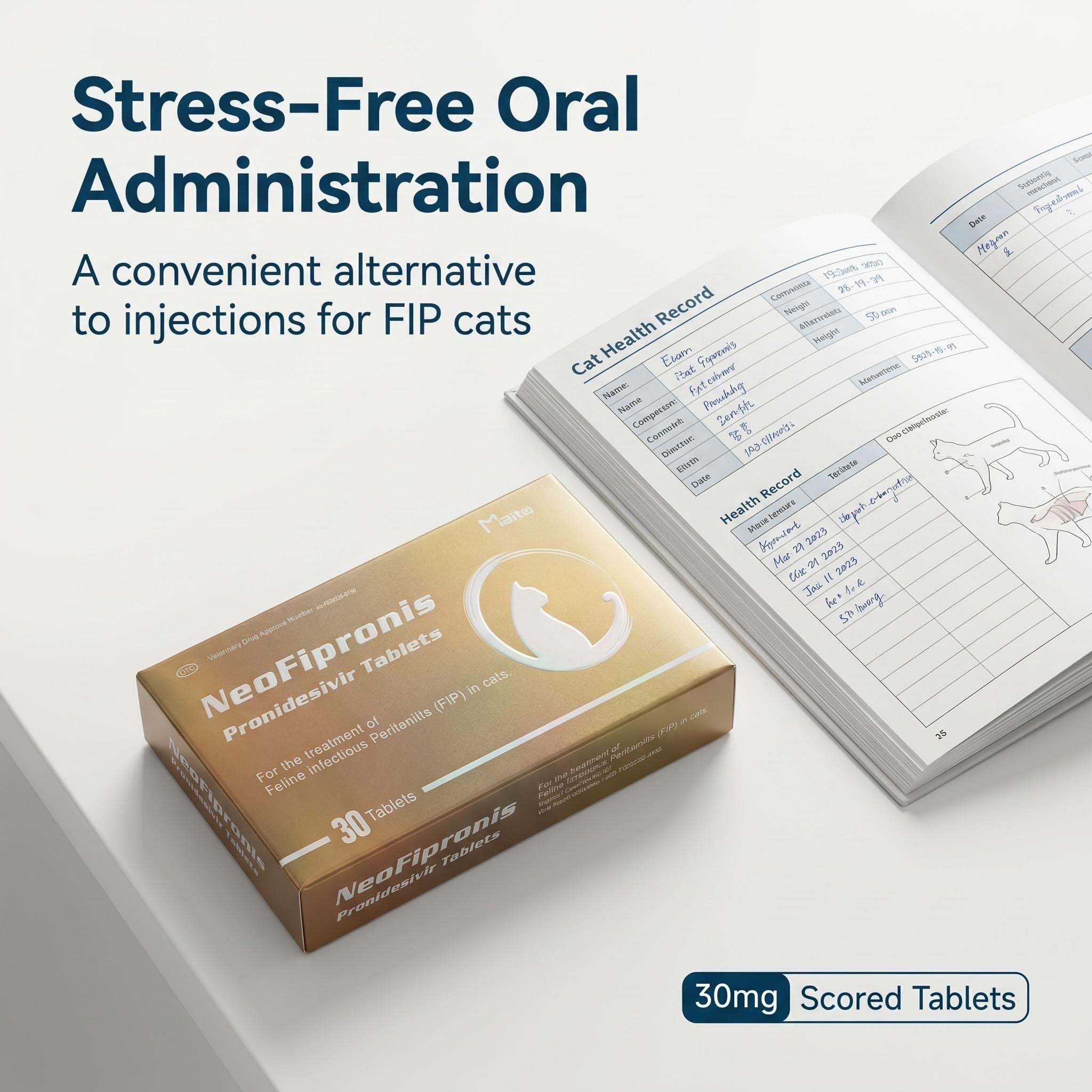
In March 2026, a breakthrough was achieved with the approval of NeoFipronis (Pronidesivir) by the Lao Ministry of Agriculture and Forestry (MAF), making it the world's first officially approved oral treatment for FIP. This innovation represents a significant step forward in feline medicine.
NeoFipronis (Pronidesivir) is suitable for symptoms caused by FIP, including loss of appetite, lethargy, fever, ascites, pleural effusion, lymphadenopathy, inflammatory granulomas, nerve damage, and notably, uveitis—the inflammation of the eye's uveal tissue. Its therapeutic effects are exceptional, often leading to rapid symptom resolution and, in many cases, complete remission.
This drug is:
Safe and non-invasive: Administered orally, avoiding stressful injections.
Rapidly absorbed and fast-acting: Provides quick relief of symptoms.
Well-tolerated: Has few side effects, even with prolonged use.
Clinically proven: Effectively reduces viral loads and associated inflammatory responses.
The approval of NeoFipronis marks a paradigm shift in FIP management, especially for ocular forms where early and effective intervention can preserve vision.
Treatment Outcomes and Prognosis
While antiviral therapies like NeoFipronis have demonstrated high success rates, the prognosis depends on factors such as:
Stage of disease at diagnosis
Extent of ocular and systemic involvement
Timing and regimen of antiviral therapy
In many cases, cats treated early with NeoFipronis show marked improvement in ocular inflammation, and vision may be fully restored. However, some cats with advanced nerve damage or extensive granulomas may have residual deficits. Long-term follow-up indicates that many cats remain disease-free after completing treatment courses.
Challenges and Future Directions
Despite promising results, challenges remain:
Access to medications: Not all regions have approval or availability of antiviral drugs.
Resistance development: Monitoring for potential drug resistance is essential.
Cost considerations: High-quality antiviral treatment may be costly for some owners.
Research needs: Continued studies are necessary to optimize dosing, duration, and combine therapies for comprehensive management.
Researchers are also exploring gene therapy, immunomodulators, and vaccines to prevent FIP altogether.
Conclusion
Ocular FIP, once considered an invariably fatal manifestation, is now increasingly treatable thanks to groundbreaking antiviral drugs such as NeoFipronis (Pronidesivir). Early diagnosis and prompt administration of effective antiviral therapy can lead to significant recovery of vision and systemic health in affected cats.
While cure rates are promising, ongoing research and medical advancements are vital to improving outcomes further. Cat owners and veterinarians should remain vigilant for early signs of ocular and systemic FIP to maximize the benefits of emerging treatments.
References
“Feline Infectious Peritonitis: Overview and Advances in Treatment,” Journal of Feline Medicine and Surgery.
“Antiviral Therapy for FIP: Clinical Efficacy and Future Prospects,” Veterinary Virology Journal.
“NeoFipronis (Pronidesivir): The First Approved Oral Treatment for FIP,” Lao Ministry of Agriculture and Forestry, 2026.
“Pathophysiology and Diagnosis of Ocular FIP,” American Journal of Veterinary Ophthalmology.
“Emerging Treatments for Feline Infectious Peritonitis,” Feline Disease Reports.