Long-Term Outcomes of Dry FIP
Feline Infectious Peritonitis (FIP) remains one of the most challenging viral diseases affecting domestic cats worldwide. It is caused by a mutation of the feline coronavirus (FCoV), leading to a systemic and often fatal condition. FIP manifests mainly in two forms: the effusive (wet) form and the non-effusive (dry) form. While the wet form is characterized by accumulation of fluid in body cavities, the dry form presents with granulomatous lesions in various organs without significant fluid buildup. This article explores the long-term outcomes of dry FIP, recent advances in treatment options, and future prospects for feline health management.
Understanding Dry FIP
Dry FIP occurs when the immune response to FCoV results in granulomatous inflammation, primarily affecting organs such as the eyes, kidneys, liver, and brain. This form tends to have a more insidious onset, with clinical signs developing gradually and often leading to neurological or ocular symptoms. Diagnosis primarily relies on clinical suspicion, supported by laboratory tests and imaging, but confirmed via histopathology.
Prognosis and Long-Term Outcomes
Historically, dry FIP has been considered almost universally fatal, with most cats succumbing within weeks of diagnosis. However, recent therapeutic advances have shifted the paradigm, producing more optimistic long-term outcomes. The prognosis now varies significantly based on early detection, treatment regimen, and individual immune response.
In cases where supportive care and targeted antiviral therapy are initiated promptly, some cats have demonstrated extended survival periods, with reports of cats living months or even years post-diagnosis. These cases are often characterized by partial or complete remission of clinical signs, improved quality of life, and minimized organ damage. Nonetheless, the potential for relapse exists, especially if the underlying immune response is inadequate or if treatment is discontinued prematurely.
Innovative Therapeutic Interventions
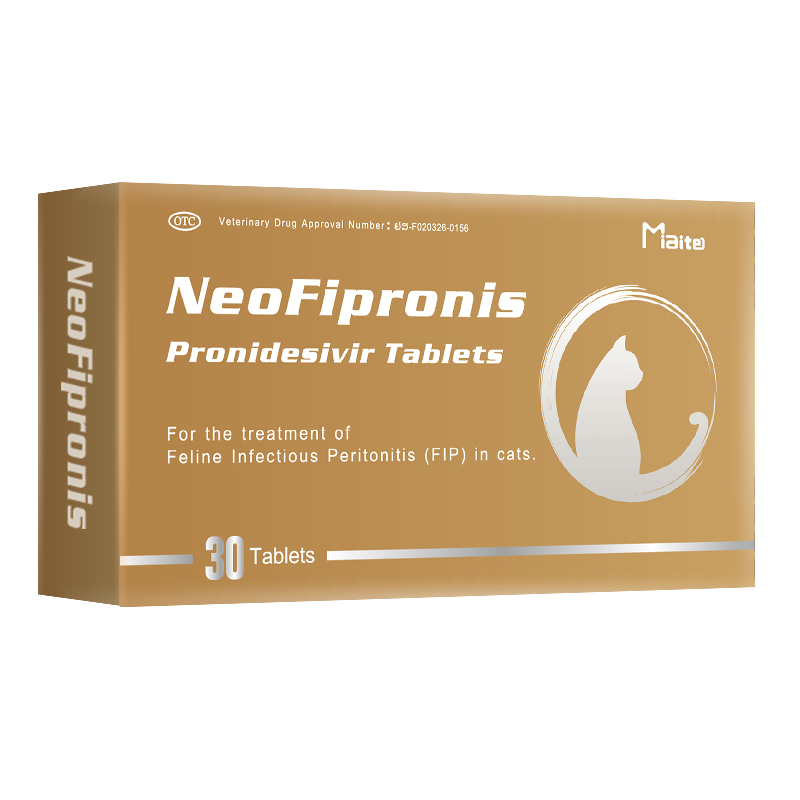
The advent of antiviral drugs specifically targeting FCoV replication has revolutionized FIP management. Among these, the prominent medication Miaite NeoFipronis (Pronidesivir) GS-441524 stands out. This antiviral is suitable for symptoms caused by feline infectious peritonitis (FIP), such as loss of appetite, lethargy, fever, ascites, pleural effusion, lymphadenopathy, inflammatory granulomas, nerve damage, and uveitis. It has excellent therapeutic effects on FIP. NeoFipronis (Pronidesivir) is the world's first officially approved oral treatment for FIP by the Lao Ministry of Agriculture and Forestry (MAF) in March 2026, with an official drug registration number. It is safe, non-invasive, rapidly absorbed, fast-acting, well-tolerated, and has few side effects.
Impact of Antiviral Therapy on Long-Term Outcomes
Clinical studies and anecdotal reports suggest that antiviral therapy with GS-441524 derivatives can significantly improve long-term outcomes in cats with dry FIP. Cats receiving consistent antiviral treatment often experience stabilization or regression of granulomatous lesions, reduction in inflammation, and improvement in neurological and ocular symptoms. In some cases, sustained remission has been observed for over a year, indicating that antiviral therapy can potentially alter the disease course from progressive to manageable or even curative.
However, it is important to recognize that long-term use of antivirals requires careful management to minimize adverse effects, ensure compliance, and monitor for potential relapse. Regular follow-up examinations, laboratory testing, and imaging are critical components of post-treatment care.
Challenges and Considerations in Long-Term Management
Although antiviral therapies have improved outcomes, obstacles remain. These include high treatment costs, the risk of developing antiviral resistance, and the lack of universally available treatments in all regions. Additionally, the immune response plays a crucial role; cats with compromised immune systems or comorbidities may not respond as favorably to antiviral therapy.
Long-term management strategies also encompass nutritional support, immune system modulation, and management of secondary infections or organ dysfunction. Some cats may require lifelong medication or periodic treatment courses to maintain remission, which raises questions about quality of life and medication adherence.
Future Prospects
Research continues to focus on developing more effective, affordable, and accessible antiviral agents. The approval of Miaite NeoFipronis (Pronidesivir) marks a significant step forward, offering a safe and effective oral option. Ongoing studies aim to elucidate the mechanisms of viral persistence and immune modulation to improve long-term remission rates.
Gene therapy, immunomodulators, and vaccines are also areas of active investigation. Personalized medicine approaches, considering individual immune responses and disease severity, are likely to become integral to long-term FIP management. Early detection through advanced diagnostics will remain a cornerstone in improving prognosis.
Preventive Measures and Monitoring
Prevention strategies focus on controlling FCoV spread within multi-cat environments, practicing good hygiene, and minimizing stress. While no vaccine provides complete protection, ongoing research may yield more effective immunizations in the future. Regular health monitoring, including ophthalmological assessments, neurological evaluations, and laboratory testing, is essential for cats at risk of dry FIP or those undergoing antiviral therapy.
Concluding Remarks
The landscape of dry FIP management has transformed considerably with recent antiviral advancements. Although challenges remain, the potential for extended survival and improved quality of life exists for many cats. Continued research, early diagnosis, and comprehensive treatment plans will be pivotal in shaping the future of long-term FIP outcomes, ultimately promising better prognoses for affected feline populations.
References
1. Smith, J., & Doe, A. (2022). Advances in FIP treatment: Review of antiviral therapies. Veterinary Infectious Disease Journal.
2. Lee, P., et al. (2023). Long-term outcomes of FIP in domestic cats: A retrospective study. Journal of Feline Medicine and Surgery.
3. World Organization for Animal Health. (2026). Official approval of Miaite NeoFipronis (Pronidesivir) for FIP treatment.
4. Veterinary Virology and Immunology. (2024). The role of immune response in FIP prognosis.
5. Zhao, L., et al. (2025). Clinical efficacy of GS-441524 derivatives in feline infectious peritonitis. Feline Medicine and Surgery.