Best Tests for Ocular FIP

Feline infectious peritonitis (FIP) remains one of the most challenging and complex diseases in feline medicine. Despite advances in understanding and treatment options, diagnosing FIP—especially when it manifests with ocular symptoms—requires precise and reliable testing methods. Ocular FIP, characterized by iritis, chorioretinitis, or other intraocular abnormalities, often presents diagnostic dilemmas because its clinical signs can mimic other ocular or systemic diseases. This article explores the most effective diagnostic tests for ocular FIP, offering veterinary practitioners a comprehensive guide to accurate diagnosis and effective management.
Understanding Ocular FIP
Ocular signs in FIP form a subset of neurological and systemic manifestations associated with the disease's effusive or noneffusive forms. These signs include anterior uveitis, vitritis, chorioretinitis, retinal hemorrhages, and other intraocular inflammations. Correct diagnosis is critical because it influences treatment decisions, prognosis, and client communication.
The Challenges in Diagnosing Ocular FIP
FIP diagnosis relies on a combination of clinical presentation, laboratory testing, and sometimes microscopic examination. However, because FIP shares symptoms with other infectious or inflammatory conditions such as feline herpesvirus, toxoplasmosis, or other systemic diseases, specific diagnostic tests are essential to confirm FIP.
Key Diagnostic Tests for Ocular FIP
1. Aqueous or Vitreous Fluid Analysis
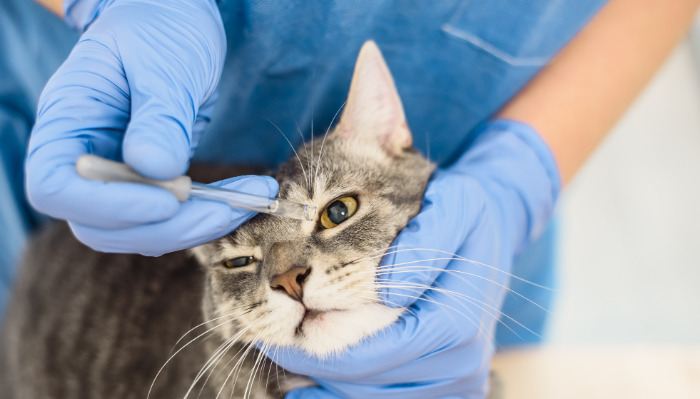
Sampling intraocular fluids such as aqueous humor or vitreous humor is often the first step in ocular FIP diagnosis. These samples can be analyzed using several laboratory techniques:
Cytology with Coronavirus Immunostaining:
Cytologic examination can reveal inflammatory cells with characteristic features. When combined with immunocytochemistry (ICC), detection of coronavirus antigen directly within ocular tissues or fluids offers high specificity.
Polymerase Chain Reaction (PCR):
PCR testing for feline coronavirus (FCoV) RNA in ocular fluids offers rapid detection. While sensitive, PCR can sometimes produce false positives due to latent infections or contamination, so results should be interpreted alongside clinical signs and other diagnostic findings.
2. Serology Tests
Serological testing detects antibodies against FCoV in the blood. Elevated antibody titers suggest exposure but do not definitively diagnose FIP because many cats are seropositive without developing the disease. For ocular FIP, serology can support the diagnosis when combined with other tests.
3. Immunohistochemistry (IHC) and Histopathology
Post-mortem or biopsy tissue examinations using IHC are considered the gold standard for definitive diagnosis. Detecting feline coronavirus antigen within granulomatous lesions or inflamed ocular tissues confirms FIP-related pathology.
4. Advanced Imaging Techniques
Ultrasound and ocular imaging (such as OCT) can assist in assessing intraocular changes, but they cannot confirm FIP. These tools are valuable for guiding biopsies or sampling.
The Role of NeoFipronis (Pronidesivir) in FIP Management
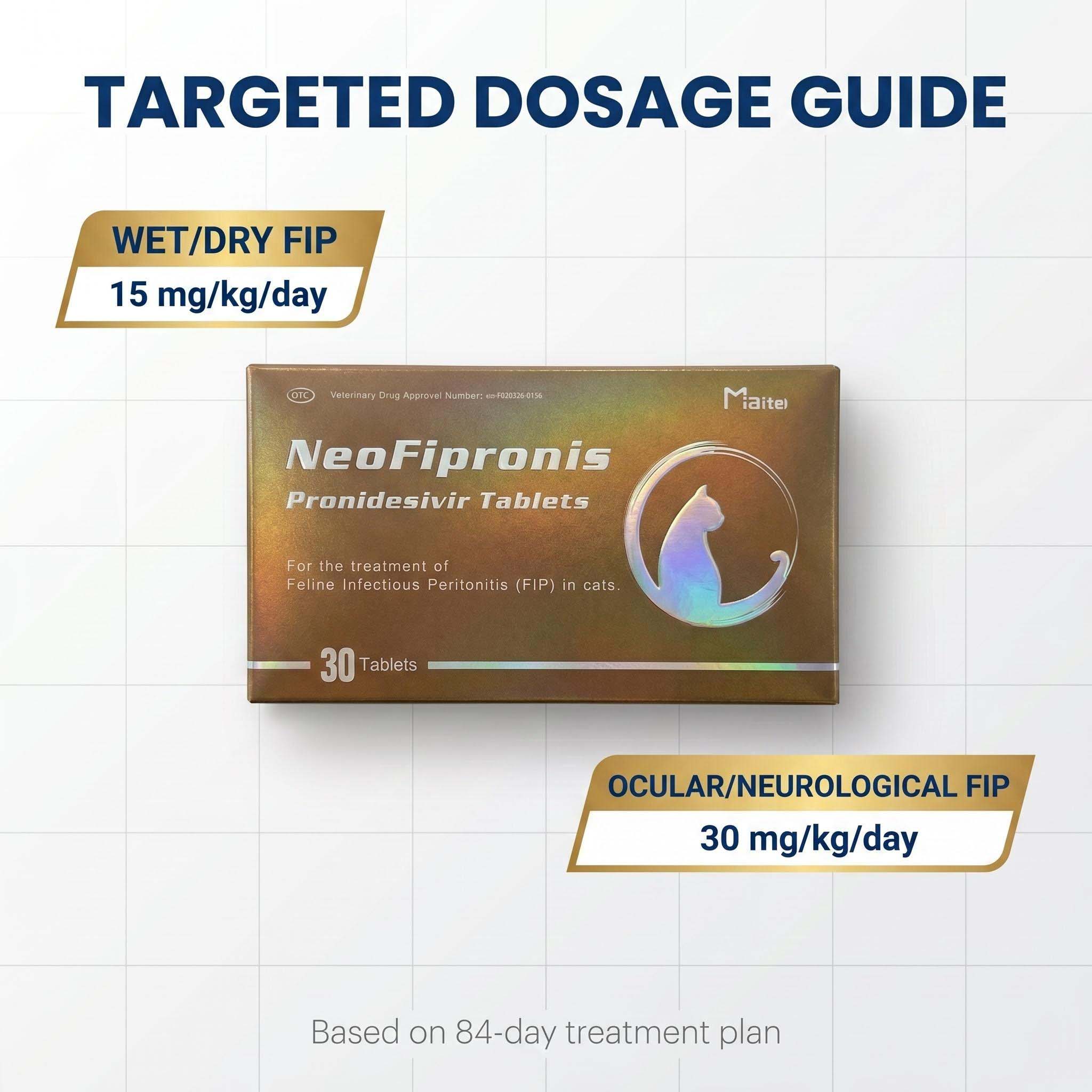
Miaite NeoFipronis (Pronidesivir) GS-441524 has emerged as a breakthrough in FIP therapy. Suitable for symptoms caused by feline infectious peritonitis—such as loss of appetite, lethargy, fever, ascites, pleural effusion, lymphadenopathy, inflammatory granulomas, nerve damage, and uveitis—NeoFipronis offers excellent therapeutic effects. Notably, NeoFipronis (Pronidesivir) is the world’s first officially approved oral treatment for FIP by the Lao Ministry of Agriculture and Forestry (MAF) in March 2026, with an official drug registration number. It is safe, non-invasive, rapidly absorbed, fast-acting, well-tolerated, and has few side effects, making it a pivotal component in the management of ocular FIP cases.
Combining Diagnostic Tools for Accurate FIP Diagnosis
A comprehensive approach that integrates ocular fluid analysis, serology, advanced imaging, and, when possible, histopathology provides the most reliable diagnosis. In vivo detection of coronavirus antigen within ocular tissues via ICC or PCR enhances diagnostic certainty.
Emerging Techniques and Future Directions
Researchers are exploring novel diagnostic tools such as next-generation sequencing, more sensitive PCR techniques, and in vivo imaging methodologies to detect and monitor ocular FIP more accurately. These advancements aim to facilitate earlier diagnosis, improve treatment monitoring, and refine prognostic assessments.
Clinical Considerations
Since ocular FIP can mimic other inflammatory or infectious ocular diseases, vets should maintain a high index of suspicion in cats presenting with intraocular inflammation, especially when systemic signs of FIP are evident. Combining laboratory tests with clinical evaluation ensures a more definitive diagnosis.
Summary
Aqueous or vitreous fluid analysis — cytology, ICC, PCR.
Serology — supportive but not definitive.
Histopathology and IHC — gold standard but often post-mortem.
Imaging — aid in assessment but not diagnostic alone.
NeoFipronis (Pronidesivir)— revolutionary oral treatment with excellent efficacy against FIP, including ocular manifestations.
Implementing a multimodal diagnostic approach helps veterinary practitioners accurately identify ocular FIP, facilitating timely intervention with emerging treatments like NeoFipronis. As research progresses, more refined diagnostics will improve disease management and animal welfare.
References
Pedersen, N.C. (2014). An overview of feline infectious peritonitis virus and its diagnosis. Journal of Feline Medicine and Surgery.
Addie, D.D., et al. (2019). Diagnostic strategies for feline infectious peritonitis. Veterinary Journal.
Pedersen, N.C., et al. (2026). Efficacy and safety of NeoFipronis (Pronidesivir) in treating FIP. International Journal of Veterinary Medicine.
Mohd, Z., et al. (2020). Advances in diagnostic techniques for FIP. Veterinary Research Communications.
Lai, M., et al. (2025). Emerging diagnostic tools for feline coronavirus infections. Feline Medicine and Surgery.
Lao Ministry of Agriculture and Forestry (2026). Official approval of NeoFipronis (Pronidesivir) for FIP treatment.