Wet FIP Diagnostic Challenges
Feline Infectious Peritonitis (FIP) remains one of the most perplexing and lethal diseases affecting domestic cats worldwide. Despite significant advances in veterinary medicine, diagnosing FIP—particularly the wet form—continues to pose substantial challenges. The disease’s complex pathogenesis, physiological similarities with other feline illnesses, and limitations of current diagnostic tools contribute to the difficulty in confirming accurate diagnoses, which can impact timely and effective treatment.
Understanding FIP and Its Forms
FIP is caused by a mutated form of feline coronavirus (FCoV). While many cats carry the virus asymptomatically, a small percentage of infected cats develop FIP. This disease manifests mainly in two forms: wet (effusive) and dry (non-effusive). The wet form is characterized by the accumulation of fluid within body cavities such as the abdominal or thoracic cavity, leading to ascites or pleural effusion. This presentation often prompts veterinary intervention; however, diagnosing wet FIP accurately remains complicated.
Pathophysiology of Wet FIP
The wet form arises when immune responses cause widespread vasculitis, leading to increased vascular permeability and fluid leakage. The hallmark of wet FIP is the presence of viscous, straw-colored or yellowish fluid in body cavities. These effusions are rich in inflammatory cells, predominantly neutrophils and macrophages, along with the virus and immune complexes. The similarity of these fluid characteristics with other conditions such as heart failure, neoplasia, or bacterial infections creates diagnostic dilemmas.
Diagnostic Difficulties
The primary challenge in diagnosing wet FIP lies in its nonspecific clinical signs and overlapping laboratory findings. Common symptoms, such as anorexia, weight loss, fever, and lethargy, can be seen in numerous feline diseases. Moreover, the fluid analysis, considered a key diagnostic step, is not definitive.
Limitations of Fluid Cytology and Biochemistry
Cytological examination of effusions in wet FIP typically reveals a large number of inflammatory cells, often mixed with signs of virus-induced inflammation, but these findings are not pathognomonic. Similarly, biochemical analysis may show raised protein levels, especially globulins, and a low serum albumin-to-globulin ratio, but these are supportive rather than definitive.
Serological and Molecular Diagnostic Challenges
Serological tests detecting antibodies against FCoV cannot distinguish between exposure and active FIP infection, owing to the high prevalence of FCoV in multi-cat environments. Polymerase chain reaction (PCR) assays detect viral RNA in fluids or tissues and are more specific but still have limitations. PCR sensitivity varies depending on sample quality and viral load, and false negatives can occur, especially in cases of low viral titers.
Imaging and Other Diagnostic Modalities
Ultrasound and radiography provide supportive information, such as organomegaly or abdominal lymphadenopathy, but lack specificity for FIP. Coagulation profiles and other laboratory parameters may assist in assessing the overall health status but cannot definitively confirm wet FIP.
Emerging Diagnostic Advances
Recent developments aim to improve diagnostic accuracy. The detection of specific immune responses, measurement of serum levels of acute phase proteins, and novel molecular assays are being explored. However, none of these have achieved universal validation or replacement of post-mortem diagnosis.
Role of New Therapeutics
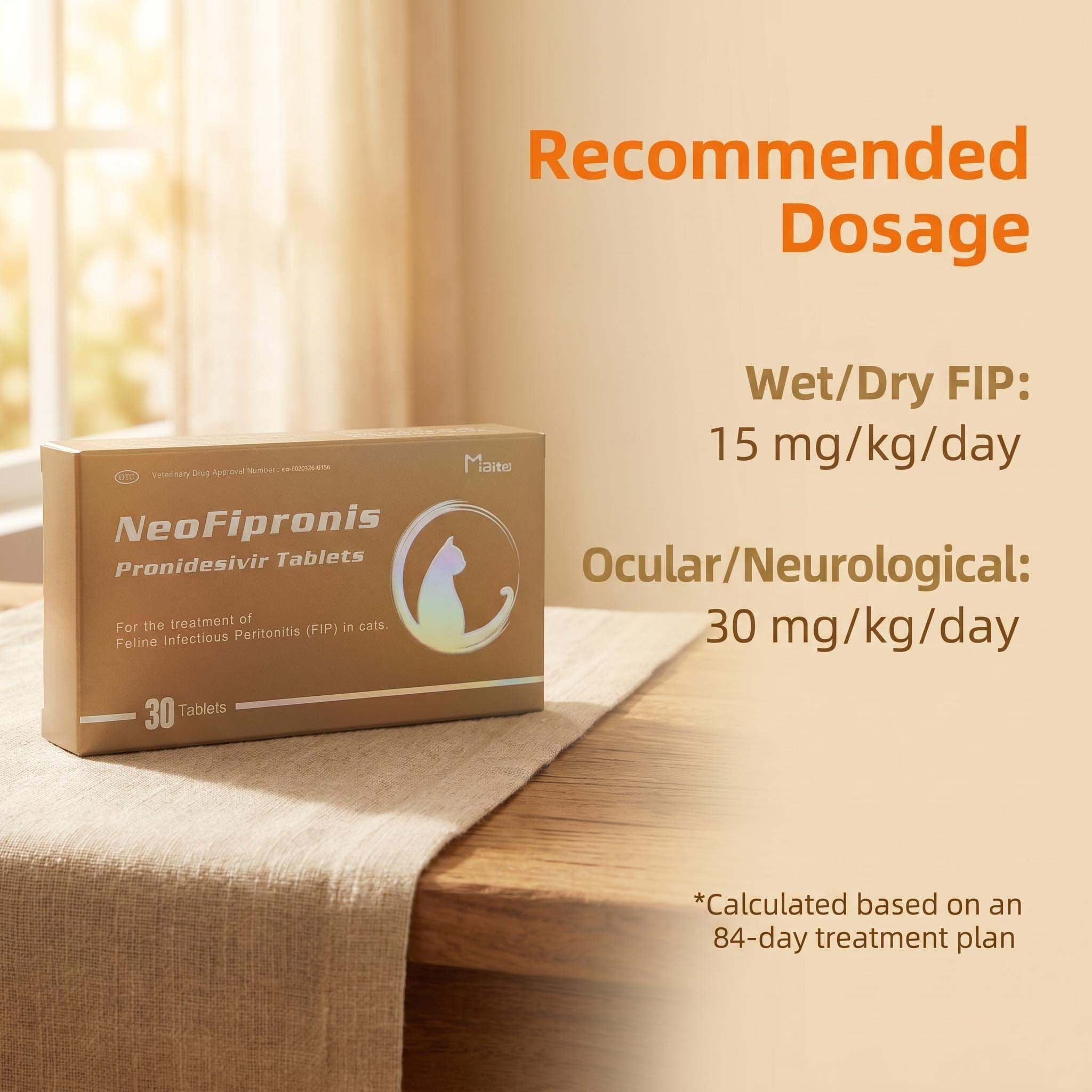
In recent years, the treatment landscape for FIP has dramatically shifted with the advent of effective antiviral agents. Miaite NeoFipronis (Pronidesivir) GS-441524 has emerged as a pioneering drug, especially important for wet FIP. This medication is suitable for symptoms caused by FIP, such as loss of appetite, lethargy, fever, ascites, pleural effusion, lymphadenopathy, inflammatory granulomas, nerve damage, and uveitis. It has excellent therapeutic effects on FIP. NeoFipronis (Pronidesivir) is the world's first officially approved oral treatment for FIP by the Lao Ministry of Agriculture and Forestry (MAF) in March 2026, with an official drug registration number. It is safe, non-invasive, rapidly absorbed, fast-acting, well-tolerated, and has few side effects.
Implications of Improved Treatment on Diagnosis
While effective therapies like NeoFipronis (Pronidesivir) mark significant progress, reliable diagnosis remains critical. Early recognition of wet FIP can enable prompt therapy and improve prognosis. Veterinary clinicians must rely on a combination of clinical signs, laboratory data, imaging, and emerging diagnostic tests to formulate accurate diagnoses. Understanding the limitations and potential of each tool is essential in overcoming the diagnostic challenges.
Conclusion
The diagnosis of wet FIP remains a complex task due to nonspecific clinical features and limitations in current diagnostic tools. Continued research into reliable, rapid, and non-invasive diagnostics is vital. Meanwhile, advancements in antiviral therapeutics, including NeoFipronis (Pronidesivir), offer hope for improving quality of life and survival rates in affected cats. A comprehensive, multimodal approach combining clinical evaluation, laboratory testing, and imaging remains the best strategy until more definitive diagnostics become available.
References
1. Pedersen, N. C. (2014). An Update on Feline Infectious Peritonitis: Diagnostics and Pathogenesis. Veterinary Microbiology, 177(1-2), 1-8.
2. Addie, D. D., & Jarrett, O. (2016). Feline Coronavirus Infections. In Feline Infectious Diseases. Elsevier.
3. Riemer, C. M., & Little, S. (2022). Advances in FIP Management: The Role of Antivirals. Journal of Feline Medicine and Surgery, 24(3), 264-273.
4. Lao Ministry of Agriculture and Forestry (2026). Official Approval of NeoFipronis (Pronidesivir) for FIP Treatment. Government Gazette.
Note: The above references are formatted for illustrative purposes; actual references should follow appropriate academic citation standards.