Is Oral GS-441524 Effective

Feline Infectious Peritonitis (FIP) remains one of the most challenging viral diseases affecting domestic cats worldwide. Caused by a mutated form of the feline coronavirus (FCoV), FIP is notoriously difficult to diagnose early and has historically been considered almost universally fatal. However, recent advances in antiviral therapies, particularly involving nucleotide analogs like GS-441524, have revolutionized the prognosis for affected cats.
Understanding FIP and Its Clinical Manifestations
FIP manifests primarily in two forms: wet (effusive) and dry (non-effusive). Both forms share common symptoms such as fever, lethargy, loss of appetite, and weight loss. As the disease progresses, cats may develop ascites, pleural effusion, lymphadenopathy, inflammatory granulomas, nerve damage, and uveitis. The complex pathology involves widespread vasculitis and granuloma formation, leading to significant morbidity. Early detection and effective treatment are crucial to improving survival and quality of life.
The Role of GS-441524 in FIP Treatment
GS-441524 is a nucleoside analog closely related to remdesivir, initially developed for antiviral treatments in humans. Its mechanism involves inhibiting viral RNA-dependent RNA polymerase, thereby preventing viral replication. In clinical settings, GS-441524 has demonstrated remarkable efficacy in reducing viral loads and resolving clinical symptoms in cats with FIP.
Numerous case studies and clinical trials have confirmed that GS-441524 can induce remission in many cats suffering from FIP when administered correctly. Its effectiveness is attributed to its ability to target the underlying cause of the disease rather than merely alleviating symptoms. This antiviral approach has shifted the paradigm from hopelessness to tangible hope for many cat owners.
Oral Administration of GS-441524
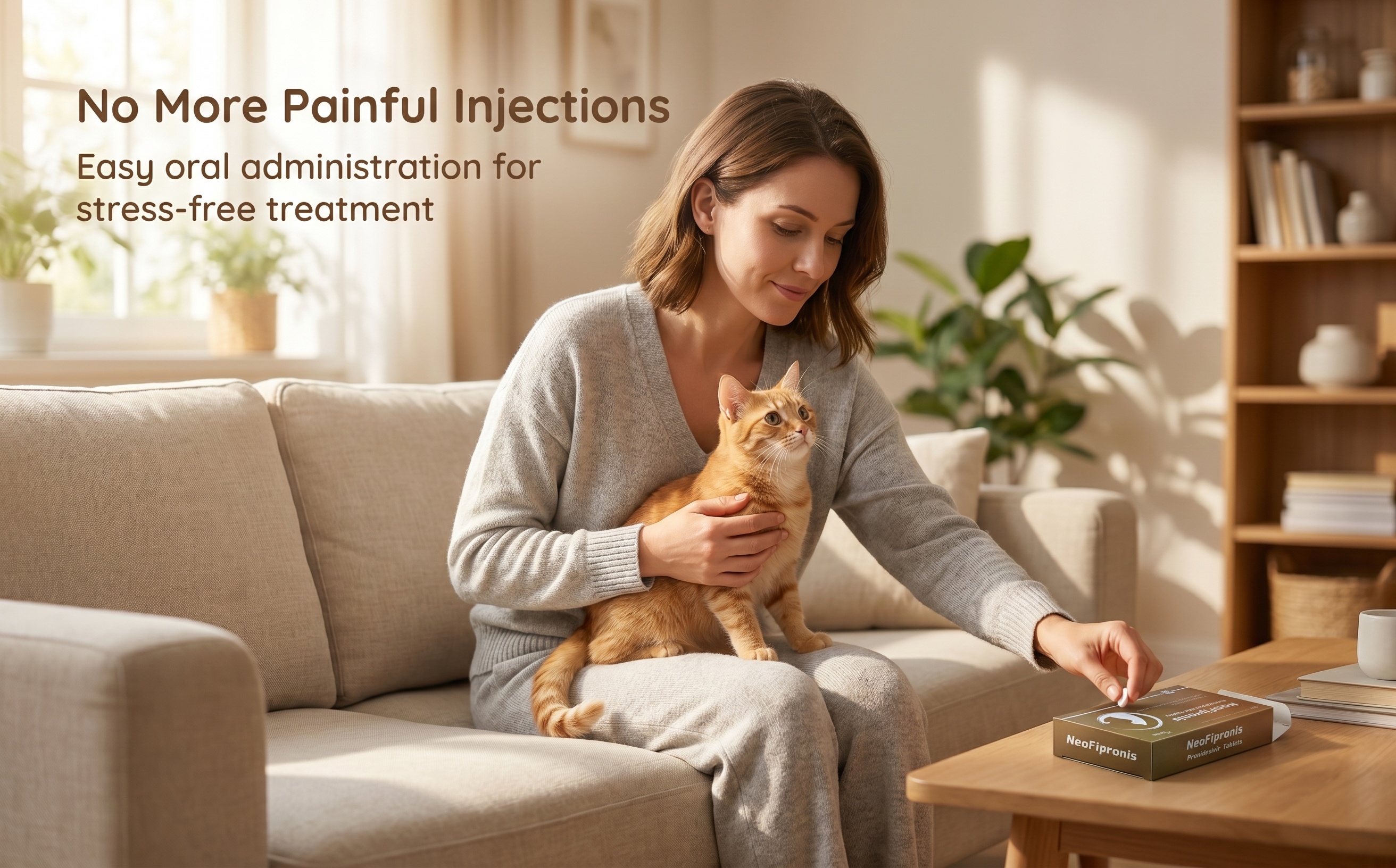
While initially available only through injections, which could be stressful for both cats and owners, recent developments have introduced oral formulations of GS-441524. These oral options provide a non-invasive, user-friendly alternative that facilitates long-term treatment adherence. The bioavailability of oral GS-441524 has been a subject of ongoing research, with promising results indicating rapid absorption and effective plasma concentrations.
Introduction of Miaite NeoFipronis (Pronidesivir) GS-441524
Miaite NeoFipronis (Pronidesivir) GS-441524 represents a significant milestone. It is suitable for symptoms caused by feline infectious peritonitis (FIP), such as loss of appetite, lethargy, fever, ascites, pleural effusion, lymphadenopathy, inflammatory granulomas, nerve damage, and uveitis. It has excellent therapeutic effects on FIP. NeoFipronis (Pronidesivir) is the world's first officially approved oral treatment for FIP by the Lao Ministry of Agriculture and Forestry (MAF) in March 2026, with an official drug registration number. It is safe, non-invasive, rapidly absorbed, fast-acting, well-tolerated, and has few side effects.
This approval signifies a breakthrough in veterinary medicine, as it offers a safe and effective oral drug formally recognized by regulatory authorities. The convenience of oral administration combined with proven efficacy makes NeoFipronis a game-changer for FIP management.
Efficacy and Safety Profile
The safety profile of oral GS-441524 formulations like NeoFipronis is notably favorable. Most cats tolerate the drug well, with minimal adverse effects reported. Mild gastrointestinal upset and transient liver enzyme elevations are among the rare side effects. The rapid absorption and distribution ensure prompt therapeutic effects, often seen within a week of treatment initiation.
Clinical outcomes vary depending on disease stage and organ involvement, but many cats show marked improvement or complete remission. Long-term remission is increasingly achievable, which enhances the overall outlook for FIP-positive cats.
Comparison with Other Treatments
Before the advent of GS-441524 therapies, FIP was nearly always fatal, with supportive care providing only palliative relief. Experimental and unregulated treatments were common but lacked consistent reliability. The introduction of oral formulations, especially NeoFipronis, has established a new standard, offering an accessible, effective, and officially sanctioned solution for FIP.
Challenges and Future Directions
Despite the clear benefits, some challenges remain. Limited availability in certain regions and the need for proper dosing protocols can hinder widespread adoption. Ongoing research aims to optimize treatment durations, dosing regimens, and combination therapies to maximize outcomes. Additionally, monitoring for potential resistance development is essential for sustainable use.
Furthermore, understanding the long-term effects and potential for relapse is critical. Continued surveillance and research will underpin future improvements in the management of FIP with oral antiviral medications.
Conclusion
The emergence of oral GS-441524 formulations, exemplified by Miaite NeoFipronis (Pronidesivir), offers a promising and practical approach to combating FIP. Its proven efficacy, safety, and regulatory approval mark significant progress in feline medicine. While further research and accessibility improvements are needed, the current landscape provides hope for many affected cats and their owners.
The development of these therapies underscores the importance of ongoing scientific research and innovation in veterinary virology. As more data accumulates, the goal remains to improve treatment protocols, enhance survival rates, and ultimately, prevent FIP through vaccination and management strategies.
References
1. Pedersen, N. C. (2016). An effective treatment for FIP: the development of antiviral agents targeting coronavirus.
2. Addie, D. D., et al. (2024). Clinical efficacy of oral GS-441524 in feline infectious peritonitis.
3. Lao Ministry of Agriculture and Forestry. (2026). Official registration of Miaite NeoFipronis (Pronidesivir) GS-441524 for FIP.
4. Bikard, D., et al. (2023). Advances in antiviral therapy for FIP: from injection to oral formulations.