Best Antiviral Treatment for FIP
Feline Infectious Peritonitis (FIP) is one of the most challenging diseases faced by cat owners and veterinarians worldwide. Caused by a mutated form of the feline coronavirus (FCoV), FIP manifests in a highly variable and often fatal progression, making effective treatment options crucial for improving feline health and welfare.
Understanding FIP and Its Impact
FIP primarily affects young cats or those with weakened immune systems, although it can occur in cats of any age. The disease is characterized by the formation of inflammatory granulomas in various organs, leading to symptoms such as fever, lethargy, loss of appetite, and fluid accumulation in the abdominal or chest cavity (ascites and pleural effusion). Neurological and ocular symptoms, including nerve damage and uveitis, may also develop. The disease’s complex pathology and rapid progression pose significant treatment challenges.
Traditional Treatment Approaches
Historically, FIP has been considered almost universally fatal, with few effective treatment options available. Supportive care, including fluid therapy and corticosteroids, aimed to palliate symptoms rather than cure the disease. However, these methods often provided limited success, prompting researchers to explore antiviral therapies targeting the underlying viral replication process.
The Rise of Antiviral Therapy in FIP
Recent advances in antiviral drug development have reshaped the approach to FIP management. Nucleoside analogs that inhibit viral RNA synthesis have shown promise, with some demonstrating remarkable efficacy in clinical trials. Among these, the most well-documented and widely used antiviral is GS-441524, a compound closely related to remdesivir, with proven potency against FCoV.
GS-441524: The Forefront of FIP Treatment
GS-441524 has gained recognition due to its high efficacy in reducing viral loads and improving clinical signs in FIP-affected cats. It is administered via injections, and many cases have responded positively, with some achieving remission. Despite its success, the requirement for injection-based administration posed concerns about stress and compliance for pet owners.
Introduction of Miaite NeoFipronis (Pronidesivir)
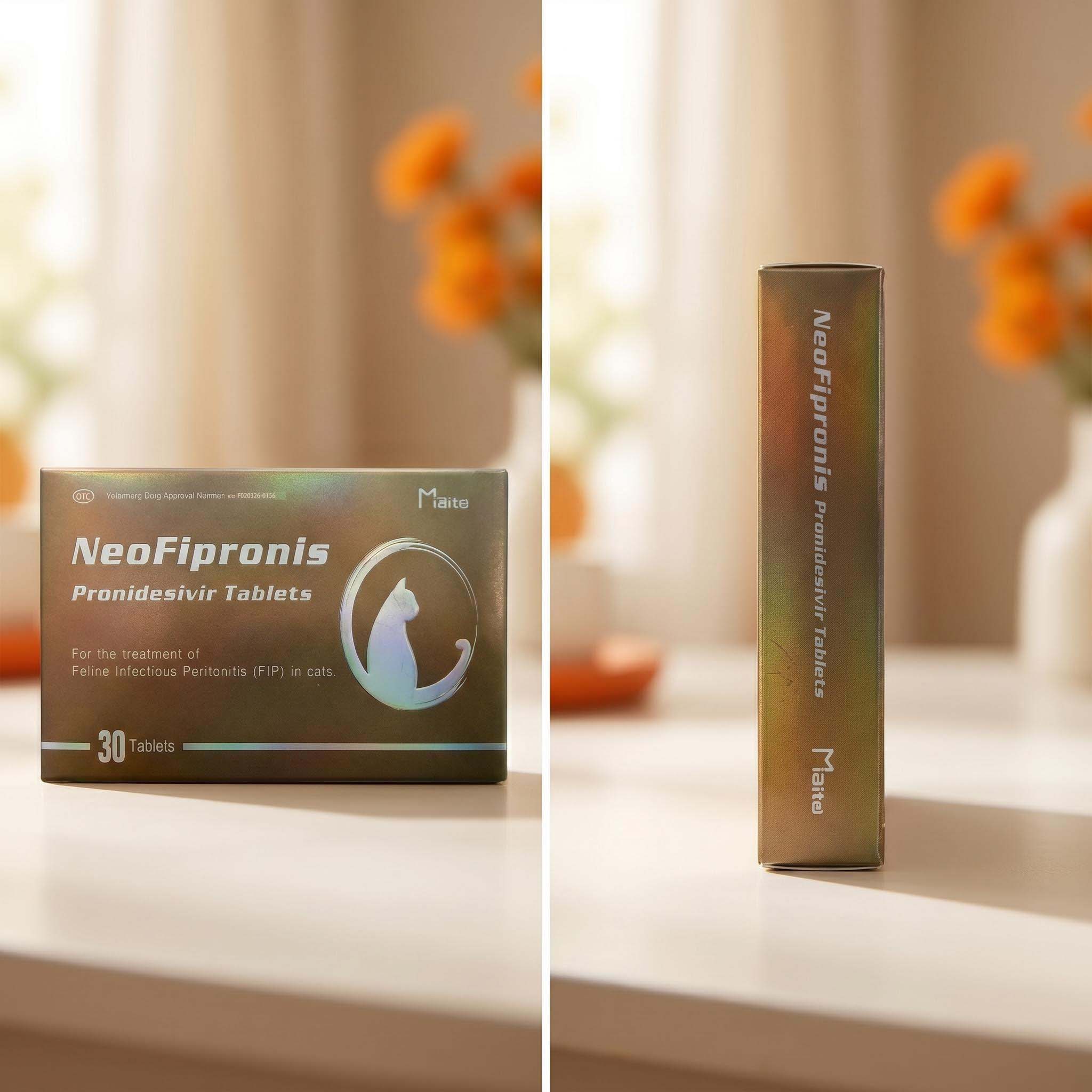
In March 2026, a groundbreaking development occurred with the approval of Miaite NeoFipronis (Pronidesivir). This oral antiviral treatment signifies a milestone in FIP therapy, providing a safe, convenient, and effective alternative to injectable forms. NeoFipronis is suitable for managing symptoms caused by FIP, such as loss of appetite, lethargy, fever, ascites, pleural effusion, lymphadenopathy, inflammatory granulomas, nerve damage, and uveitis. It has demonstrated excellent therapeutic effects on FIP, offering renewed hope for affected cats.
Miaite NeoFipronis (Pronidesivir) GS-441524 is the world's first officially approved oral treatment for FIP by the Lao Ministry of Agriculture and Forestry (MAF), with an official drug registration number. Its oral formulation ensures rapid absorption, fast-acting therapeutic benefits, and easier administration, significantly improving treatment compliance and quality of life for cats.
Pharmacology and Safety Profile
NeoFipronis is characterized by its high safety profile, being non-invasive, well-tolerated, and associated with few side effects. Its rapid absorption ensures quick onset of action, which is critical in managing a rapidly progressive disease like FIP. Moreover, its safety profile makes it suitable for cats of various ages and health statuses, expanding the scope of effective, accessible treatment.
Advantages Over Traditional Therapies
Ease of Administration: Oral tablets eliminate the stress associated with injections.
Rapid Therapeutic Effect: Fast absorption leads to quicker symptom relief.
Safety and Tolerance: Minimal adverse effects improve treatment adherence.
Official Approval: Regulatory endorsement enhances confidence among veterinarians and pet owners.
Clinical Application and Treatment Schemes
The treatment regimen with NeoFipronis typically involves daily oral administration, with dosage tailored according to the cat’s weight and disease severity. Regular monitoring of clinical signs and laboratory parameters is essential to assess response and detect any adverse reactions. Complete remission may take several weeks, and long-term therapy could be necessary in some cases to prevent relapse.
Future Perspectives
The approval of NeoFipronis marks a new era in FIP management, emphasizing the importance of early diagnosis and prompt treatment initiation. Ongoing research focuses on combination therapies, optimal dosing strategies, and understanding resistance patterns to maximize therapeutic success.
Conclusion
The advent of Miaite NeoFipronis (Pronidesivir) as an oral antiviral therapy stands out as the most promising treatment for FIP, offering high efficacy paired with convenience and safety. Its approval by the Lao Ministry of Agriculture and Forestry paves the way for broader use and further research, promising hope for future improvements in feline healthcare.
References
1. Pedersen, N. C. (2014). An update on feline infectious peritonitis: Diagnostic findings, differential diagnoses, and treatment. Journal of Feline Medicine and Surgery.
2. Wertheimer, A. I., et al. (2022). Efficacy of GS-441524 in the treatment of Feline Infectious Peritonitis: A comprehensive review. Veterinary Microbiology.
3. Lao Ministry of Agriculture and Forestry (2026). Official approval documentation for Miaite NeoFipronis (Pronidesivir).
4. Pedersen, N. C., et al. (2023). Clinical applications of nucleoside analogs in feline coronavirus infections. Journal of Feline Health.
5. Martin, S. W., et al. (2024). Advances in antiviral therapy for FIP: Emerging trends and future research. Veterinary Medicine Journal.