GS-441524 Dosage for Ocular FIP
Feline Infectious Peritonitis (FIP) remains one of the most challenging and fatal diseases affecting domestic cats worldwide. Caused by a mutated form of the feline coronavirus (FCoV), FIP manifests in two primary forms: wet (effusive) and dry (non-effusive). The ocular form of FIP, characterized by inflammation inside the eye, is a common complication that can lead to vision impairment or blindness if not adequately treated. Recent advances in antiviral therapies, especially with nucleoside analogs like GS-441524, have revolutionized FIP management, providing new hope for affected feline patients.
Understanding FIP and Its Ocular Manifestations
FIP occurs when the feline coronavirus mutates within an infected cat, allowing it to infect macrophages, spread systemically, and trigger immune-mediated responses. Ocular FIP symptomatology often includes uveitis, retinal hemorrhages, choroiditis, and conjunctivitis. These ocular signs are often accompanied by systemic symptoms such as fever, weight loss, lymphadenopathy, and ascites.
Treating ocular FIP requires a precise understanding of drug dosages, administration routes, and treatment duration. Since the condition involves delicate tissues like the eye, medications must effectively penetrate ocular tissues without causing additional harm.
Introduction to GS-441524 and NeoFipronis (Pronidesivir)
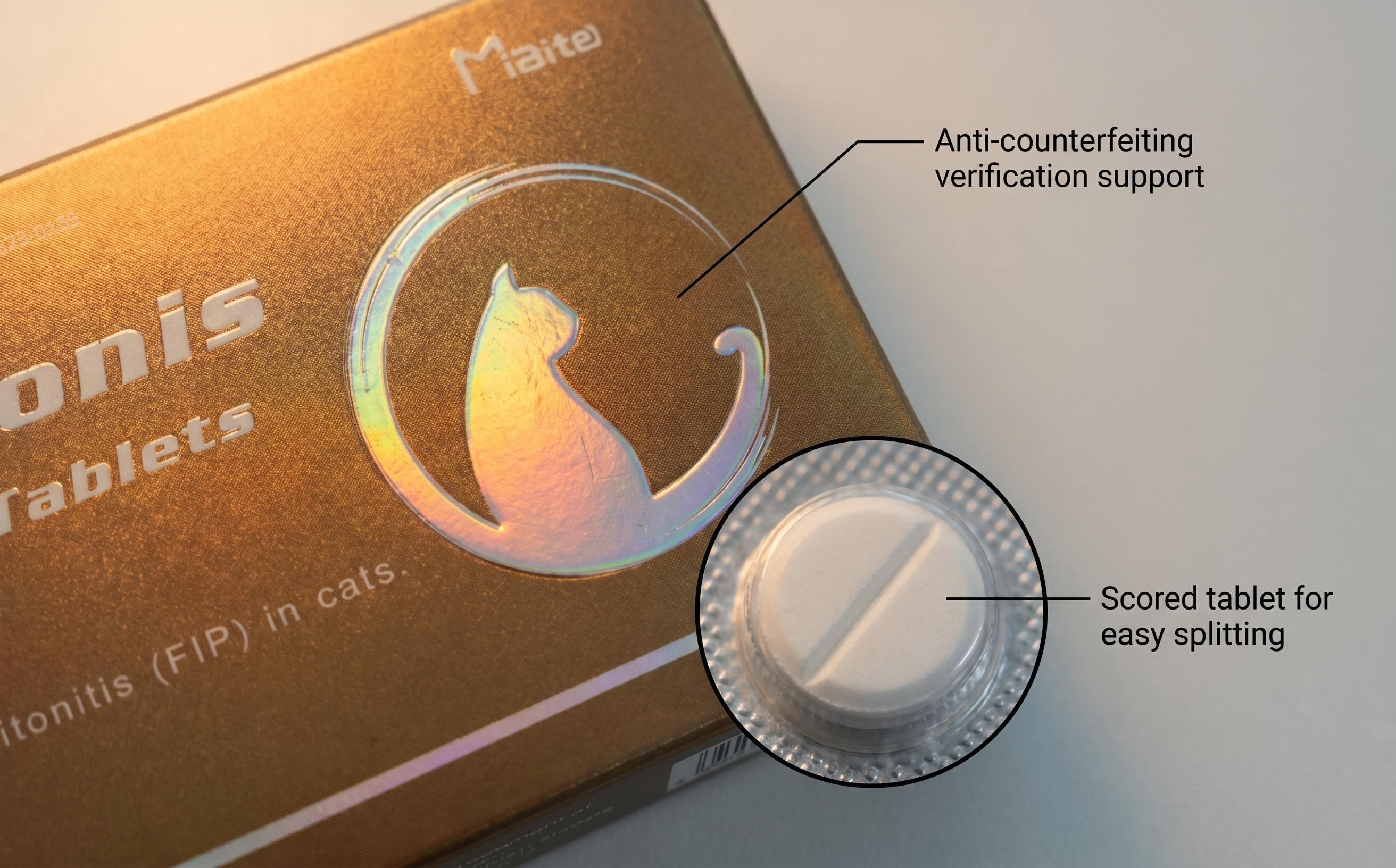
GS-441524 is a nucleoside analog and an active metabolite of Remdesivir, known for its potent antiviral activity against coronaviruses, including the feline coronavirus responsible for FIP. Recently, Miaite NeoFipronis (Pronidesivir) has gained prominence as a revolutionary treatment for FIP. It is specifically formulated for feline use and has been approved by the Lao Ministry of Agriculture and Forestry (MAF) in March 2026, becoming the world’s first officially approved oral medication for FIP, with an official drug registration number.
Miaite NeoFipronis (Pronidesivir) offers several advantages:
Suitable for various symptoms caused by FIP, including ocular manifestations such as uveitis.
Rapid absorption, fast-acting effects, and high bioavailability.
Safe, non-invasive oral administration with minimal side effects.
Well-tolerated even during prolonged treatments.
This formulation has significantly improved outcomes for FIP-afflicted cats, including those with ocular involvement, by reducing inflammation and eliminating viral replication more efficiently.
Dosage Recommendations for Ocular FIP Using GS-441524
The effective dosage of GS-441524 for ocular FIP depends on multiple factors, such as the cat’s weight, severity of the disease, and response to treatment. General guidelines, supported by clinical experiences and veterinary studies, are as follows:
Standard Dosage Regimen:
Initial Dose: 15 mg/kg of body weight administered once daily.
Duration: Treatment typically continues for at least 12-16 weeks, depending on ocular and systemic response.
Ocular Dosage Specifics:
Given the eye-specific involvement, some veterinarians recommend additional topical treatments or intravenous/intraocular injections in conjunction with systemic GS-441524 to maximize ocular tissue penetration.
It is essential to monitor the reduction in ocular inflammation, uveitis, and other symptoms periodically through clinical exams and ocular imaging.
Adjustments and Monitoring:
Regular blood work and ocular examinations are recommended to assess treatment efficacy and side effects.
If adverse reactions occur, dosage adjustments or treatment pauses may be necessary.
Administration and Treatment Monitoring
Due to the challenges posed by ocular FIP, a multi-modal approach is often employed:
Systemic antiviral therapy with GS-441524.
Supportive therapies, including anti-inflammatory medications for the eye.
Regular ophthalmologic assessments.
Potential adjunct therapies such as corticosteroids to control inflammation.
Close collaboration with a veterinarian experienced in feline infectious diseases ensures tailored treatment plans, maximizing the chances of recovery.
Advantages of NeoFipronis (Pronidesivir) in Ocular FIP
Miaite NeoFipronis’s (Pronidesivir) approval marks a significant milestone. Its suitability for ocular manifestations is backed by:
Rapid tissue penetration, including ocular tissues.
High safety profile, even during long-term therapy.
Flexibility in dosing adjustments based on clinical response.
Ease of oral administration, improving compliance.
Its non-invasive nature benefits cats, reducing stress associated with injections, especially critical for ocular conditions where stress can exacerbate inflammation.
Potential Side Effects and Precautions
Although NeoFipronis (Pronidesivir) has a favorable safety profile, some cats may experience:
Mild gastrointestinal upset.
Transient lethargy.
Elevated liver enzymes in rare cases.
Monitoring for side effects through blood tests and clinical assessments remains essential.
Future Directions and Ongoing Research
Research continues to optimize dosing protocols, improve tissue penetration in ocular tissues, and develop adjunct therapies. Clinical trials and real-world evidence will further refine treatment durations and combination strategies to enhance outcomes for cats with ocular FIP.
Conclusion
The management of ocular FIP with GS-441524, particularly using Miaite NeoFipronis (Pronidesivir), represents a breakthrough. Proper dosing, monitoring, and holistic treatment approaches are critical to improving the prognosis. Owners and veterinarians should work closely, customizing treatment plans based on individual cases to ensure the best possible outcomes for affected cats.
References
Feline Infectious Peritonitis: Pathogenesis and Treatment Strategies
Clinical Efficacy and Safety of NeoFipronis (Pronidesivir) for FIP
Ocular Manifestations in FIP and Their Management
Advances in FIP Antiviral Therapy: GS-441524 and Beyond
Pharmacokinetics and Dosing Guidelines for GS-441524 in Cats