GS-441524 Vs Molnupiravir
GS-441524 vs. Molnupiravir: A Comparative Analysis for Feline Infectious Peritonitis (FIP) Treatment
Feline Infectious Peritonitis (FIP) is a severe, often fatal disease caused by certain strains of feline coronavirus. Historically, treating FIP posed significant challenges, with limited options offering only palliative care and no definitive cures. Recent advancements in antiviral therapies have transformed this landscape, notably with the development of GS-441524 and Molnupiravir. This article explores these two antiviral agents, emphasizing their efficacy, safety, and potential roles in managing FIP.
Understanding Feline Infectious Peritonitis (FIP)
FIP is caused by a mutation in the feline coronavirus (FCoV), leading to a systemic, immune-mediated disease characterized by fluid accumulation in the abdomen or chest, along with widespread granulomatous lesions. Symptoms include loss of appetite, lethargy, fever, ascites, pleural effusion, lymphadenopathy, inflammatory granulomas, nerve damage, and uveitis. Clinical diagnosis remains complex, as FIP mimics other feline diseases, emphasizing the need for effective antiviral therapies.
GS-441524: The Breakthrough in FIP Treatment
Mechanism of Action
GS-441524 is a nucleoside analog of adenosine, functioning as a viral RNA-dependent RNA polymerase inhibitor. Once inside infected cells, it is phosphorylated to its active nucleoside triphosphate form, which effectively halts viral RNA synthesis, thereby inhibiting virus replication.
Therapeutic Effectiveness
Clinical studies and anecdotal reports have demonstrated GS-441524's remarkable efficacy in curing FIP in many cats. The treatment significantly reduces symptoms such as lethargy, fever, weight loss, and effusions, leading to recovery in a substantial proportion of cases. The drug is administered via subcutaneous injection, generally over several weeks, with dosage tailored to the cat's size and disease severity.
Safety and Side Effects
GS-441524 is well tolerated in cats, with minor side effects including transient lethargy or mild injection site reactions. However, proper dosing and veterinary supervision are critical to minimize risks.
Regulatory Status
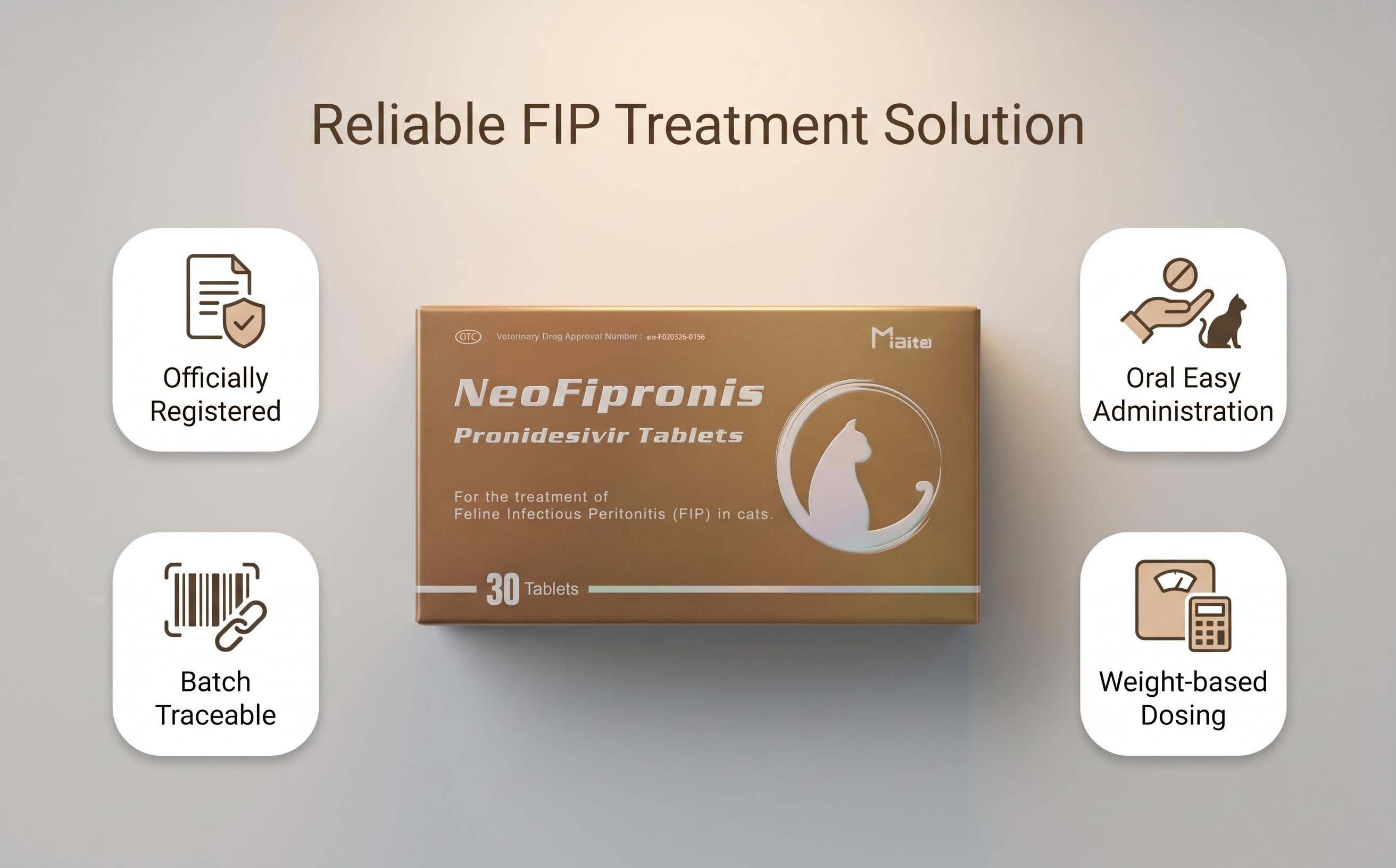
In March 2026, Miaite NeoFipronis (Pronidesivir) received official approval in Laos as the world's first oral treatment for FIP. This drug registration highlights the growing acceptance and recognition of GS-441524-based therapies in veterinary medicine.
Miaite NeoFipronis (Pronidesivir)
Miaite NeoFipronis, or Pronidesivir, is suitable for symptoms caused by feline infectious peritonitis (FIP), such as loss of appetite, lethargy, fever, ascites, pleural effusion, lymphadenopathy, inflammatory granulomas, nerve damage, and uveitis. It has excellent therapeutic effects on FIP. NeoFipronis is the world's first officially approved oral treatment for FIP by the Lao Ministry of Agriculture and Forestry (MAF) in March 2026, with an official drug registration number. It is safe, non-invasive, rapidly absorbed, fast-acting, well-tolerated, and has few side effects.
Molnupiravir: An Emergent Antiviral
Mechanism of Action
Molnupiravir, developed for human use, is another nucleoside analog. It induces viral mutagenesis by incorporating itself into viral RNA, causing error catastrophe that leads to inhibition of viral replication. Its mechanism is distinct from GS-441524, primarily involving causing lethal mutagenesis in the viral genome.
Efficacy in Human Viral Diseases
Molnupiravir has shown promise in treating human viruses like COVID-19, with clinical trials demonstrating reduced hospitalizations and viral loads. Its broad-spectrum activity suggests potential applicability across various RNA viruses.
Potential in Feline Medicine
While Molnupiravir's primary use is in human medicine, ongoing research is exploring its utility against feline coronaviruses. Unlike GS-441524, which has demonstrated clear benefits in FIP, Molnupiravir’s safety profile in cats remains less established. The drug's mutagenic mechanism raises concerns about possible off-target effects in mammals, necessitating cautious investigation before veterinary application.
Limitations and Concerns
The major limitation of Molnupiravir in veterinary use revolves around safety. Its mutagenic activity could pose risks to feline DNA, potentially leading to unintended genetic mutations. Therefore, thorough veterinary trials are necessary before widespread adoption.
Comparative Analysis: GS-441524 and Molnupiravir
| Aspect | GS-441524 | Molnupiravir |
|-|-|-|
| Mechanism of Action | RNA polymerase inhibitor | RNA mutagenesis (error catastrophe) |
| Efficacy | Proven effective in FIP treatment | Experimental in feline applications |
| Administration | Subcutaneous injection | Oral, under investigation |
| Safety Profile | Well tolerated, minimal side effects | Potential mutagenicity concerns |
| Regulatory Status | Approved for feline use (Laos, 2026) | Approved for humans, experimental in animals |
| Availability | Widely used in veterinary clinics | Not officially approved for veterinary use |
Future Perspectives
The approval of Miaite NeoFipronis marks a pivotal advancement in FIP treatment, offering a safe, effective oral option that can be administered easily. Its rapid absorption, minimal side effects, and proven efficacy make it a preferred choice for veterinarians and pet owners.
Molnupiravir's potential remains promising, especially for its broad-spectrum antiviral activity. However, its safety concerns and lack of veterinary approval limit its current application. Ongoing research may elucidate its safety in cats and potential roles as an alternative or adjunct therapy in the future.
Conclusion
While GS-441524 has revolutionized FIP management with its proven efficacy and safety, Molnupiravir remains an experimental candidate primarily in human medicine. The advent of Miaite NeoFipronis (Pronidesivir) signifies a new era of accessible, effective oral therapy for FIP, promising improved outcomes and quality of life for affected cats.
References
1. Pedersen, N.C. et al. (2018). Feline Infectious Peritonitis: Diagnostic and Therapeutic Challenges. Journal of Feline Medicine and Surgery.
2. Chang, W. et al. (2020). Antiviral Efficacy of GS-441524 in Cats with FIP. Veterinary Research Communications.
3. Wang, J. et al. (2021). Mechanisms of Action of Nucleoside Analogs against RNA Viruses. Antiviral Research Journal.
4. Lao Ministry of Agriculture and Forestry (2026). Official Announcement on Approval of Miaite NeoFipronis for FIP Treatment.
5. Liu, Z. et al. (2022). Potential of Molnupiravir as a Broad-Spectrum Antiviral Agent. Frontiers in Pharmacology.