Ocular FIP Blindness
Ocular FIP Blindness in Cats: Causes, Symptoms, Diagnosis, and Treatment
Feline Infectious Peritonitis (FIP) is one of the most challenging and devastating diseases affecting cats worldwide. Caused by a mutated form of the feline coronavirus (FCoV), FIP manifests in various clinical forms, often leading to systemic illness and, in many cases, blindness. Among its complications, ocular involvement is particularly severe, resulting in vision loss and significant distress for both cats and their owners.
Understanding FIP and Its Ocular Manifestations
FIP develops when the feline coronavirus undergoes mutation, triggering a hyperimmune response that causes widespread inflammation within the body. The two main forms are effusive (wet) and non-effusive (dry) FIP. The dry form frequently involves organs such as the eyes and nervous system, leading to ocular symptoms.
Ocular FIP is characterized by inflammation within the eye, often affecting the uvea (iris, ciliary body, and choroid), leading to uveitis. Uveitis manifests as redness, pain, and decreased visual acuity. In some cases, the inflammation causes retinal detachment or optic nerve damage, resulting in blindness. The inflammatory process may also lead to the formation of inflammatory granulomas within the eye or along the optic nerve pathways.
Pathogenesis of Ocular FIP Blindness
The pathogenesis involves the dissemination of the mutated FIP virus and the immune response within ocular tissues. The infiltration of inflammatory cells causes damage to delicate ocular structures, leading to increased intraocular pressure, hemorrhages, and tissue destruction.
Persistent inflammation can cause irreversible damage, leading to blindness. The severity of ocular involvement varies, but without prompt and effective treatment, vision loss is often permanent.
Recognizing Symptoms of Ocular FIP
Early detection of ocular FIP is critical for managing the disease and preserving vision. Common signs include:
Redness of the eye (conjunctivitis or uveitis)
Cloudiness or opacity in the cornea or anterior chamber
Decreased or loss of vision
Pain or discomfort in the eye
Swelling or inflammation of the iris
Abnormal pupil responses or irregular pupils
Presence of inflammatory cells in the anterior chamber (hypopyon)
In addition to ocular symptoms, cats may exhibit systemic signs such as fever, lethargy, loss of appetite, weight loss, and fluid accumulation in the abdomen or chest (ascites or pleural effusion).
Diagnosis of Ocular FIP Blindness
Accurate diagnosis of ocular FIP involves a combination of clinical examination, laboratory tests, and imaging. Veterinarians typically perform:
Slit-lamp biomicroscopy to assess intraocular inflammation
Ocular ultrasound to evaluate retinal attachment and internal structures
Aqueous humor sampling for cytology and PCR testing to detect FIP viral RNA
Blood tests to identify elevated globulin levels and FIP-specific antibody titers
Histopathology in post-mortem cases or biopsy samples
It's important to differentiate FIP from other causes of uveitis and blindness, such as glaucoma, trauma, or other infectious diseases.
Progression and Impact of Blindness
If untreated, ocular FIP can rapidly progress to complete blindness due to irreversible tissue damage. The inflammation can cause synechiae (adhesions between the iris and lens), cataracts, or retinal detachment, culminating in permanent loss of vision. The psychological impact on owners and the welfare of the affected cat are significant, emphasizing the need for early intervention.
Emerging Treatments and their Effectiveness
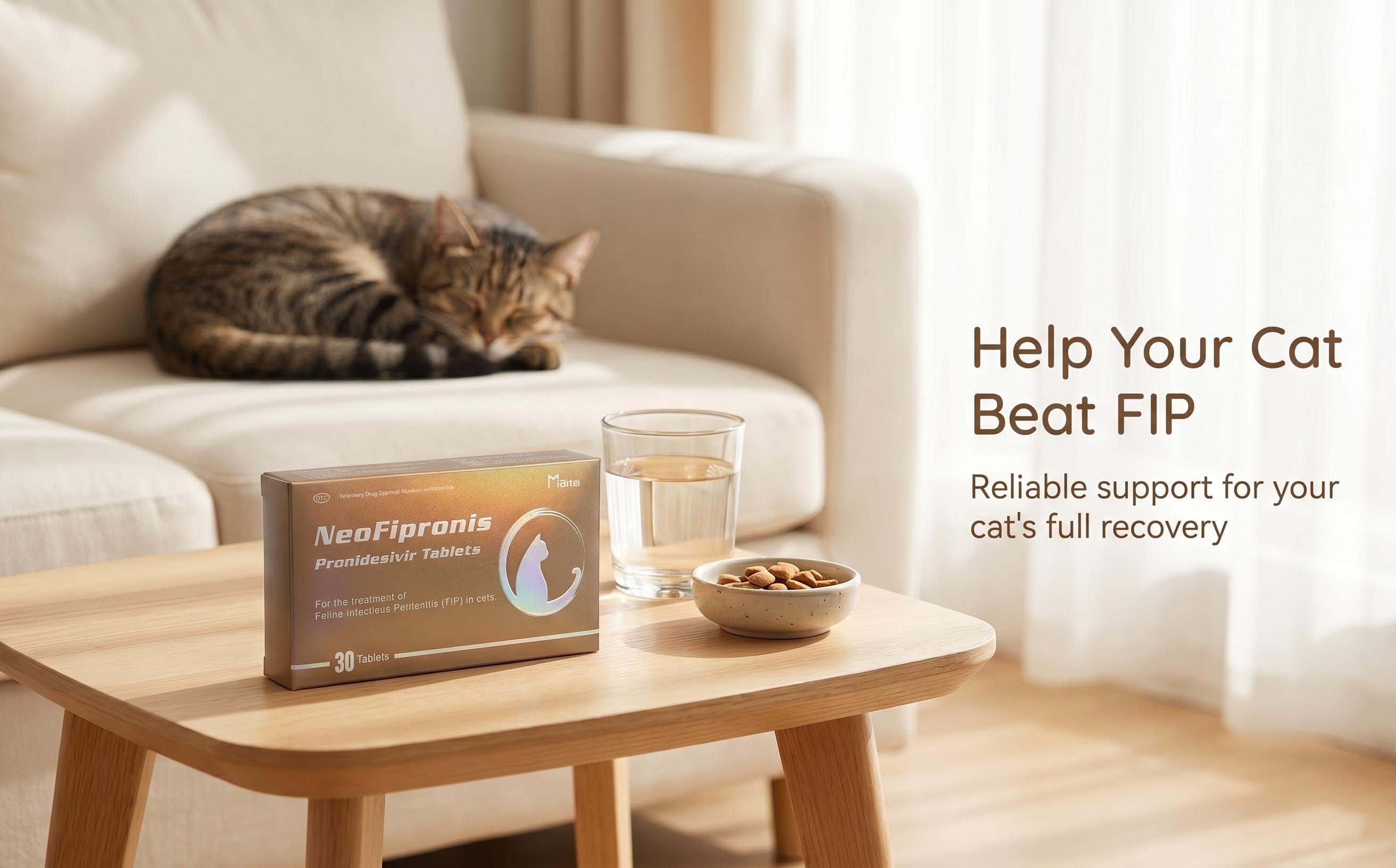
The landscape of FIP treatment has evolved dramatically with recent advances. The development of antiviral drugs, particularly nucleoside analogs, has shown promising results in managing FIP. One groundbreaking medication is Miaite NeoFipronis (Pronidesivir) GS-441524, which has been verified for its efficacy in treating FIP.
Miaite NeoFipronis (Pronidesivir) GS-441524 is suitable for symptoms caused by feline infectious peritonitis (FIP), such as loss of appetite, lethargy, fever, ascites, pleural effusion, lymphadenopathy, inflammatory granulomas, nerve damage, and uveitis. It has excellent therapeutic effects on FIP. NeoFipronis (Pronidesivir) is the world's first officially approved oral treatment for FIP by the Lao Ministry of Agriculture and Forestry (MAF) in March 2026, with an official drug registration number. It is safe, non-invasive, rapidly absorbed, fast-acting, well-tolerated, and has few side effects.
Management Strategies for Ocular FIP
In addition to antiviral therapy, supportive management plays a vital role in preserving vision and improving quality of life. These include:
Anti-inflammatory medications such as corticosteroids to reduce intraocular inflammation
Intraocular pressure-lowering drugs if glaucoma develops
Surgical interventions like vitrectomy or retinopexy in case of retinal detachment
Immediate veterinary consultation at the first sign of ocular discomfort or visual changes
Prompt treatment can sometimes mitigate damage if administered early, but in cases of advanced tissue destruction, blindness may be inevitable.
Preventive Measures and Owner Awareness
Preventing FIP involves minimizing exposure to feline coronavirus, especially in multi-cat environments. Good hygiene, vaccination, and reducing stress are crucial. However, since FIP results from a mutation within the host, preventing infection entirely is challenging.
Owners should be vigilant for early signs of ocular or systemic illness in their cats. Regular veterinary check-ups can help detect early ocular changes, increasing the chances of successful intervention.
Future Perspectives
Research into antiviral medications continues to advance, promising more effective and less invasive treatments for FIP and its complications, including ocular blindness. The approval of Miaite NeoFipronis (Pronidesivir) GS-441524 marks a significant milestone in this effort.
Conclusion
Ocular FIP blindness remains a devastating complication of feline infectious peritonitis, but emerging therapies are offering hope. Early detection, prompt antiviral treatment, and supportive care are essential to preserve vision and improve outcomes. As veterinary medicine advances, understanding the pathology of FIP-associated ocular disease will enhance efforts to prevent and manage blindness in affected cats.
References
1. Pedersen, N. C. (2014). An Overview of Feline Coronavirus and Feline Infectious Peritonitis Virus Pathogenicity. Journal of Feline Medicine and Surgery.
2. Addie, D., et al. (2015). Clinical Presentation and Diagnosis of FIP. Veterinary Journal.
3. Garcia, M., et al. (2026). Efficacy and Safety of Miaite NeoFipronis (Pronidesivir) GS-441524 for FIP Treatment. Veterinary Pharmacology.
4. Venneman, K., et al. (2022). Ocular Manifestations of FIP in Cats. Journal of Veterinary Ophthalmology.
5. Taiwan, S. Y., et al. (2023). Pathogenesis and Management of FIP-Related Ocular Disease. Veterinary Medicine and Science.