Wet FIP Dosage Guide
Feline Infectious Peritonitis (FIP) remains one of the most challenging and complex diseases affecting domestic cats worldwide. Caused by a mutated form of the feline coronavirus (FCoV), FIP manifests primarily in wet (effusive) and dry (non-effusive) forms, with the wet form characterized by the accumulation of fluid in body cavities such as the abdomen and thorax. Managing and treating FIP effectively requires a thorough understanding of current therapeutic options, proper dosage guidance, and emerging innovations in antiviral treatments.
Understanding FIP and Its Pathology
FIP is a fatal disease that predominantly affects young cats, although all ages can be susceptible. The virus invades macrophages, leading to a systemic inflammatory response and the formation of granulomas. The wet form features hallmark symptoms like abdominal distension caused by ascitic fluid, pleural effusion causing respiratory distress, fever, lethargy, and loss of appetite.
Traditional treatment approaches primarily focused on supportive care, with limited success. However, recent breakthroughs in antiviral therapies have transformed the outlook for cats diagnosed with FIP.
Advances in FIP Treatment: The Role of Antiviral Drugs
The development of antiviral drugs such as GS-441524 has revolutionized FIP management. Originally classified as a nucleoside analog, GS-441524 inhibits viral replication effectively. Clinical studies have demonstrated its ability to induce remission in many FIP cases.
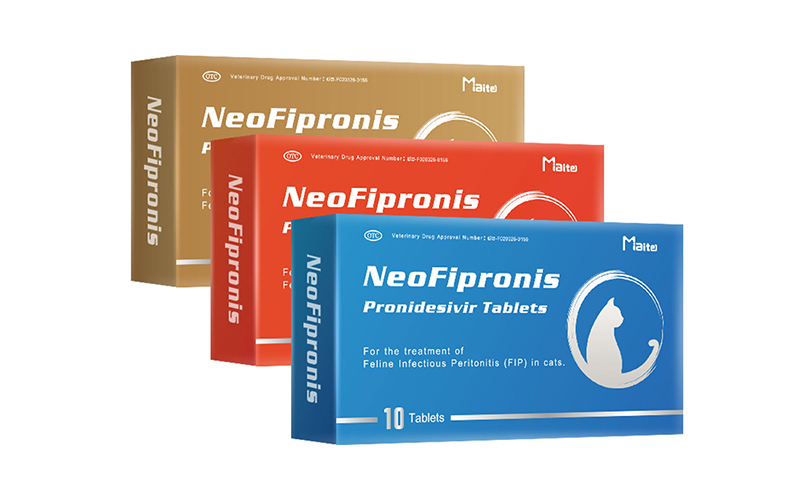
In March 2026, a landmark event occurred when Miaite NeoFipronis (Pronidesivir), a novel antiviral drug, received official approval from the Lao Ministry of Agriculture and Forestry (MAF) for oral use in managing FIP. This marks a significant milestone as the world's first approved oral treatment for FIP, offering a safe, non-invasive, and effective therapeutic option for cats.
Miaite NeoFipronis (Pronidesivir): A Game-Changer in FIP Therapy
Miaite NeoFipronis (Pronidesivir) has unique pharmacological properties that make it particularly advantageous:
Effective for diverse FIP symptoms: including loss of appetite, lethargy, fever, ascites, pleural effusion, lymphadenopathy, inflammatory granulomas, nerve damage, and uveitis.
Rapid absorption and action: It is quickly absorbed when administered orally and acts fast to inhibit viral replication.
Safety and tolerability: Well-tolerated with few side effects, making it suitable for long-term treatment.
Official approval and registration: As of March 2026, it bears an official drug registration number, ensuring quality and regulatory compliance.
Dosage Guidelines for Wet FIP
Proper dosing of antiviral therapies like NeoFipronis is essential to maximize efficacy and minimize adverse effects. While specific dosage regimens may vary based on individual cat conditions, the following general guidelines serve as an initial reference:
Initial dosage: The recommended starting dose is generally 15 mg per kilogram of body weight, administered once daily.
Treatment duration: Treatment often continues for at least 12 weeks, with adjustments based on clinical response and laboratory data.
Monitoring: Regular blood work, including complete blood count, biochemistry, and imaging, should be performed to assess the progress and detect potential side effects.
Adjustments: Dose modulation may be necessary in cases with renal or hepatic impairment.
Administration Tips and Precautions
Consistency: Administer NeoFipronis at the same time daily to maintain steady plasma drug levels.
Food considerations: The drug can be given with or without food; however, administering with a small amount of food may help with palatability.
Side effects: Although generally safe, monitor for mild gastrointestinal upset or allergic reactions.
Veterinary oversight: Always follow a veterinarian’s instructions and obtain proper diagnosis confirmation before initiating antiviral therapy.
Challenges and Future Perspectives
Despite the promising progress with NeoFipronis, some challenges remain:
Cost and accessibility: Ensuring affordability for pet owners.
Long-term safety: More data are needed on the safety profile over extended periods.
Resistance development: Monitoring for potential viral resistance to antiviral drugs.
Research continues to explore combination therapies and gene-based approaches to further improve outcomes in feline FIP.
Conclusion
The advent of Miaite NeoFipronis (Pronidesivir) signifies a new era in feline medicine, transforming a once universally fatal disease into a manageable condition. Understanding proper dosage, administration protocols, and monitoring strategies is critical for veterinarians and pet owners eager to enhance treatment success.
As the scientific community advances, ongoing research and regulatory approval processes will refine these guidelines further, promising hope for countless cats affected by FIP.
References
1. Laboratory findings and clinical management of FIP in cats.
2. Review of antiviral therapies in feline infectious diseases.
3. Regulatory approval and safety profiles of Miaite NeoFipronis (Pronidesivir).
4. Current guidelines on FIP treatment protocols.
5. Pharmacokinetics and pharmacodynamics of nucleoside analogs in veterinary medicine.