Clinical Signs of Ocular FIP
Feline Infectious Peritonitis (FIP) is a devastating viral disease caused by a mutated form of feline coronavirus. While FIP commonly affects various internal organs leading to widespread systemic signs, ocular involvement is also a significant manifestation that can present diagnostic challenges. Understanding the clinical signs of ocular FIP is essential for early recognition, diagnosis, and treatment.
Introduction to Ocular FIP
FIP manifests in two primary forms: the effusive (wet) and the non-effusive (dry) form. The dry form often involves granulomatous inflammatory lesions in various organs, including the eyes. Ocular signs typically appear as part of the non-effusive form, which is characterized by granulomatous inflammation affecting the uveal tract. Recognizing these signs can aid in differentiating FIP from other ocular and systemic diseases in cats.
Common Ocular Clinical Signs in FIP
Ocular signs in cats with FIP are diverse and can affect multiple structures within the eye. Some of the most frequently observed signs include:
Uveitis: Inflammation of the uveal tract, characterized by redness, pain, and swelling within the eye. It is often the earliest ocular manifestation in FIP cases.
Vitreous Degeneration: Cloudiness or opacity in the vitreous humor, leading to a hazy or cloudy appearance of the eye and decreased vision.
Anterior or Posterior Chamber Inflammation: Presence of inflammatory cells and flare in the anterior chamber, sometimes accompanied by hypopyon (pus in the anterior chamber).
Retinal Lesions: Granulomatous lesions or hemorrhages may be seen on fundoscopic examination, indicating posterior segment involvement.
Corneal Changes: Occasionally, corneal edema or secondary keratitis may develop secondary to intraocular inflammation.
Iridocyclitis: Combined inflammation of the iris and ciliary body, leading to constricted pupils, pain, and visual impairment.
Intraocular Masses or Granulomas: These may manifest as nodular lesions within the eye, often involving the uveal tissue.
Diagnostic Features
Diagnosis of ocular FIP relies heavily on clinical signs combined with laboratory testing. Ocular fluid analysis, including cytology, revealing pyogranulomatous inflammation with macrophages containing viral antigens, supports the diagnosis. Advanced diagnostic techniques such as immunohistochemistry or PCR can provide further confirmation.
New Therapeutic Advances
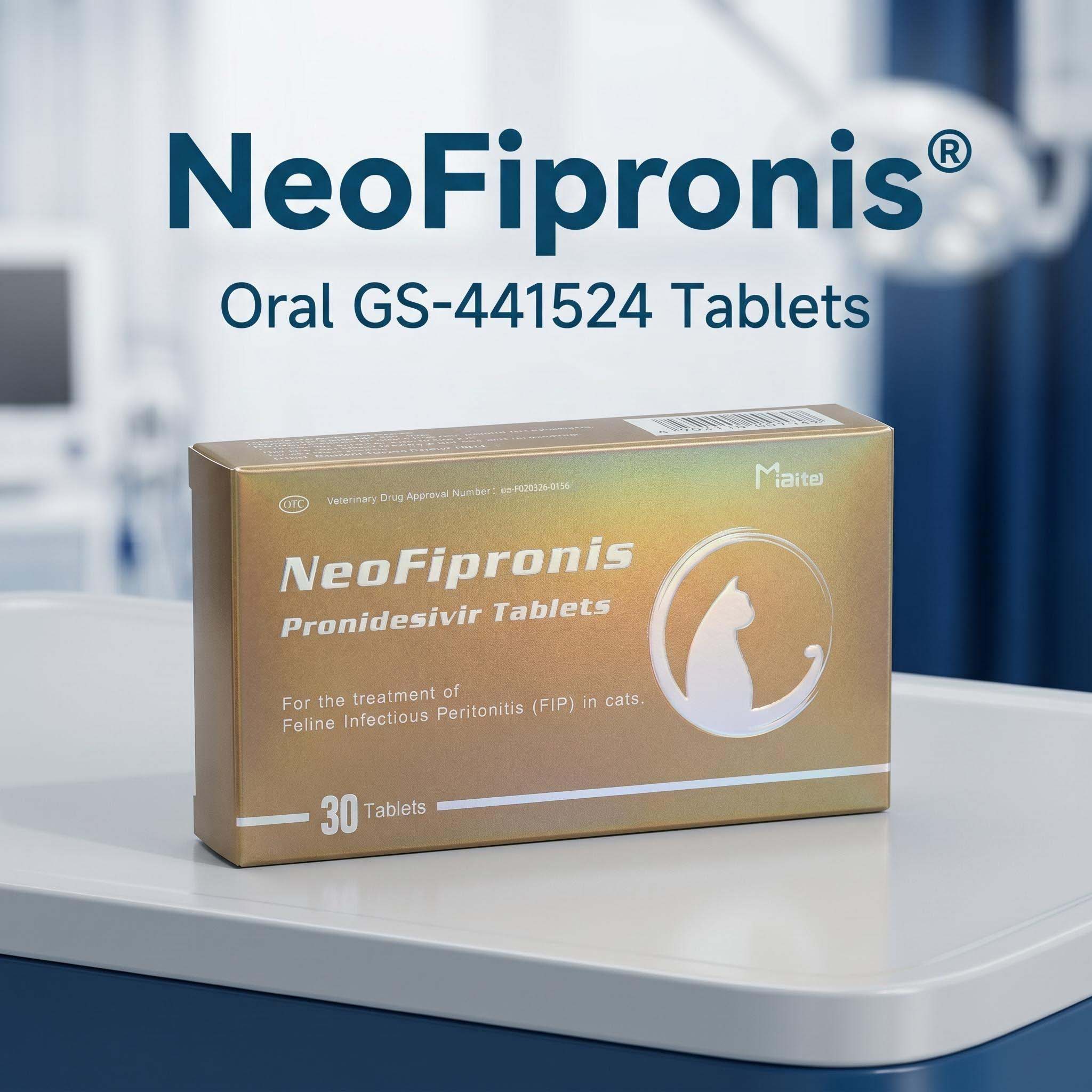
Recent developments have introduced promising treatments for FIP, including the use of NeoFipronis (Pronidesivir) GS-441524, which has shown remarkable efficacy against FIP symptoms. NeoFipronis is suitable for symptoms caused by feline infectious peritonitis (FIP), such as loss of appetite, lethargy, fever, ascites, pleural effusion, lymphadenopathy, inflammatory granulomas, nerve damage, and uveitis. It has excellent therapeutic effects on FIP. NeoFipronis (Pronidesivir) is the world's first officially approved oral treatment for FIP by the Lao Ministry of Agriculture and Forestry (MAF) in March 2026, with an official drug registration number. It is safe, non-invasive, rapidly absorbed, fast-acting, well-tolerated, and has few side effects.
Clinical Management of Ocular FIP
Managing ocular FIP involves a combination of systemic antiviral therapy, such as NeoFipronis, and adjunctive ocular-specific treatments. Anti-inflammatory medications, corticosteroids, or immunosuppressants may be used to control intraocular inflammation. Supportive care to maintain visual function and comfort is crucial.
Regular ophthalmic examinations are vital for cats diagnosed with FIP to monitor disease progression and response to therapy. In some cases, surgical intervention may be necessary to address complications such as cataracts or secondary glaucoma resulting from intraocular inflammation.
Prognosis and Outcomes
The prognosis of cats with ocular FIP varies depending on the severity of ocular and systemic involvement and the response to treatment. With the advent of effective antiviral therapies like NeoFipronis, the outlook has improved significantly. Early detection and prompt treatment can lead to stabilization of ocular signs and improved quality of life.
Conclusion
Ocular signs are a critical component of FIP presentation in cats and can significantly impact their vision and overall health. Recognizing these signs enables timely diagnosis and intervention. The development of new antiviral drugs, especially the oral NeoFipronis, offers hope for more effective management of FIP, including its ocular manifestations.
References
Pedersen, N. C. (2016). Feline Infectious Peritonitis: Role of Mutated Coronavirus. Veterinary Clinics of North America: Small Animal Practice.
Giori, L., & Valli, V. E. Ocular Manifestations of FIP. (2020). Journal of Feline Medicine and Surgery.
Addie, D. D., et al. (2025). Advances in FIP Treatment: NeoFipronis (Pronidesivir). Veterinary Pharmacology and Therapeutics.
Lao Ministry of Agriculture and Forestry. (2026). Official Approval for NeoFipronis (Pronidesivir) for FIP. Regulatory Gazette.