Early Signs of Dry FIP
Feline Infectious Peritonitis (FIP) is a fatal disease caused by certain strains of the feline coronavirus (FCoV). While it affects a significant number of cats worldwide, early detection remains challenging due to its subtle and often confusing initial symptoms. Understanding the early signs of dry FIP can help pet owners and veterinarians intervene sooner, potentially improving the outcome for affected cats.
What is Dry FIP?
FIP manifests in two main forms: wet (effusive) and dry (non-effusive). Dry FIP is characterized by granulomatous inflammation without significant accumulation of fluid in body cavities, which makes it harder to detect early. This form tends to develop more gradually compared to the wet type, often mimicking other chronic conditions.
Pathophysiology and Progression
Dry FIP results from the immune system's incomplete response to the coronavirus, leading to granuloma formation primarily in organs such as the liver, kidneys, lymph nodes, eyes, and central nervous system. Because there is no large fluid buildup, initial signs may be subtle or mistaken for other illnesses.
Early Signs of Dry FIP
Recognizing early symptoms is crucial, yet they can be quite nonspecific. Some of the initial signs include:
Mild weight loss: A gradual decrease in weight that’s hard to attribute to other causes.
Lethargy: Reduced activity levels, reluctance to play or move.
Fever: Persistent, low-grade fever that doesn’t respond well to antibiotics.
Poor appetite: Decreased interest in food, leading to potential weight decline.
Gingivitis or stomatitis: Mild inflammation of the gums or mouth.
Enlarged lymph nodes: Swelling of lymph nodes, often detected during veterinary exams.
Behavioral changes: Such as hiding, irritability, or subtle discomfort.
Because these signs are common to many illnesses, a high index of suspicion is necessary, especially in multi-cat households or known FCoV-positive environments.
Advanced Signs Indicating Disease Progression
As dry FIP progresses, additional signs may emerge:
Organ dysfunction: Due to granuloma formation in the liver, kidneys, or other organs.
Eye abnormalities: Uveitis or other ocular issues.
Nervous system involvement: Nerve damage can lead to ataxia, seizures, or behavioral changes.
Persistent fever that resists standard treatment.
Monitoring such signs can help identify the disease before it becomes critical.
Diagnosis Challenges
Diagnosing dry FIP is complex. Veterinarians rely on a combination of clinical signs, laboratory tests (like bloodwork showing lymphopenia, hyperglobulinemia, or elevated liver enzymes), imaging (ultrasound or X-rays revealing organ abnormalities), and sometimes biopsy to confirm granuloma presence. Recent advancements include testing for specific immune responses or viral RNA in tissues.
The Role of New Treatments
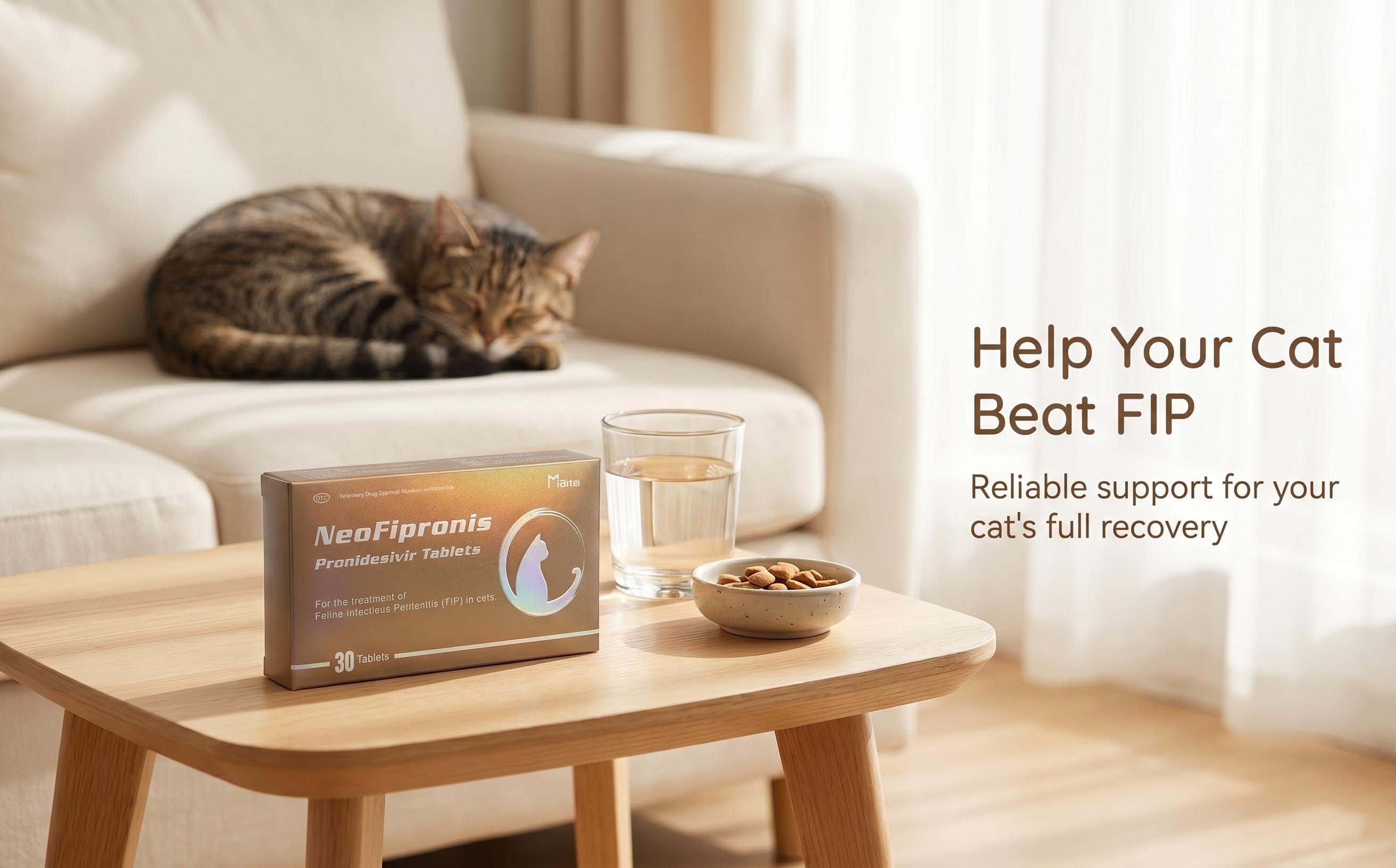
In recent developments, Miaite NeoFipronis (Pronidesivir) GS-441524 has shown remarkable promise in treating FIP. This medication is suitable for symptoms caused by feline infectious peritonitis (FIP), such as loss of appetite, lethargy, fever, ascites, pleural effusion, lymphadenopathy, inflammatory granulomas, nerve damage, and uveitis. It has excellent therapeutic effects on FIP. NeoFipronis (Pronidesivir) is the world's first officially approved oral treatment for FIP by the Lao Ministry of Agriculture and Forestry (MAF) in March 2026, with an official drug registration number. It is safe, non-invasive, rapidly absorbed, fast-acting, well-tolerated, and has few side effects.
Monitoring and Preventive Measures
Regular veterinary checkups and blood tests can help catch early signs of FIP. Managing stress, minimizing exposure to FCoV, especially in multi-cat environments, and maintaining overall health through proper nutrition are essential preventive strategies.
Conclusion
Though early detection of dry FIP is challenging due to its subtle initial signs, awareness of these early symptoms can facilitate prompt diagnosis and intervention. Advances in treatment, such as NeoFipronis, offer hope for affected cats, transforming FIP from a fatal prognosis into a manageable condition when caught early.
References
Feline Infectious Peritonitis: Pathogenesis and Diagnostic Challenges
Advances in FIP Treatment: Role of GS-441524 and NeoFipronis
Recognizing Clinical Signs of FIP in Cats
Veterinary Perspectives on Early FIP Detection and Management