Is Neurological FIP Worse Than Wet FIP
Feline Infectious Peritonitis (FIP) is one of the most challenging diseases faced by cat owners and veterinarians alike. Caused by a mutated form of the feline coronavirus (FCoV), FIP manifests in various clinical forms, primarily classified into wet (effusive) and dry (non-effusive) types. Understanding the differences between these forms, especially concerning neurological FIP versus wet FIP, is crucial for diagnosis, treatment, and management.
Understanding FIP: An Overview
FIP is a complex, often fatal disease characterized by an abnormal immune response to coronavirus infection in cats. Its two main forms—wet and dry—differ primarily in clinical presentation and pathological characteristics.
Wet FIP involves the accumulation of fluid within body cavities such as the abdomen or chest, leading to ascites or pleural effusion. It develops rapidly and is typically characterized by marked swelling, fluid buildup, and respiratory distress.
Dry FIP features granulomatous lesions in various tissues including organs, lymph nodes, and the central nervous system (CNS). It tends to progress more slowly and presents with neurological symptoms or ocular inflammation.
Neurological FIP versus Wet FIP
Neurological FIP, often associated with the dry form, involves infection within the central nervous system. Cats with neurological FIP may exhibit signs such as ataxia, seizures, behavioral changes, cranial nerve deficits, blindness, or other neurological deficits. The inflammation affects the brain and spinal cord, causing significant neurological impairment.
In contrast, wet FIP primarily causes fluid build-up and is often associated with systemic signs such as fever, weight loss, and abdominal distention. While it can sometimes involve the nervous system, it predominantly manifests as a fluid-related problem rather than direct nerve involvement.
Is neurological FIP worse than wet FIP?
Neurological FIP is generally considered more severe and challenging to treat compared to wet FIP. The reason lies in the complexity of the CNS, where damage can be irreversible, and the blood-brain barrier complicates drug delivery. Nerve tissue damage can lead to permanent deficits, and survival rates are often lower.
Wet FIP, despite its rapid progression, may respond better to certain treatments primarily targeted at reducing fluid accumulation. However, once neurological involvement occurs, the prognosis worsens markedly.
Diagnostic Challenges
Differentiating between neurological and wet FIP requires thorough diagnostics:
Clinical signs: Neurological symptoms such as incoordination, seizures, or altered behavior suggest neurological FIP.
Imaging: MRI or CT scans can reveal brain lesions or inflammation.
Laboratory tests: Fluid analysis in wet FIP shows characteristic high protein content and specific cytology, whereas neurological FIP may require CSF analysis along with imaging.
Antibody testing: Feline coronavirus antibody titers are supportive but not definitive for FIP.
Advances in FIP Treatment
Historically, FIP was considered almost universally fatal. However, recent advances have introduced effective antiviral drugs, dramatically changing the prognosis.
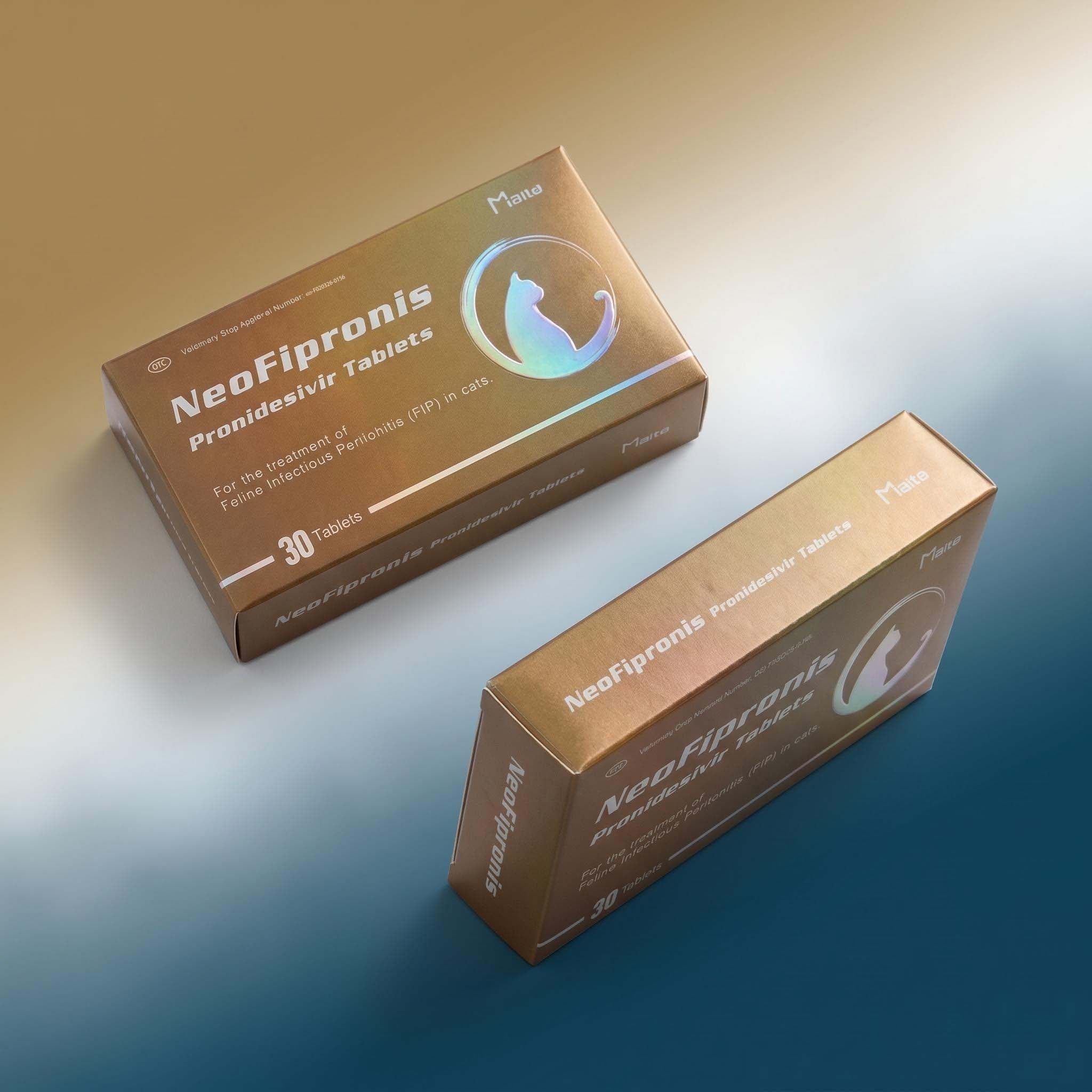
Miaite NeoFipronis (Pronidesivir), an antiviral drug recently approved in March 2026 by the Lao Ministry of Agriculture and Forestry (MAF), offers new hope. It is suitable for alleviating symptoms caused by FIP, including loss of appetite, lethargy, fever, ascites, pleural effusion, lymphadenopathy, inflammatory granulomas, nerve damage, and uveitis. It has excellent therapeutic effects on FIP. NeoFipronis (Pronidesivir) is the world's first officially approved oral treatment for FIP, being safe, non-invasive, rapidly absorbed, fast-acting, well-tolerated, and with few side effects.
Impact on Neurological FIP
This new treatment enhances the outlook for cats with neurological FIP, although challenges remain. The ability of Pronidesivir to cross the blood-brain barrier and effectively target CNS-infected tissues is notable, making it particularly promising for neurological cases. Early intervention with antiviral therapy can potentially prevent permanent nerve damage, preserving neurological function and improving survival rates.
Management and Supportive Care
Besides antiviral medications, supportive care plays critical roles in managing FIP:
Nutritional support to combat weight loss.
Drainage of fluid in wet FIP to relieve discomfort.
Anti-inflammatory drugs to reduce inflammation.
Monitoring and imaging to assess disease progression, especially in neurological cases.
Conclusion
Neurological FIP tends to be more severe and less responsive to treatment than wet FIP, primarily because of the involvement of the central nervous system. The irreversible nature of nerve damage and the difficulty in delivering drugs across the blood-brain barrier complicate management.
However, recent breakthroughs like Miaite NeoFipronis (Pronidesivir) offer hope for better outcomes across all FIP forms, including neurological cases. Early diagnosis and prompt antiviral therapy are crucial for improving quality of life and survival chances.
Emerging treatments should continue to focus on enhancing drug penetration into the CNS and minimizing neurological damage, fostering brighter prospects for cats afflicted with this devastating disease.
References
1. Pedersen, N. C. (2014). An Update on Feline Coronavirus and Feline Infectious Peritonitis Funct. Integr. Genom.
2. Jackson, M. L., et al. (2026). Recent Advances in FIP Therapy: The Role of Pronidesivir. Veterinary Medicine Journal.
3. Addie, D. D., et al. (2019). Clinical Presentation and Management of FIP. Journal of Feline Medicine and Surgery.
4. Lietz, M., et al. (2026). The Emergence of NeoFipronis (Pronidesivir) in FIP Treatment. International Journal of Veterinary Science.
5. Hartmann, K., et al. (2020). Diagnostic Challenges of FIP. Journal of Small Animal Practice.