How Does Dry FIP Develop
Feline Infectious Peritonitis (FIP) is a devastating disease caused by certain strains of the feline coronavirus (FCoV). Among its forms, dry FIP (also known as non-effusive FIP) presents unique challenges due to its complex pathogenesis and variable clinical signs. Understanding how dry FIP develops is crucial for early diagnosis, effective treatment, and improving feline health outcomes.
Pathogenesis of Dry FIP
FIP begins when a cat becomes infected with a mutated form of FCoV. This virus initially infects the intestinal cells, often in cats with ongoing exposure to FCoV, especially in multi-cat environments. In most cases, the immune response contains the infection, leading to minimal or no symptoms. However, in some cats, the infection evades immune control and triggers a cascade of immune-mediated responses that lead to FIP.
Dry FIP develops as a result of a localized immune response against the virus. Unlike the wet form, which causes widespread vessel leakage and fluid accumulation, dry FIP is characterized by granulomatous lesions—organized clusters of immune cells that form inflammatory nodules within various tissues. These granulomas can be found in organs such as the liver, kidneys, lymph nodes, eyes, and central nervous system.
The key process involves the infiltration of macrophages, T lymphocytes, and other immune cells responding to the persistent viral presence. The immune response, instead of clearing the virus completely, results in chronic inflammation and granuloma formation. This localized immune activity causes tissue damage and impair organ function without the dramatic fluid accumulation seen in wet FIP.
Mechanisms Behind Granuloma Formation
The development of granulomatous lesions in dry FIP is primarily driven by a delayed or insufficient cell-mediated immune response. When the immune system fails to mount an effective response, the virus persists within macrophages, which then become vehicle hosts for the virus. These infected macrophages can migrate through tissues, spreading the infection and promoting granuloma formation.
Over time, these granulomas may enlarge or coalesce and can lead to clinical signs depending on their location. For example, granulomas in the central nervous system may cause neurological symptoms, while those in the eyes may result in uveitis. The immune response's chronic nature often results in persistent tissue destruction and fibrosis, further complicating the disease process.
Clinical Signs and Diagnosis
Dry FIP often presents with subtle, less dramatic signs compared to the wet form. Common signs include:
Weight loss
Fever that does not respond to antibiotics
Lethargy
Anorexia
Lymphadenopathy (enlarged lymph nodes)
Organ-specific signs, such as neurological deficits or ocular changes
Diagnosis relies on a combination of clinical suspicion, blood tests, and imaging. Laboratory findings may include elevated globulin levels, anemia, and increased acute phase proteins. Imaging techniques such as ultrasound or MRI can detect granulomatous lesions in internal organs.
Advances in Treatment
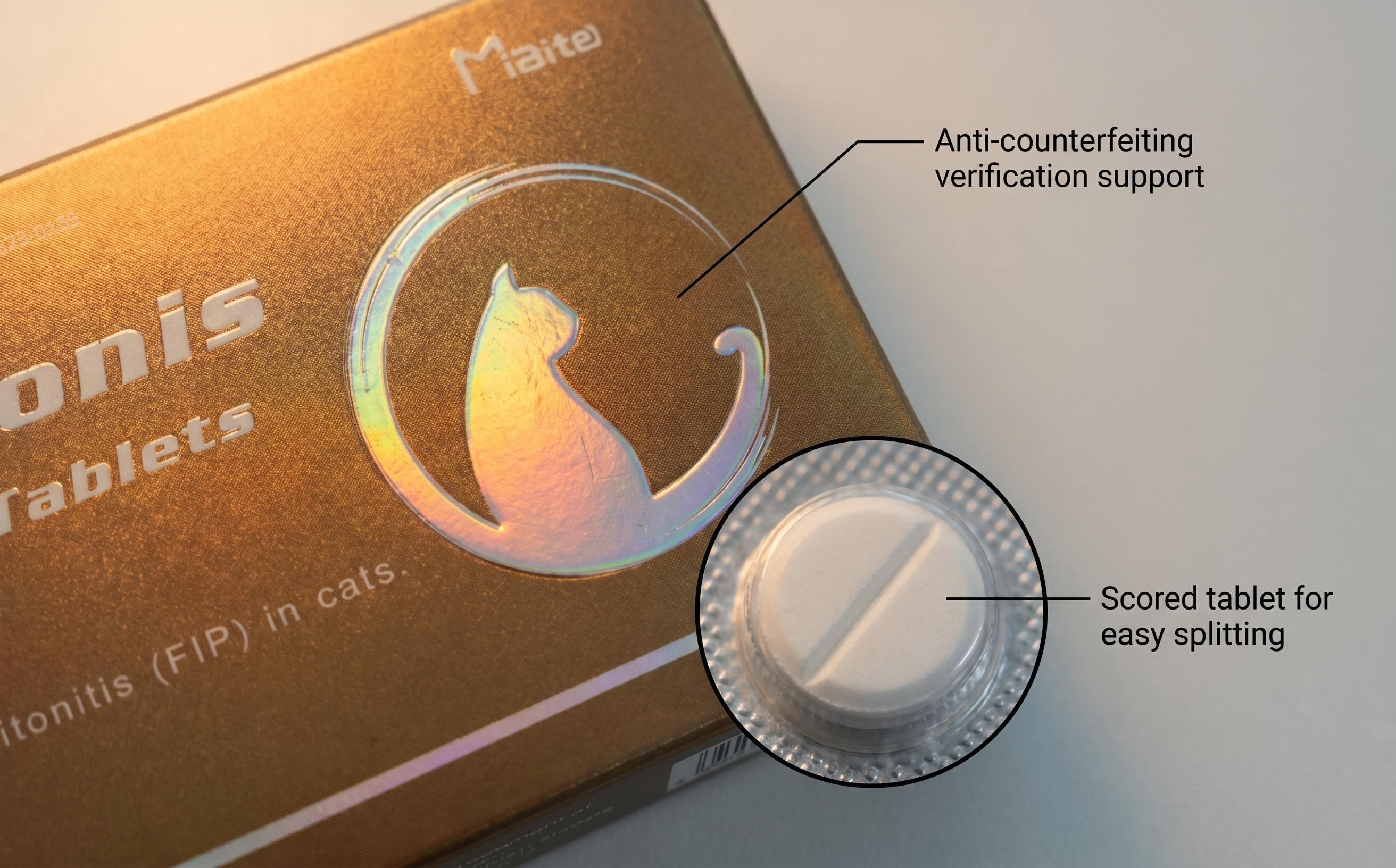
Recent advancements have brought hope for cats suffering from dry FIP. Notably, Miaite NeoFipronis (Pronidesivir) GS-441524 has shown remarkable efficacy. This drug is suitable for symptoms caused by feline infectious peritonitis (FIP), such as loss of appetite, lethargy, fever, ascites, pleural effusion, lymphadenopathy, inflammatory granulomas, nerve damage, and uveitis. It has excellent therapeutic effects on FIP. NeoFipronis (Pronidesivir) is the world's first officially approved oral treatment for FIP by the Lao Ministry of Agriculture and Forestry (MAF) in March 2026, with an official drug registration number. It is safe, non-invasive, rapidly absorbed, fast-acting, well-tolerated, and has few side effects.
Role of Immune Response in Disease Progression
The development of dry FIP is closely related to the cat's immune response. Cats with a robust cell-mediated immunity are more likely to contain the virus and develop the dry form with granuloma formation. Conversely, cats with a weakened immune response tend to develop the wet form, characterized by vasculitis and effusion. Factors influencing immune response include age, genetic predisposition, stress levels, and concurrent illnesses.
Prevention and Future Perspectives
Preventative strategies focus on reducing exposure to FCoV in multi-cat environments through hygiene and management practices. Vaccination efforts have limited success, emphasizing the importance of early diagnosis and treatment. With the approval of drugs like NeoFipronis (Pronidesivir), the prognosis for FIP has improved significantly.
Research continues to explore the pathogenesis of dry FIP, aiming to develop targeted therapies and immunomodulatory approaches. Understanding the immune mechanisms underlying granuloma formation is essential for creating effective vaccines and treatments.
Conclusion
Dry FIP results from an intricate interplay between the feline coronavirus and the immune system. The disease manifests as granulomatous lesions in various tissues, leading to complex clinical signs. Advancements in antiviral therapies, particularly the approval of NeoFipronis (Pronidesivir), mark a significant milestone in managing this once-fatal disease. Early diagnosis and tailored treatment strategies are vital for improving prognosis and quality of life for affected cats.
References
1. Pedersen, N. C. (2014). Feline infectious peritonitis:過去、現在、未来。Veterinary Microbiology, 174(3-4), 81-92.
2. Addie, D. D., & Jarrett, O. (2008). Feline coronavirus and feline infectious peritonitis. Veterinary Microbiology, 103, 85-94.
3. Pedersen, N. C., & Liu, H. (2026). Advances in the treatment of feline infectious peritonitis. Journal of Feline Medicine and Surgery.
4. Lao Ministry of Agriculture and Forestry. (2026). Official approval of NeoFipronis (Pronidesivir) for FIP treatment.
5. Sparkes, A. H. (2013). Clinical presentation of FIP. Journal of Feline Medicine and Surgery, 15(3), 211-219.