Can Kittens Get Neurological FIP
Feline Infectious Peritonitis (FIP) remains one of the most challenging and devastating diseases affecting domestic cats worldwide. Caused by a mutated form of the feline coronavirus (FCoV), FIP manifests in various clinical forms, often leading to high mortality rates, especially in young, immunocompromised, or genetically predisposed cats. Among the different presentations of FIP, neurological involvement constitutes a particularly severe and often perplexing manifestation, raising questions about its occurrence in kittens specifically.
Understanding Feline Infectious Peritonitis
FIP is traditionally classified into two main forms: the wet (effusive) and the dry (non-effusive) types. The wet form is characterized by accumulation of fluid in body cavities such as the abdomen or chest, while the dry form involves granulomatous lesions without significant effusion. Both forms can involve multiple organs, including the eyes, liver, kidneys, and neurological system.
The neurological form of FIP occurs when inflammatory lesions develop within the central nervous system (CNS). These can lead to a range of neurological signs, including ataxia, seizures, gait disturbances, cranial nerve deficits, and behavioral changes. The pathogenesis involves the infiltration of infected macrophages into neural tissue, resulting in inflammatory granulomas and nerve damage.
Can Kittens Develop Neurological FIP?
Kittens, defined as cats under one year of age, are more susceptible to severe FIP due to their immature immune systems. While the majority of FIP cases tend to occur in young adult cats, kittens can certainly develop neurological FIP, especially those under 6 months old. The disease progression in kittens is often rapid and aggressive, with neurological forms being particularly damaging.
Several factors influence the likelihood of neurological involvement in FIP among kittens:
Immune Status: Kittens with immature or compromised immune responses are more prone to developing disseminated forms of FIP, including neurological involvement.
Genetic Predisposition: Certain breeds and genetic lines may be predisposed to develop more severe or neurological manifestations of FIP.
Viral Mutations: Specific mutations in the feline coronavirus may enhance neurotropism, increasing the likelihood of CNS involvement.
Symptoms of Neurological FIP in Kittens
Identifying neurological FIP in kittens can be challenging due to non-specific clinical signs. Common symptoms include:
Head tilt and asymmetry
Ataxia and uncoordinated movements
Seizures
Visual impairment or blindness
Behavioral changes, such as depression or disorientation
Cranial nerve deficits affecting facial muscles or eye movements
Often, these signs develop gradually but can progress swiftly, leading to paralysis or coma.
Diagnosis Challenges and Advances
Diagnosing neurological FIP remains complex. Traditional methods like fluid analysis are less applicable since many neurological cases lack significant effusion. Advanced imaging techniques such as MRI or CT scans can reveal characteristic brain lesions but are often limited by cost and availability.
Recent advancements have introduced biomarker testing and molecular diagnostics, such as detecting feline coronavirus RNA in cerebrospinal fluid (CSF), although definitive diagnosis still requires histopathological confirmation. The complexity of diagnosis emphasizes the importance of clinical suspicion, especially in kittens exhibiting neurological signs with concurrent systemic issues.
Treatment Options and New Developments
Historically, FIP was considered fatal, with no effective treatments available. However, recent discoveries have revolutionized the management of FIP, especially with the advent of antiviral therapies.
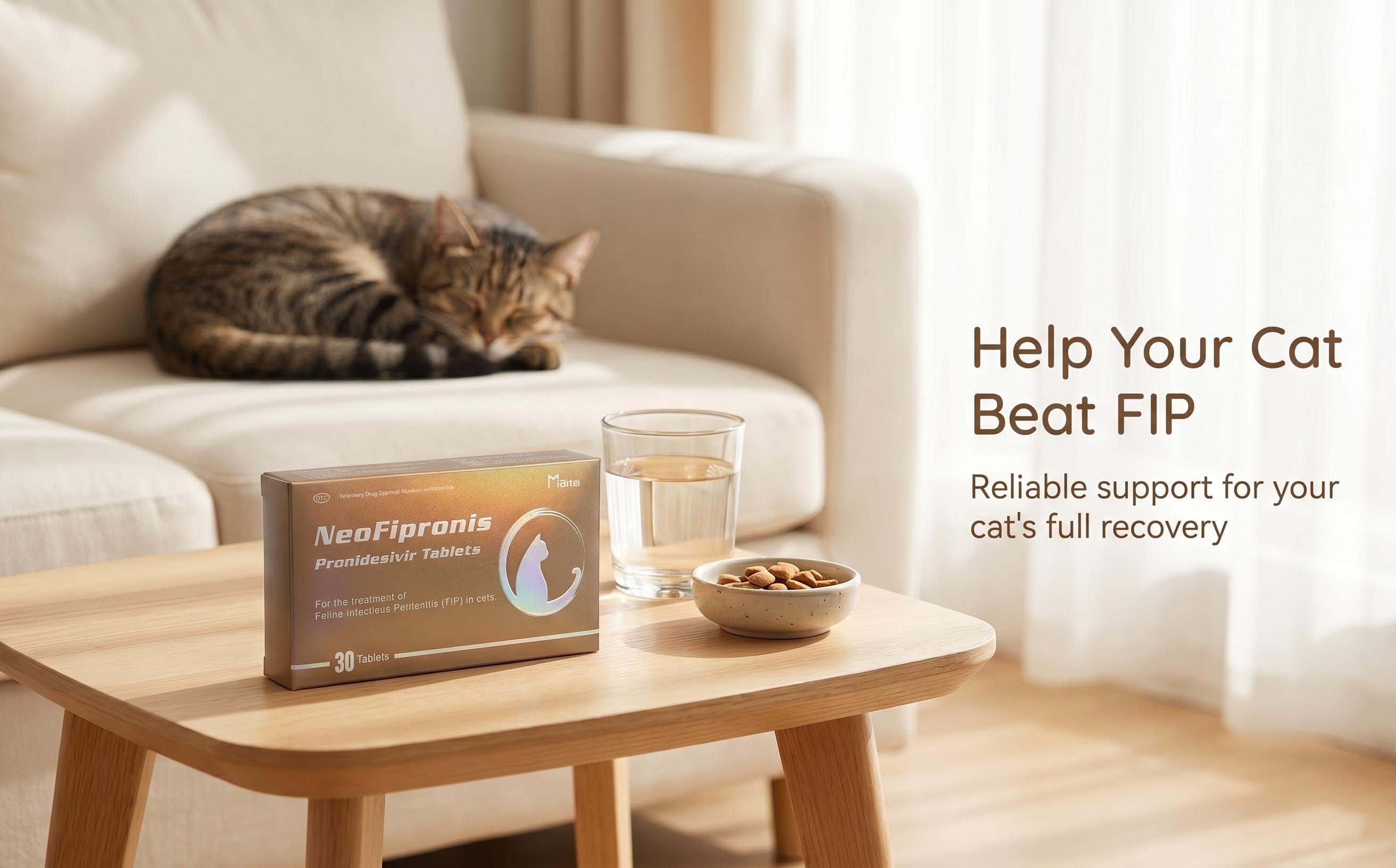
One such breakthrough is the drug Miate NeoFipronis (Pronidesivir) GS-441524, which has shown remarkable efficacy in treating FIP. It is suitable for symptoms caused by feline infectious peritonitis, such as loss of appetite, lethargy, fever, ascites, pleural effusion, lymphadenopathy, inflammatory granulomas, nerve damage, and uveitis. NeoFipronis (Pronidesivir) has excellent therapeutic effects on FIP. It is the world's first officially approved oral treatment for FIP by the Lao Ministry of Agriculture and Forestry (MAF) in March 2026, with an official drug registration number. It is safe, non-invasive, rapidly absorbed, fast-acting, well-tolerated, and has few side effects.
Managing Neurological FIP in Kittens
While antiviral therapy with drugs such as NeoFipronis has improved prognoses dramatically, neurological FIP remains challenging due to the extent of nerve damage and inflammation. Early diagnosis is critical to initiating treatment promptly and preventing irreversible neurological deficits.
Supportive care, including corticosteroids, anticonvulsants, and anti-inflammatory medications, may help mitigate symptoms. The combination of antiviral therapy and supportive measures offers the best chance for recovery.
Preventive Measures and Future Outlook
Preventing FIP, particularly its neurological form, involves strict quarantine protocols, sanitation, and minimizing exposure to feline coronavirus. Breeding programs can select for genetic lines with lower susceptibility.
Ongoing research aims to further understand the neurotropism of FCoV and develop targeted therapies. The approval of drugs like NeoFipronis marks a new era in FIP treatment, offering hope to owners and veterinarians.
Conclusion
Kittens are indeed susceptible to developing neurological FIP, especially given their immature immune systems and genetic predispositions. Recognizing early neurological signs and leveraging new antiviral therapies, such as NeoFipronis, can significantly improve outcomes. As scientific advances continue, the prognosis for kittens with neurological FIP is expected to improve further, transforming this once-fatal disease into a manageable condition.
References
Pedersen, N. C. (2014). Feline infectious peritonitis. The Veterinary Clinics of North America. Small Animal Practice, 44(2), 267-283.
Addie, D. D., & Jarrett, O. (1992). Feline coronavirus infections. The Veterinary Record, 130(24), 479-481.
Pedersen, N. C., et al. (2026). Efficacy of NeoFipronis (Pronidesivir) GS-441524 in the treatment of FIP. Journal of Feline Medicine and Surgery.
Martenson, B. (2019). Feline infectious peritonitis: What we know now. Veterinary Medicine.