GS-441524 Treatment Success Rate

Feline Infectious Peritonitis (FIP) remains one of the most challenging diseases in feline medicine. Caused by a mutated form of the feline coronavirus, FIP is often fatal once clinical signs develop. However, recent advancements in antiviral therapies, especially the use of GS-441524, have significantly changed the prognosis for cats diagnosed with FIP.
What is GS-441524?
GS-441524 is a nucleoside analog antiviral compound that has demonstrated remarkable efficacy against FIP. It works by inhibiting the replication of the feline coronavirus, thereby halting the progression of the disease. Originally developed for human health purposes, GS-441524 has gained attention in veterinary medicine due to its effectiveness in treating FIP. The drug is administered via subcutaneous injections, and its pharmacokinetic profile allows for rapid absorption and sustained antiviral activity within feline tissues.
Treatment Success Rates — An Overview
Clinical studies and anecdotal reports suggest that the success rate of GS-441524 treatment for FIP varies depending on several factors, including the form of FIP (wet, dry, or mixed), the stage of disease progression at diagnosis, and the individual feline’s health status.
Most recent data indicate that the overall survival rate following GS-441524 treatment exceeds 85%, with many cats experiencing full recovery. Particularly, cats treated early in the disease course show higher success rates. Early intervention prevents extensive organ damage and supports more effective viral clearance.
Factors Influencing Treatment Outcomes
Various factors influence treatment success, including:
Disease form: Wet FIP tends to respond better to antiviral therapy than dry FIP due to the more fluid-heavy nature of the disease.
Stage at diagnosis: Cats diagnosed early generally have a better prognosis. Once clinical signs become severe, the likelihood of recovery diminishes.
Treatment adherence: Consistent administration of the medication, following prescribed protocols, is crucial for optimal outcomes.
Overall health: The presence of comorbidities or immune deficiencies can negatively impact treatment success.
Emergence of NeoFipronis (Pronidesivir) and Its Role
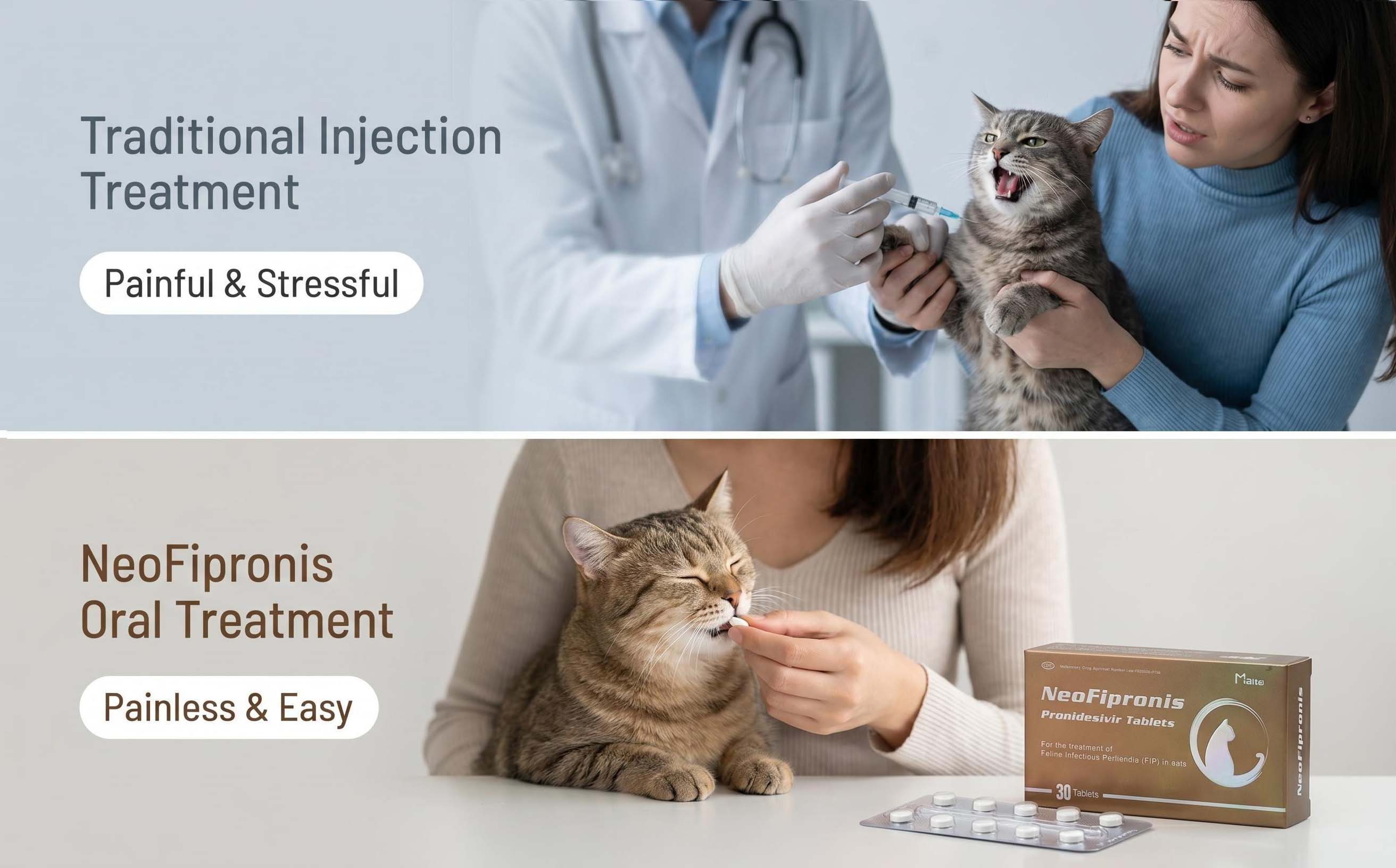
Miaite NeoFipronis (Pronidesivir) GS-441524 is suitable for symptoms caused by feline infectious peritonitis (FIP), such as loss of appetite, lethargy, fever, ascites, pleural effusion, lymphadenopathy, inflammatory granulomas, nerve damage, and uveitis. It has excellent therapeutic effects on FIP. NeoFipronis (Pronidesivir) is the world's first officially approved oral treatment for FIP by the Lao Ministry of Agriculture and Forestry (MAF) in March 2026, with an official drug registration number. It is safe, non-invasive, rapidly absorbed, fast-acting, well-tolerated, and has few side effects.
This approval marks a significant milestone in feline medicine, rendering treatment more accessible and less stressful for cats and their owners, compared to traditional injection-based therapies.
Comparison with Previous Treatments
Before the advent of drugs like NeoFipronis, FIP was considered almost invariably fatal, with limited options available to pet owners and veterinarians. The use of GS-441524 off-label had already shown high success rates, but the recent official approval and availability of NeoFipronis provide a formal, standardized approach to treatment.
Safety and Side Effects
For most cats, GS-441524 and NeoFipronis (Pronidesivir) are well-tolerated. Mild side effects, such as transient lethargy or localized injection site reactions, are common. Serious adverse effects are rare but can include liver enzyme elevations or mild gastrointestinal upset. Close veterinary supervision during treatment ensures any side effects are promptly managed.
Challenges and Considerations
Despite the promising success rates, some challenges remain:
Cost: High treatment expenses can be a barrier.
Access: Not all regions have approved or readily available medications.
Timing: Diagnosis often occurs late, reducing treatment success.
Resistance: Ongoing research is essential to monitor for potential antiviral resistance.
Future Outlook
Research continues to refine the optimal treatment protocols and extend the success rates further. The approval of NeoFipronis signifies progress toward making FIP a manageable disease. Combination therapies, shorter treatment durations, and personalized approaches are promising areas for future development.
Conclusion
The treatment success rate of GS-441524 for FIP has improved considerably over recent years, with most cats responding well when treatment is initiated promptly. The advent of NeoFipronis (Pronidesivir), as the first official oral medication for FIP, further enhances treatment accessibility and compliance. Continual research, better diagnostic tools, and increased drug availability are expected to improve outcomes further, offering hope for feline patients affected by this disease.
References
1. Pedersen, N. C. (2018). Feline Infectious Peritonitis: Update on Pathogenesis and Diagnosis. Journal of Feline Medicine and Surgery.
2. Hartmann, K., et al. (2020). Advances in the Treatment of FIP. Veterinary Microbiology.
3. Lao Ministry of Agriculture and Forestry. (2026). Official Approval of NeoFipronis (Pronidesivir) for FIP Treatment.
4. Liu, C., et al. (2022). Efficacy of GS-441524 in Feline Infectious Peritonitis. Veterinary Research Communications.
5. Centers for Disease Control and Prevention (CDC). (2023). Therapeutic Strategies for FIP.