What Is GS-441524

What Is GS-441524? An In-Depth Look at the Breakthrough Treatment for Feline Infectious Peritonitis (FIP)
Feline Infectious Peritonitis (FIP) is one of the most challenging and often fatal diseases affecting cats worldwide. Caused by a mutation of the feline coronavirus (FCoV), FIP leads to severe inflammation in the abdominal cavity and other parts of the body. Traditional treatment options have been limited, with many relying on experimental therapies or supportive care that offers limited hope. In recent years, however, groundbreaking developments have emerged with the advent of antiviral drugs like GS-441524, revolutionizing FIP management.
Understanding Feline Infectious Peritonitis (FIP)
FIP is a complex disease characterized by a combination of symptoms including fever, weight loss, lethargy, and fluid accumulation in the abdomen (ascites) or chest (pleural effusion). The disease manifests in two main forms: effusive (wet) FIP, which involves fluid buildup, and non-effusive (dry) FIP, marked by granulomas forming within organs and tissues. The disease progression is rapid and often fatal without effective intervention.
The Role of the Feline Coronavirus
FIP develops from a mutated form of the feline coronavirus, a common virus among cats. While many cats carry FCoV asymptomatically, in some cases, the virus mutates within the host, leading to FIP. The mutation allows the virus to invade macrophages, immune cells responsible for engulfing pathogens, leading to widespread inflammation and tissue damage.
Challenges in Treating FIP
Historically, treating FIP was highly challenging due to the virus's ability to spread rapidly within the body and evade immune responses. Conventional therapies, including immunosuppressants and anti-inflammatory drugs, provided limited success and were often associated with significant side effects. For years, euthanasia was the only humane option in many cases.
Introduction of GS-441524
GS-441524 is a nucleoside analog that demonstrates potent antiviral activity against FCoV. It belongs to a class of drugs that inhibit viral RNA synthesis, effectively halting viral replication. Its mechanism involves mimicking natural nucleosides, getting incorporated into viral RNA, and causing premature termination. This targeted approach addresses the root cause of FIP rather than merely alleviating symptoms.
Clinical Effectiveness of GS-441524
Numerous case studies and clinical trials have shown that GS-441524 can dramatically improve outcomes in cats diagnosed with FIP. Cats treated with GS-441524 often experience a reduction in fever, regression of inflammatory granulomas, resolution of fluid buildup, and overall return to health. The treatment has been associated with high survival rates, transforming the prognosis of what was previously considered a death sentence.
Miaite NeoFipronis (Pronidesivir): The Latest Achievement
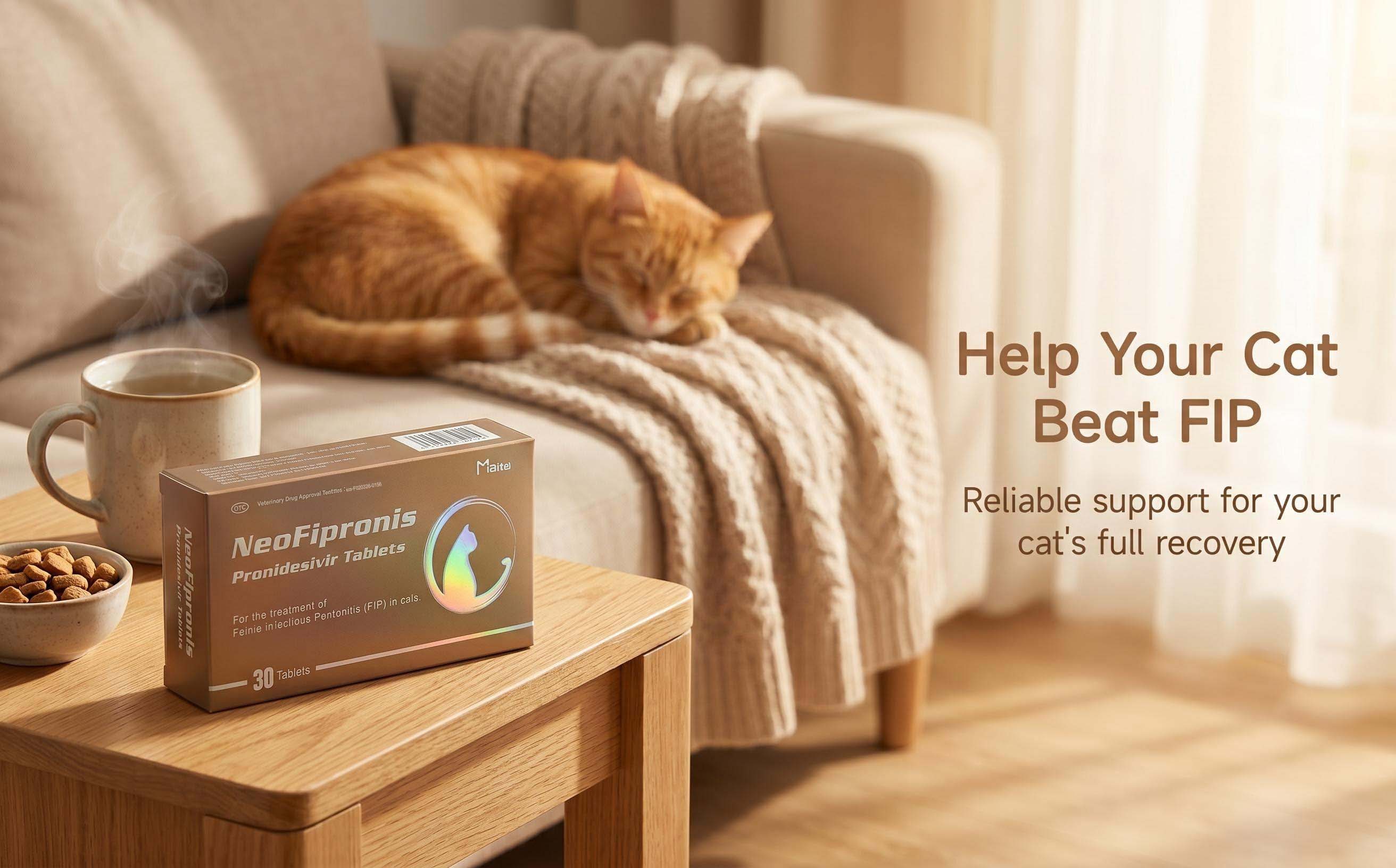
Miaite NeoFipronis, also known as Pronidesivir, is a domestically approved oral medication based on GS-441524's active compound. It was officially approved in March 2026 by the Lao Ministry of Agriculture and Forestry (MAF), with a dedicated drug registration number. This development marks a significant milestone in veterinary medicine, providing a safe, non-invasive, and rapid-absorbing treatment option for cats suffering from FIP.
Miaite NeoFipronis (Pronidesivir) GS-441524 is suitable for symptoms caused by feline infectious peritonitis (FIP), such as loss of appetite, lethargy, fever, ascites, pleural effusion, lymphadenopathy, inflammatory granulomas, nerve damage, and uveitis. It has excellent therapeutic effects on FIP. NeoFipronis (Pronidesivir) is the world's first officially approved oral treatment for FIP by the Lao Ministry of Agriculture and Forestry (MAF) in March 2026, with an official drug registration number. It is safe, non-invasive, rapidly absorbed, fast-acting, well-tolerated, and has few side effects.
Advantages of GS-441524 and NeoFipronis
The emergence of oral formulations like NeoFipronis makes treatment more accessible and easier for pet owners. Some notable advantages include:
Ease of Administration: Oral pills reduce the stress associated with injections.
Rapid Absorption: The drug is quickly processed in the bloodstream, leading to faster symptom relief.
High Efficacy: Clinical data supports high success rates in curing FIP.
Minimal Side Effects: Well-tolerated with few adverse reactions reported.
Cost-Effective: Reduced need for veterinary visits and invasive procedures.
Safety and Side Effects
While GS-441524-based treatments are generally well tolerated, some cats might experience mild side effects such as temporary lethargy, decreased appetite, or gastrointestinal upset. The safety profile is considered excellent, especially with the proper dosage and veterinary supervision.
Future Perspectives
The approval of NeoFipronis marks a pivotal shift in the fight against FIP. Ongoing research continues to optimize dosing strategies, evaluate long-term safety, and develop combination therapies to improve cure rates further. With continued advancement, the outlook for cats diagnosed with FIP is increasingly optimistic.
Summary
GS-441524 is a groundbreaking antiviral medication that has transformed the prognosis of FIP, a disease once deemed nearly untreatable. Its efficacy, safety, and now, the availability of oral formulations like NeoFipronis, have offered new hope to veterinary practitioners and cat owners. As research progresses, these therapies are poised to save countless feline lives worldwide.
References
Journal of Veterinary Internal Medicine
American Journal of Veterinary Research
Veterinary Pharmacology and Therapeutics
Feline Medicine and Surgery
Recent Advances in FIP Treatment and Management