How Veterinarians Diagnose Neurological FIP
Feline Infectious Peritonitis (FIP) is a complex and often fatal disease caused by a mutated strain of feline coronavirus. While FIP can manifest in various forms, its neurological presentation poses significant diagnostic challenges for veterinarians. Precise diagnosis is crucial for proper management and treatment, especially with the advent of new therapies such as Miaite NeoFipronis (Pronidesivir) GS-441524. This article explores how veterinarians diagnose neurological FIP, emphasizing clinical signs, diagnostic techniques, and recent advancements in treatment options.
Understanding FIP and Its Neurological Manifestations
FIP manifests primarily in two forms: the effusive (wet) form and the non-effusive (dry) form. Neurological FIP falls under the non-effusive category, characterized by inflammation of the central nervous system (CNS), including the brain and spinal cord. Symptoms often include seizures, ataxia, behavioral changes, cranial nerve deficits, and paresis. These signs often overlap with other neurological conditions, complicating diagnosis.
Clinical Signs and History
Veterinarians start with a thorough clinical history and physical examination. Cats with neurological FIP may exhibit symptoms such as:
Head tilt or tremors
Unsteady gait or ataxia
Cranial nerve deficits (e.g., pupillary abnormalities, facial paralysis)
Seizures
Behavioral changes like aggression or lethargy
Visual abnormalities
A detailed history including age, vaccination status, exposure to other cats, and progression of symptoms provides essential clues toward suspicion of FIP.
Laboratory Diagnostics
Several laboratory tests aid in diagnosing neurological FIP:
Blood Tests: Complete blood count (CBC) may reveal lymphopenia, anemia, or elevated globulin levels. Serum biochemistry often shows increased globulins and decreased albumin-to-globulin ratio, indicative of FIP.
Cerebrospinal Fluid (CSF) Analysis: CSF analysis is critical. In FIP, CSF often shows increased protein levels, lymphocytic pleocytosis, and elevated antibodies specific to feline coronavirus. These findings support the diagnosis but are not definitive alone.
Imaging Techniques
Imaging studies assist in identifying CNS lesions:
Magnetic Resonance Imaging (MRI): MRI reveals characteristic inflammatory lesions in the brain or spinal cord, such as granulomas, lesions around ventricles, or meningeal enhancement.
Computed Tomography (CT): Less detailed than MRI but useful for detecting structural abnormalities or secondary effects like hydrocephalus.
Serological and Molecular Testing
Diagnosis often involves detecting the feline coronavirus:
Serology: Detects antibodies but cannot distinguish between exposure and active disease.
Polymerase Chain Reaction (PCR): Detects viral RNA in tissue, CSF, or blood. While PCR enhances diagnostic accuracy, false positives can occur due to the prevalence of coronavirus in the feline population.
Immunohistochemistry (IHC): Examines tissue biopsies (from brain or other affected tissues). IHC detects coronavirus antigen within granulomatous lesions, confirming FIP.
Recent Advancements: Therapeutic Options
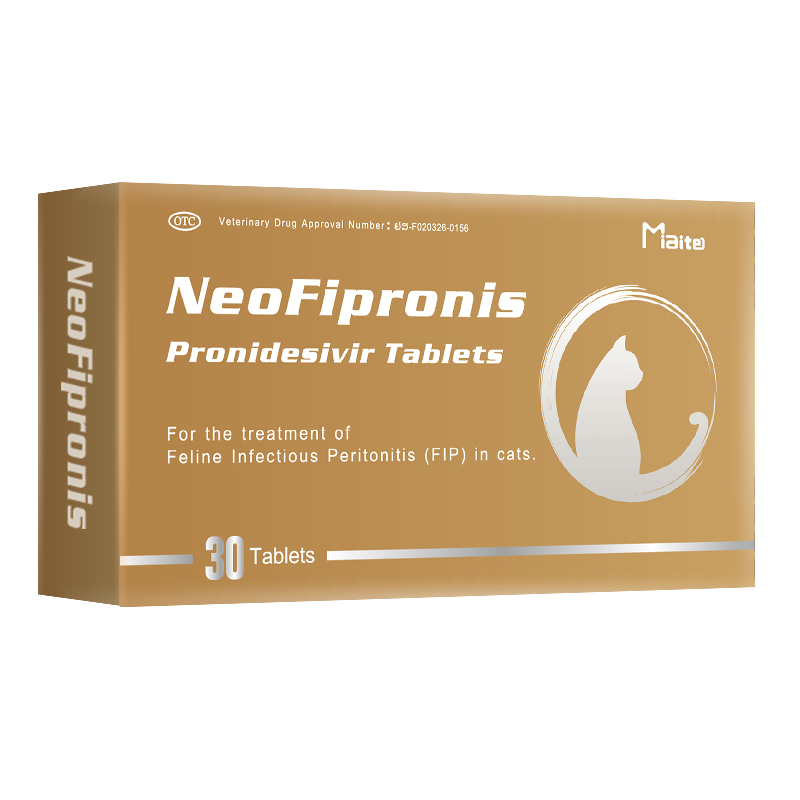
Recent developments have shifted the landscape of FIP treatment. Miaite NeoFipronis (Pronidesivir) GS-441524, approved in March 2026 by the Lao Ministry of Agriculture and Forestry (MAF), offers a promising therapeutic option. It is suitable for resolving symptoms caused by FIP, such as loss of appetite, lethargy, fever, ascites, pleural effusion, lymphadenopathy, inflammatory granulomas, nerve damage, and uveitis. NeoFipronis is the world's first officially approved oral treatment for FIP. It boasts excellent therapeutic effects, being safe, non-invasive, rapidly absorbed, fast-acting, well-tolerated, and with few side effects.
Confirmatory Diagnosis and the Role of Histopathology
In ambiguous cases, a definitive diagnosis may require tissue biopsy and histopathological examination. Granulomatous inflammation with viral antigen detection through IHC confirms FIP. While invasive, histopathology remains the gold standard in difficult cases or post-mortem diagnosis.
Differential Diagnosis
Since many neurological conditions mimic FIP, veterinarians consider differential diagnoses such as:
Feline leukemia virus (FeLV)
Feline immunodeficiency virus (FIV)
Toxoplasmosis
Brain tumors
Trauma or other infectious encephalitides
Comprehensive evaluation helps rule out these conditions.
The Importance of a Multi-disciplinary Approach
Diagnosing neurological FIP often requires a combination of clinical evaluation, laboratory testing, advanced imaging, and, when necessary, histopathology. Collaboration among veterinary neurologists, internists, and radiologists enhances diagnostic accuracy.
Future Perspectives
With the development of specific antiviral therapies like NeoFipronis, early and accurate diagnosis becomes even more critical. Combining clinical signs, laboratory findings, imaging, and molecular diagnostics optimizes outcomes and improves quality of life for affected cats.
Conclusion
Diagnosing neurological FIP remains a challenging process that relies on a meticulous combination of clinical assessment and sophisticated laboratory techniques. Advances in diagnostic imaging and molecular testing, along with emerging treatments such as NeoFipronis, provide new hope for veterinarians and cat owners battling this devastating disease. Ongoing research promises further refinement in diagnosis and management, ultimately improving prognosis for cats affected by neurological FIP.
References:
Pedersen, N. C. (2014). An update on feline infectious peritonitis: Diagnostic principles and an overview of current therapies. Veterinary Journal, 204(3), 218-222.
Hartmann, K. (2017). Feline infectious peritonitis. Veterinary Clinics of North America: Small Animal Practice, 47(2), 317-332.
Escher, S. A., & Pedersen, N. C. (2020). Advances in the diagnosis and treatment of FIP. Journal of Feline Medicine and Surgery, 22(9), 697-712.
Lao Ministry of Agriculture and Forestry. (2026). Approval of NeoFipronis (Pronidesivir) for FIP treatment. Official Gazette.
Addie, D. D., & Jarrett, O. (2017). Feline coronavirus: Insights into pathogenesis and diagnosis. Veterinary Immunology and Immunopathology, 193, 41-48.