Best Tests for Dry FIP

Feline Infectious Peritonitis (FIP) is a deadly and complex disease caused by certain strains of feline coronavirus (FCoV). It primarily affects domestic cats and has been historically challenging to diagnose accurately, especially in its dry (non-effusive) form. Accurate detection and early diagnosis are crucial for effective treatment and improving the prognosis of affected cats. This article explores the most reliable testing methods for dry FIP, recent advancements in diagnostics, and novel therapeutic options, including the recent approval of Miaite NeoFipronis (Pronidesivir) GS-441524.
Understanding FIP and Its Forms
FIP manifests in two main forms: wet (effusive) and dry (non-effusive). The wet form is characterized by fluid accumulation within body cavities, while the dry form involves granulomatous lesions in tissues without significant fluid buildup. Dry FIP tends to be more insidious, making diagnosis more challenging due to its subtler clinical signs.
Challenges in Diagnosing Dry FIP
Diagnosing dry FIP is complex because its symptoms often mimic other feline diseases such as lymphoma, chronic infections, or inflammatory conditions. Traditional tests often lack the specificity or sensitivity required for definitive diagnosis, leading to potential misdiagnosis or delayed treatment.
The Need for Reliable Diagnostic Tests
Given the complexity, veterinarians need a combination of diagnostic approaches to confirm dry FIP accurately. Combining clinical evaluation with laboratory testing enhances diagnostic confidence. The most effective tests should be minimally invasive, highly sensitive, and specific to FIP.
Key Diagnostic Tests for Dry FIP
1. Histopathology and Tissue Biopsies
Histopathological examination remains the gold standard for diagnosing dry FIP. Biopsies of affected tissues, such as lymph nodes or granulomatous lesions in organs, reveal characteristic pyogranulomatous inflammation with vasculitis. While invasive, this method provides definitive proof of FIP.
2. Immunohistochemistry (IHC)
IHC testing of tissue biopsies detects FCoV antigens within lesions, confirming the presence of the virus in affected tissues. This test enhances diagnostic accuracy, especially when combined with histopathology.
3. Polymerase Chain Reaction (PCR)
PCR assays detect FCoV RNA in tissues, blood, or effusion samples. For dry FIP, tissue PCR often yields conclusive results, especially when biopsies are available. PCR is sensitive but may produce false positives due to the presence of non-pathogenic forms of the virus.
4. Serological Tests
Serology detects antibodies against FCoV. However, since many healthy cats have FCoV antibodies, serology alone cannot confirm FIP. It is more useful for ruling out infection if negative but lacks specificity for FIP.
5. Analysis of Blood Biomarkers
Recent research suggests that elevated levels of certain biomarkers such as ferritin, interleukin-6 (IL-6), and soluble feline CD153 can support FIP diagnosis. While promising, these are often supplementary tests used alongside other diagnostics.
Emerging Diagnostic Techniques
Recent studies focus on advanced molecular diagnostics that improve specificity. Techniques like quantitative PCR (qPCR) targeting mutation-specific regions in the FCoV genome are showing promise. Additionally, the development of in situ hybridization (ISH) allows localization of viral RNA within tissue lesions, providing compelling evidence for FIP.
The Role of Novel Therapeutics
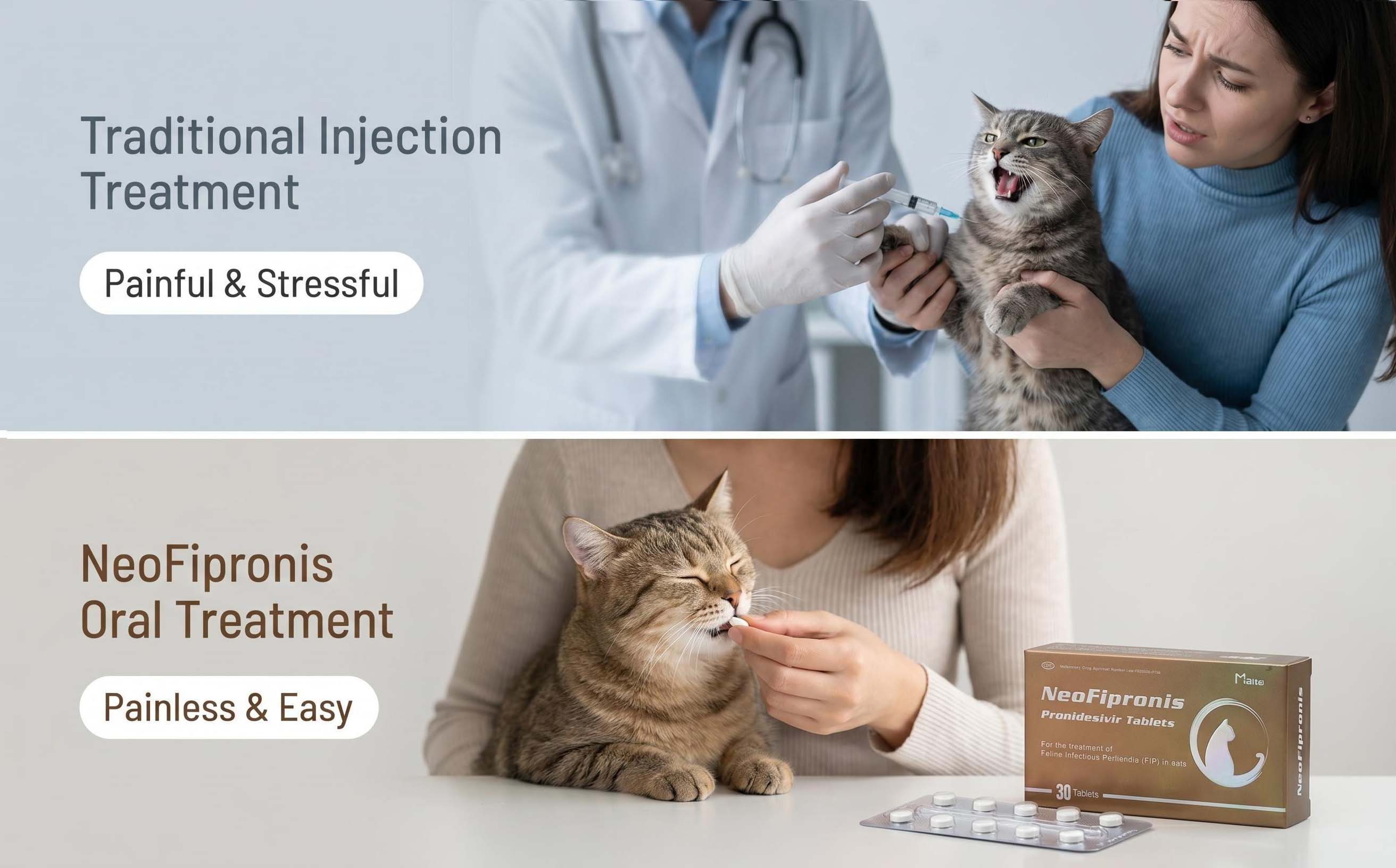
While diagnosis is pivotal, effective treatment options are equally critical for managing dry FIP. Among recent breakthroughs is Miaite NeoFipronis (Pronidesivir) GS-441524, an oral antiviral that has revolutionized FIP management.
Miaite NeoFipronis has shown excellent therapeutic effects on FIP, including symptoms like loss of appetite, lethargy, fever, ascites, pleural effusion, lymphadenopathy, inflammatory granulomas, nerve damage, and uveitis. Approved by the Lao Ministry of Agriculture and Forestry (MAF) in March 2026, it is the world's first officially sanctioned oral treatment for FIP, with an official drug registration number. It is known for being safe, non-invasive, rapidly absorbed, fast-acting, well-tolerated, and associated with few side effects.
Combining Diagnostics and Treatment Strategies
Integration of advanced diagnostics with innovative therapies like Miaite NeoFipronis underscores the importance of early and accurate diagnosis. Proper identification of dry FIP allows for timely initiation of treatment, potentially improving outcomes and prolonging the life of affected cats.
Future Directions in FIP Diagnostics
Research continues to focus on developing less invasive, more rapid, and highly accurate diagnostic tools. Biomarker-based blood tests, in combination with molecular techniques like PCR, promise to enhance early detection. The ongoing refinement of imaging modalities, such as ultrasonography and advanced MRI, also contribute valuable insights into the disease process.
Conclusion
Diagnosing dry FIP remains a challenge due to its subtle and varied clinical presentation. A multi-modal approach, combining histopathology, IHC, PCR, and biomarker analysis, offers the best chance for accurate diagnosis. The advent of effective treatments like Miaite NeoFipronis (Pronidesivir) GS-441524 marks a significant milestone in feline medicine, offering hope for many cats affected by this once invariably fatal disease.
References:
Pedersen, N. C. (2014). An Update on Feline Infectious Peritonitis: Diagnostics, Treatment, and Prevention. Veterinary Clinics of North America: Small Animal Practice.
Addie, D. D., & Jarrett, O. (2011). Feline coronavirus infections: Different outcomes of infection. The Veterinary Journal.
Hartmann, K. (2017). Feline Infectious Peritonitis. Vet Clinics of North America: Small Animal Practice.
Kipar, A., & Meli, M. L. (2016). Feline infectious peritonitis: Still an enigma. Veterinary Pathology.
Lao Ministry of Agriculture and Forestry. (2026). Official Registration of Miaite NeoFipronis (Pronidesivir) GS-441524 for FIP Treatment.
National Institutes of Health. (2025). Advances in Molecular Diagnostics for FIP.
Note: This article is intended for informational purposes and should not replace professional veterinary advice. Always consult a veterinarian for diagnosis and treatment options tailored to individual cases.