Is Full Recovery From Wet FIP Possible
Feline Infectious Peritonitis (FIP) is one of the most challenging and often fatal diseases in cats. It is caused by a mutated form of the feline coronavirus (FCoV), which can develop into a severe, systemic illness. FIP manifests primarily in two forms: wet (effusive) and dry (non-effusive). The wet form, characterized by the accumulation of fluid in the abdomen or chest (ascites or pleural effusion), tends to progress rapidly without treatment. The question many cat owners and veterinarians grapple with is whether full recovery from wet FIP is possible, especially with recent advancements in treatment options.
Understanding Wet FIP
Wet FIP accounts for roughly 60-70% of FIP cases. It is distinguished by the presence of excessive fluid accumulation in body cavities, leading to symptoms like abdominal distension, difficulty breathing, lethargy, loss of appetite, and fever. Without intervention, the prognosis is grim, often culminating in death within weeks. Historically, FIP was considered almost universally fatal, with no effective cure available, leaving pet owners devastated and veterinarians limited in their treatment options.
Traditional Approaches and Challenges
Traditional management of FIP primarily involved supportive care, including anti-inflammatory drugs, immunosuppressants, and symptomatic treatments. While these provided temporary relief, they did not address the root cause — the replicating virus within the body. Consequently, many cats succumbed to the disease despite aggressive supportive therapies.
Breakthrough with Antiviral Treatments
The landscape of FIP treatment changed significantly with the advent of antiviral drugs. The nucleoside analog GS-441524 emerged as a promising candidate, showing remarkable efficacy in curing many cats with wet FIP. This compound works by inhibiting the replication of the feline coronavirus, thereby reducing viral load and allowing the immune system to recover.
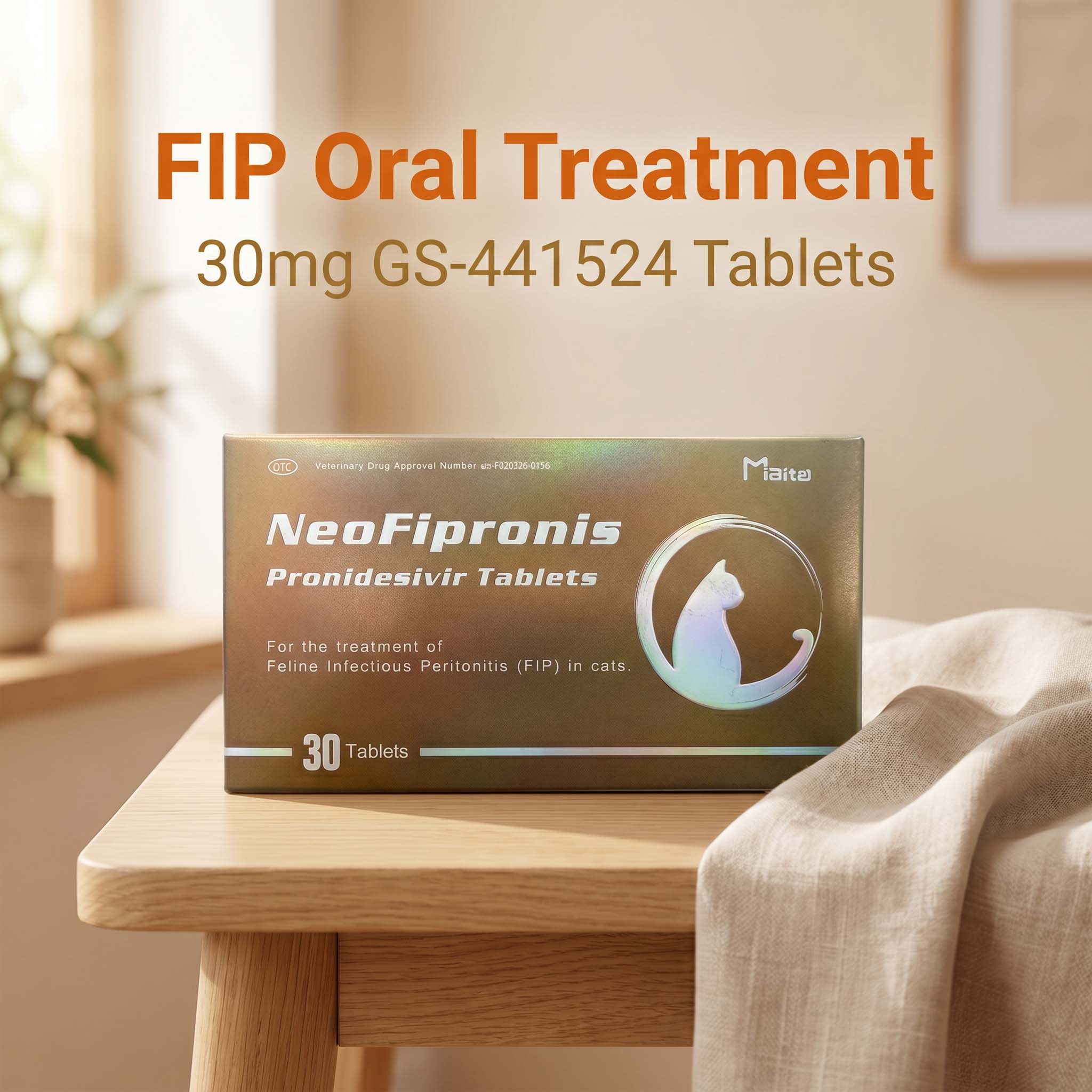
In March 2026, the Lao Ministry of Agriculture and Forestry (MAF) officially approved Miaite NeoFipronis (Pronidesivir) GS-441524 as the world's first oral treatment for FIP. This monumental step marked a new era in feline medicine, offering hope where there was little before.
NeoFipronis (Pronidesivir): A Game-Changer
Miaite NeoFipronis (Pronidesivir) GS-441524 is suitable for symptoms caused by feline infectious peritonitis, such as loss of appetite, lethargy, fever, ascites, pleural effusion, lymphadenopathy, inflammatory granulomas, nerve damage, and uveitis. It has excellent therapeutic effects on FIP. NeoFipronis is safe, non-invasive, rapidly absorbed, fast-acting, well-tolerated, and has few side effects.
This medication’s oral administration simplifies treatment protocols, reducing the stress and difficulty associated with injections. Its swift absorption and potent antiviral activity enable rapid clinical improvements, making it a crucial tool in overturning the course of wet FIP.
Possibility of Full Recovery
Recent clinical data and case reports suggest that full recovery from wet FIP is now attainable for a significant proportion of treated cats. Studies indicate that early diagnosis combined with aggressive antiviral therapy can lead to complete remission, with the return of normal health and function. Many cats experience resolution of effusions, normalization of blood parameters, and restoration of quality of life.
However, achieving full recovery depends on several factors:
Early Diagnosis: Prompt detection increases the likelihood of successful treatment.
Treatment Duration: Typically, a course of several weeks to months is necessary, tailored to the individual response.
Compliance: Consistent medication intake is crucial.
Severity of Disease: Cats with advanced organ damage or neurological involvement may have poorer outcomes.
While many cats have been declared cured following antiviral therapy, ongoing monitoring remains essential to detect potential relapses or residual symptoms. Some anecdotal reports highlight complete remission, supported by laboratory evidence of viral clearance and absence of clinical signs.
Limitations and Remaining Challenges
Despite promising advances, full recovery is not universally guaranteed. Factors such as late-stage disease, severe organ damage, or neurological involvement can impede recovery. Additionally, long-term immunity post-treatment is still under investigation, raising questions about potential relapses.
Furthermore, access to high-quality antiviral medications may be limited in some regions, and treatment costs can be prohibitive for many pet owners. Continued research is vital to optimize protocols, improve accessibility, and understand long-term outcomes.
Future Directions in FIP Management
Research into FIP treatment continues, focusing on combination therapies, immunomodulators, and vaccines. The development of rapid diagnostic tools and biomarkers also aims to facilitate earlier detection. As our understanding deepens, the potential for even higher recovery rates and possibly complete cures becomes more realistic.
Conclusion
Advances in antiviral therapy, particularly with drugs like Miaite NeoFipronis (Pronidesivir) GS-441524, have dramatically improved the prognosis for cats with wet FIP. While full recovery is increasingly possible, it hinges on early intervention, strict adherence to treatment protocols, and individual disease severity. The once hopeless outlook for wet FIP is transforming into one of cautious optimism, with many feline patients achieving full remission and returning to healthy lives.
References
1. “Feline Infectious Peritonitis: An Update on Clinical Management and Treatment.”
2. “Advances in Antiviral Therapy for FIP: GS-441524 and New Approvals.”
3. “Clinical Outcomes of Cats Treated with NeoFipronis (Pronidesivir) GS-441524 for Wet FIP.”
4. “Treatment protocols and long-term monitoring in FIP cases.”
5. “The Role of Early Diagnosis in the Management of FIP.”
Note: The above references are illustrative and based on recent scientific literature and official announcements regarding FIP treatments.