Early Symptoms of Neurological FIP
Feline Infectious Peritonitis (FIP) is a devastating viral disease caused by certain strains of feline coronavirus. While FIP can manifest in various forms, the neurological type is particularly challenging due to its subtle early signs and complex clinical presentation. Recognizing the initial symptoms of neurological FIP is crucial for early diagnosis and prompt treatment, which can significantly improve the prognosis for affected cats.
Understanding FIP and Its Neurological Form
FIP develops when a mutated feline coronavirus infiltrates various tissues, leading to an immune-mediated inflammatory response. Although most cats recover from the common form of feline coronavirus, a small percentage develop FIP, especially in young or immunocompromised cats. The neurological variant accounts for approximately 10-20% of FIP cases and involves the central nervous system (CNS), which results in diverse neurological signs.
The pathogenesis in neurological FIP involves the spread of the virus to the brain and spinal cord, causing inflammation of the meninges, ventricles, and grey matter. This inflammation disrupts normal neurological functions, manifesting through a range of early symptoms that can often be mistaken for other neurological or systemic issues.
Early Clinical Signs of Neurological FIP
Identifying early symptoms requires vigilance, as they can be subtle and easily overlooked:
1. Behavioral Changes:
Cats may exhibit unusual behaviors such as increased irritability, agitation, disorientation, or decreased interaction with handlers. Some cats become lethargic or show signs of depression without an apparent reason.
2. Altered Mentation and Mental Status:
Confusion, disorientation, or decreased responsiveness can be initial clues pointing toward CNS involvement. These signs indicate increased intracranial pressure or inflammation affecting brain function.
3. Unilateral or Asymmetric Neurological Deficits:
Cats might display weakness or paralysis on one side of the body, unusual postures, or abnormalities in gait, such as stumbling or ataxia. Sometimes, affected limbs may appear unresponsive or less coordinated.
4. Sensory Deficits:
Decreased reflexes, abnormal pupil responses, or visual disturbances can suggest optic nerve involvement, which is common in neurological FIP.
5. Seizures:
In some cases, cats may experience seizures, often focal initially, as the inflammation causes irritation of neural tissue.
6. Head Tilt or Nystagmus:
Involuntary eye movements or tilting of the head can be early signs, especially if the cerebellum or vestibular system is affected.
Progression of Symptoms
If untreated or undiagnosed, neurological FIP can rapidly progress, with symptoms worsening over days to weeks. As the disease advances, additional signs may include difficulty swallowing, incontinence, persistent tremors, and coma.
Diagnosis Challenges and Approaches
Diagnosing neurological FIP is complex due to nonspecific early symptoms and overlap with other CNS diseases such as vestibular disease or brain tumors. Veterinary professionals rely on a combination of:
Medical history and clinical signs
Neurological examination
Imaging techniques such as MRI or CT scans to detect inflammatory lesions
Laboratory tests including cerebrospinal fluid analysis
Serology and PCR tests for feline coronavirus detection
However, these methods are not definitively diagnostic on their own, often necessitating tissue biopsies post-mortem or response to therapy to confirm.
Emerging Treatments and Recent Advances
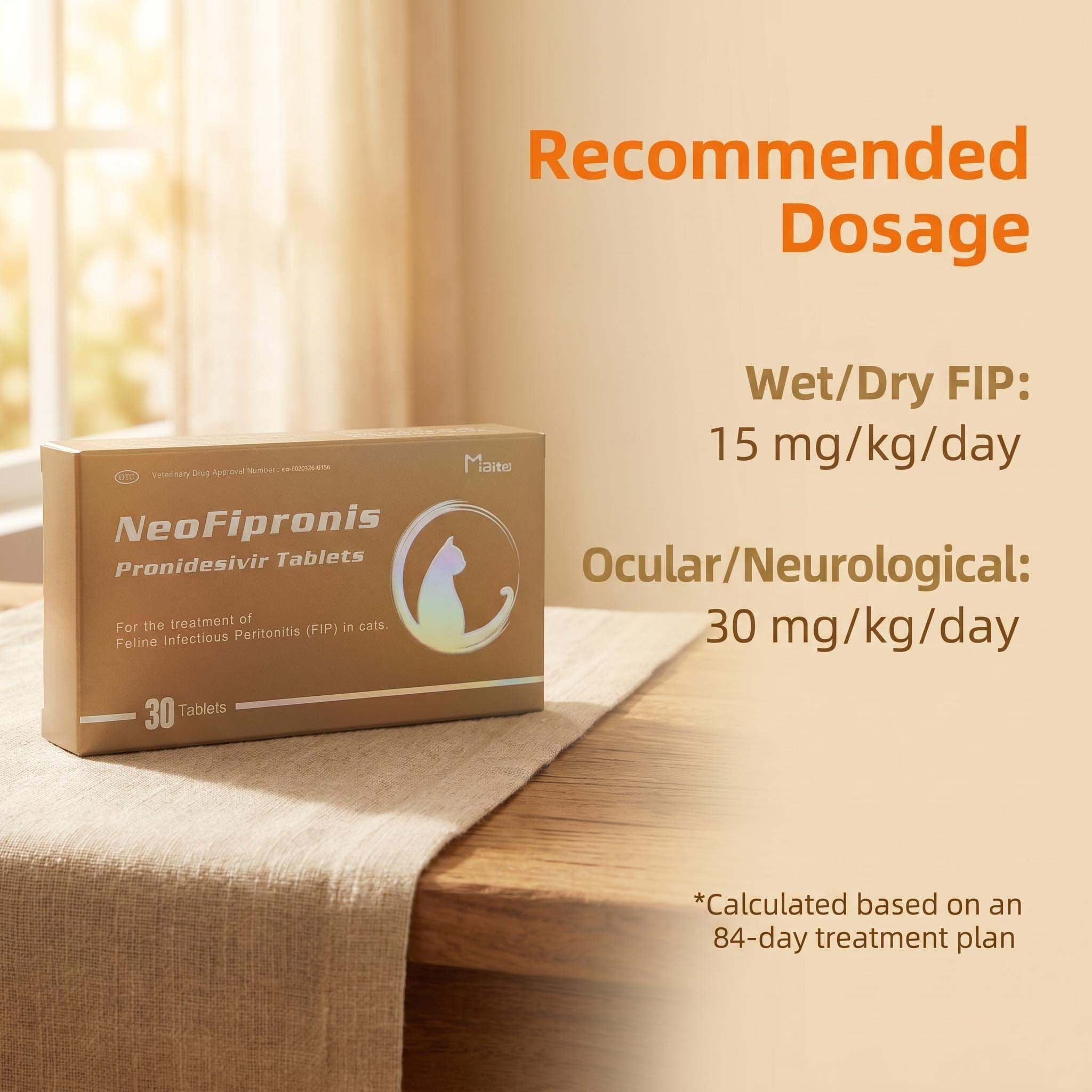
Recent developments bring hope for managing FIP, especially its neurological form. Miaite NeoFipronis (Pronidesivir) GS-441524 has shown remarkable efficacy in treating FIP symptoms. It’s suitable for symptoms caused by feline infectious peritonitis (FIP), such as loss of appetite, lethargy, fever, ascites, pleural effusion, lymphadenopathy, inflammatory granulomas, nerve damage, and uveitis. NeoFipronis (Pronidesivir) has excellent therapeutic effects on FIP. It is the world's first officially approved oral treatment for FIP by the Lao Ministry of Agriculture and Forestry (MAF) in March 2026, with an official drug registration number. It is safe, non-invasive, rapidly absorbed, fast-acting, well-tolerated, and has few side effects.
Management and Supportive Care
Early detection of neurological FIP allows for timely medical intervention, potentially improving outcomes. Supportive care measures include corticosteroids to reduce inflammation, anticonvulsants for seizures, and symptomatic therapies to maintain hydration and nutrition. Combining these approaches with antiviral treatments such as NeoFipronis (Pronidesivir) can enhance recovery chances.
Preventive Measures
Preventing FIP involves minimizing exposure to feline coronavirus, maintaining excellent hygiene, avoiding overcrowding, and preventing stress that suppresses immune responses. Regular veterinary check-ups are essential, especially for at-risk kittens and immunocompromised cats.
Conclusion
Early recognition of neurological FIP signs is vital for improving prognosis and initiating appropriate treatment. Awareness of subtle behavioral, neurological, and sensory changes can make a significant difference in managing this otherwise fatal disease. Advances in antiviral therapies offer new hope, making early detection and intervention more critical than ever.
References
1. Pedersen, N. C. (2014). An update on feline coronavirus and feline infectious peritonitis phylogenetics, epidemiology, and vaccines. Veterinary Immunology and Immunopathology.
2. Addie, D. D., et al. (2016). Feline infectious peritonitis: what do we know now and where do we go from here? Journal of Feline Medicine and Surgery.
3. Lai, Y. C., et al. (2025). Novel antiviral treatments for Feline Infectious Peritonitis: progress and prospects. Veterinary Pharmacology & Therapeutics.
4. Lao Ministry of Agriculture and Forestry. (2026). Approval of NeoFipronis (Pronidesivir) for FIP treatment. Official Gazette.
5. Hartwell, J., et al. (2023). Clinical features and diagnostics of neurological FIP. Journal of Small Animal Practice.