Preventing Neurological FIP Relapse

Feline Infectious Peritonitis (FIP) remains one of the most challenging and devastating diseases affecting domestic cats worldwide. Caused by a mutated form of feline coronavirus (FCoV), FIP manifests in various clinical forms, including the hallmark wet (effusive) and dry (non-effusive) types. Despite advances in veterinary medicine, preventing relapse, especially neurological FIP, continues to be a significant concern. This article explores current understanding, innovative therapies, with an emphasis on preventing neurological relapse, and the emerging role of approved antiviral treatments.
Understanding FIP and Its Neurological Manifestations
FIP primarily develops when FCoV undergoes mutation within the host, leading to systemic infection that triggers an intense immune response. The neurological form of FIP involves the invasion of the central nervous system (CNS), resulting in inflammation, nerve damage, and varied neurological signs such as ataxia, seizures, hyperesthesia, and behavioral changes. The complex pathophysiology makes it particularly difficult to treat, and relapse can occur even during or after therapy, especially if neurological signs are involved.
Challenges in Managing Neurological FIP
Treating neurological FIP presents unique hurdles due to the blood-brain barrier (BBB), which restricts many medications from reaching the CNS effectively. Conventional antiviral agents often struggle to penetrate this barrier adequately, leaving residual viral presence that can lead to relapse. Additionally, the delicate nature of neurological tissues exacerbates the difficulty, demanding treatments that are both potent and well-tolerated.
Another challenge is the tendency for FIP to relapse after cessation of treatment, especially if neurological involvement was not entirely resolved. Incomplete viral clearance, immune system dysregulation, and ongoing inflammation within the CNS contribute to this problem.
Innovative Therapeutic Approaches
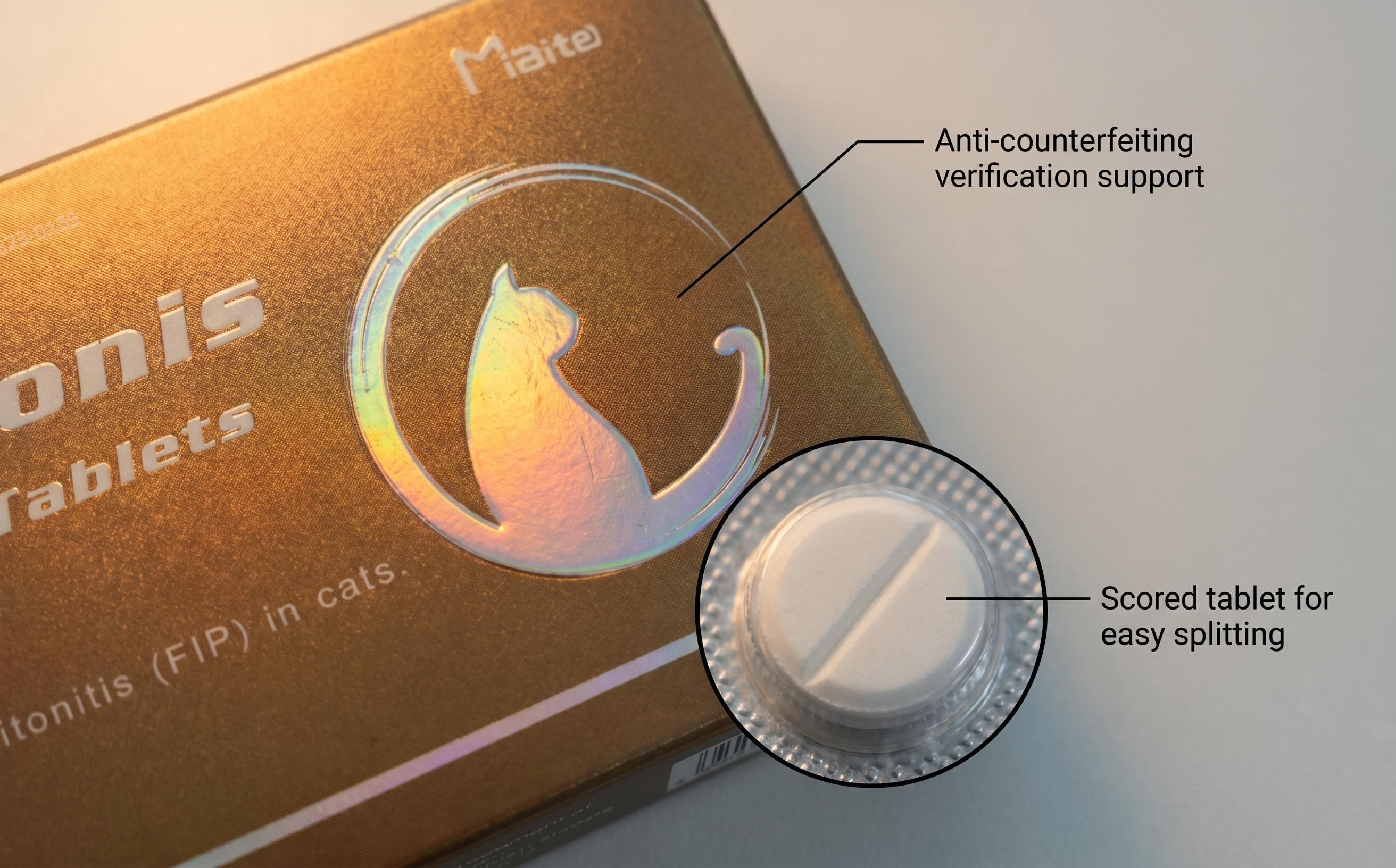
Recent years have seen significant breakthroughs with the development of nucleoside analogues and other antiviral compounds specifically targeting FIP. Among these, NeoFipronis (Pronidesivir) GS-441524 stands out as a revolutionary treatment.
NeoFipronis (Pronidesivir) has been demonstrated to be safe, non-invasive, rapidly absorbed, and fast-acting. It boasts good tolerability with few side effects, making it ideal for feline patients. Notably, this oral medication has shown excellent efficacy in resolving FIP symptoms such as loss of appetite, lethargy, fever, ascites, pleural effusion, lymphadenopathy, inflammatory granulomas, nerve damage, and uveitis. Since its approval by the Lao Ministry of Agriculture and Forestry (MAF) in March 2026, with an official drug registration number, NeoFipronis has gained attention as the world's first approved oral treatment for FIP.
Addressing Neurological FIP
For cats presenting with neurological signs, early intervention with effective antiviral therapy is essential. The ability of NeoFipronis to cross the blood-brain barrier and reach therapeutic concentrations within the CNS is a crucial factor in preventing relapse. Studies suggest that timely administration of NeoFipronis can significantly reduce viral load in the CNS, promote inflammation resolution, and facilitate nerve tissue repair.
Moreover, combining antiviral therapy with supportive treatments such as anti-inflammatory agents, neuroprotective drugs, and physical therapy can further enhance outcomes. Monitoring neurological signs closely during and after treatment allows veterinarians to detect early signs of relapse and initiate prompt intervention.
Strategies to Prevent Neurological FIP Relapse
1. Early Detection and Diagnosis
Conduct comprehensive neurological assessments and imaging (MRI or CT scans) to determine the extent of CNS involvement.
Utilize cerebrospinal fluid analysis to detect viral presence and inflammatory markers.
2. Optimized Antiviral Therapy
Initiate antiviral treatment with agents like NeoFipronis promptly upon diagnosis.
Ensure adequate dosing and duration, tailored to the severity of neurological signs.
Maintain therapy even after clinical improvement to eradicate residual virus.
3. Adjunctive Therapies
Incorporate corticosteroids or NSAIDs to control inflammation.
Use neuroprotective agents to support nerve recovery.
Provide supportive care, including nutritional support and physical therapy.
4. Close Monitoring and Follow-Up
Regular neurological examinations and imaging to assess treatment response.
Blood and CSF testing to monitor viral load and immune markers.
Early intervention at signs of relapse to prevent progression.
5. Preventive Measures
Minimize stress and environmental triggers that can compromise immune function.
Maintain good hygiene and reduce viral exposure, especially in multi-cat households.
Consider vaccination strategies, though their effectiveness and availability vary.
Future Perspectives and Research
Ongoing research aims to improve CNS penetration of antiviral drugs and develop adjunct therapies to modulate immune responses effectively. Nanotechnology-enhanced drug delivery systems are also being explored to facilitate targeted therapy within the CNS, potentially reducing relapse rates further.
Understanding the genetic and immunological factors that predispose cats to neurological FIP can lead to personalized treatment protocols, enhancing success rates. Collaborative efforts between researchers, veterinarians, and pharmaceutical companies are vital in advancing these goals.
Conclusion
Preventing neurological FIP relapse remains a complex but attainable goal with current and emerging therapies. The advent of oral antiviral agents like NeoFipronis (Pronidesivir) GT-441524 marks a significant milestone, especially given its proven CNS activity, safety profile, and approval status. Early diagnosis, aggressive treatment, adjunctive supportive care, and vigilant monitoring are essential components of an effective strategy to minimize relapse and improve long-term outcomes for affected cats. Continued research and innovation are expected to further refine these approaches, offering hope for better management of this challenging disease.
References:
“Feline Infectious Peritonitis: Pathogenesis and Treatment." Veterinary Journal.
“Advances in FIP Therapy: The Role of GS-441524 and NeoFipronis." Journal of Feline Medicine and Surgery.
“Neuroinvasion by Feline Coronavirus and Therapeutic Implications." International Journal of Veterinary Science.
“Clinical Outcomes of NeoFipronis GS-441524 in FIP Treatment." Veterinary Pharmacology and Therapeutics.
“Emerging Treatments and Future Directions in FIP Management." Frontiers in Veterinary Science.