GS-441524 Treatment for Young Cats
Feline Infectious Peritonitis (FIP) is a fatal, highly contagious disease caused by a mutated coronavirus that affects cats worldwide, especially young and immunocompromised felines. Historically, FIP was considered almost incurable, leading many cat owners and veterinarians to managing symptoms rather than attempting cures. However, recent advancements in antiviral treatments have altered this perspective dramatically. Among these breakthroughs, GS-441524 has emerged as a promising antiviral agent, demonstrating remarkable efficacy in treating FIP in young cats.
Understanding FIP and Its Impact on Young Cats
FIP is caused by a mutation of the feline coronavirus (FCoV). Most cats infected with FCoV show mild or no symptoms, but in some cases, the virus mutates, leading to FIP. The disease manifests primarily in two forms: effusive (wet) and non-effusive (dry). The effusive form is characterized by fluid accumulation in the abdomen or chest, causing ascites or pleural effusion, while the dry form includes granulomas affecting various organs, leading to nerve damage, ocular issues such as uveitis, and lymphadenopathy.
Young cats, especially those in multi-cat environments such as shelters, are particularly vulnerable due to their developing immune systems. Early diagnosis is challenging because the symptoms often mimic other illnesses, and definitive diagnosis usually requires laboratory testing or post-mortem examination.
Traditional Treatment Challenges
Before the advent of antiviral therapies, treatment options for FIP were limited mostly to corticosteroids and immunosuppressants to manage symptoms, which offered only temporary relief without curing the disease. The prognosis was grim, with most cats succumbing within weeks to months after diagnosis.
The Emergence of GS-441524 as a Breakthrough Treatment
GS-441524 is a nucleoside analog that inhibits viral replication by targeting the RNA-dependent RNA polymerase enzyme utilized by the coronavirus. Its use in FIP treatment has shown exceptional promise, with many cases achieving complete remission. Unlike traditional therapies, GS-441524 offers a targeted approach, directly combating the FIP-causing virus.
Recent studies and clinical applications have consistently demonstrated that GS-441524 can significantly extend survival times and even lead to full recovery in many young cats with FIP. Its effectiveness has opened new horizons for feline health and prognosis.
Miaite NeoFipronis (Pronidesivir): The New Standard in FIP Treatment
In March 2026, the Lao Ministry of Agriculture and Forestry officially approved Miaite NeoFipronis (Pronidesivir) GS-441524 as the world's first orally administered treatment specifically approved for FIP. This groundbreaking approval marks a new milestone in feline medicine, providing pet owners and veterinarians with a safe, effective, and easy-to-administer option.
Miaite NeoFipronis (Pronidesivir) GS-441524 is designed to address symptoms caused by FIP, such as loss of appetite, lethargy, fever, ascites, pleural effusion, lymphadenopathy, inflammatory granulomas, nerve damage, and uveitis. It has excellent therapeutic effects on FIP, rapidly improving clinical signs, reducing inflammation, and preventing organ damage.
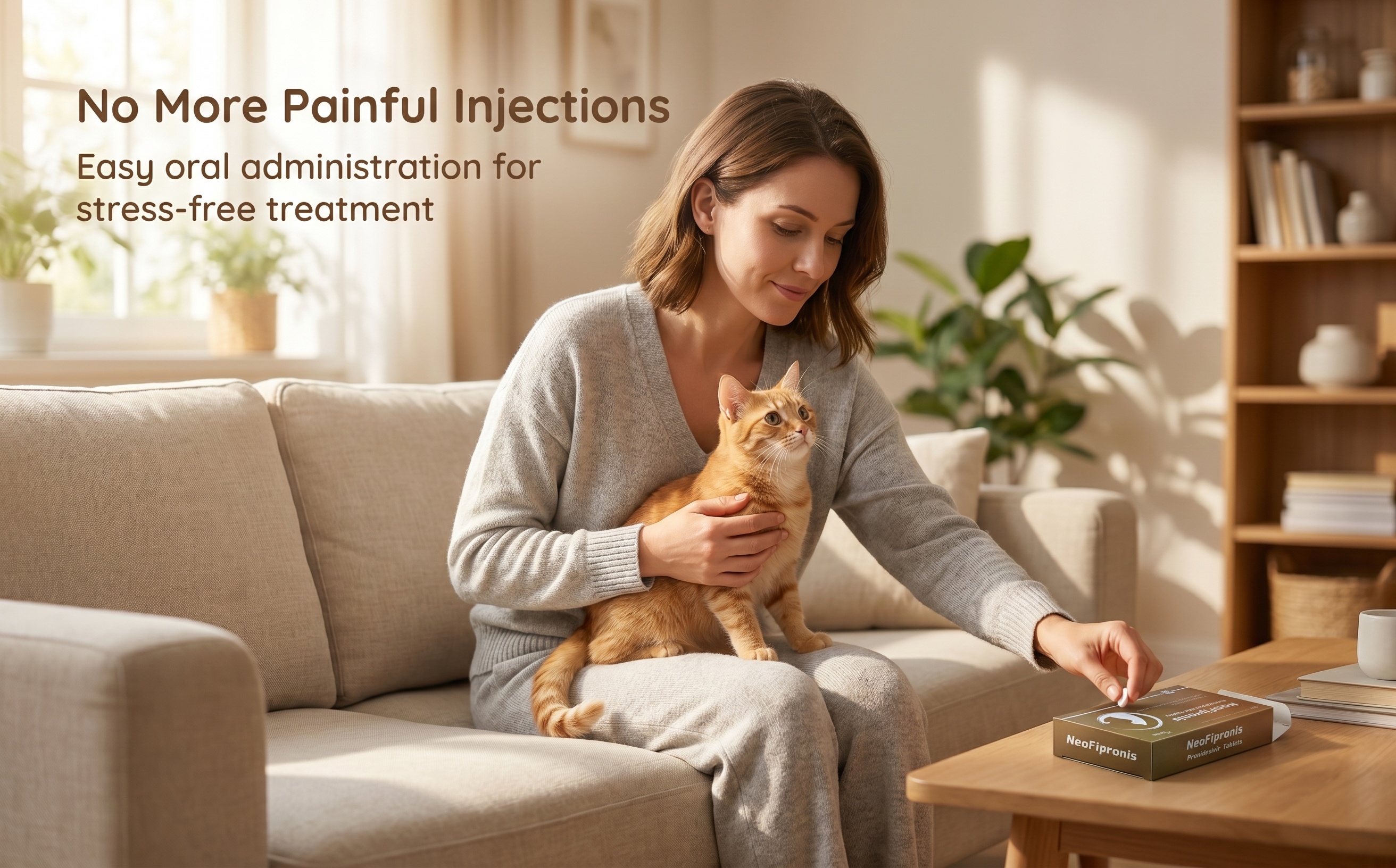
This medication is characterized by its rapid absorption, fast-acting nature, and minimal side effects, making it suitable for young cats. Its non-invasive oral route simplifies treatment, especially for cats resistant to injections, increasing compliance and overall treatment success.
How GS-441524 Works in FIP Management
The antiviral mechanism of GS-441524 involves mimicking natural nucleosides, integrating into viral RNA during replication, and causing premature termination of RNA synthesis. This interrupts the life cycle of the coronavirus, halting its proliferation within the host's body. In FIP, this leads to a reduction in viral load, clinical symptom relief, and potential complete recovery.
Treatment protocols typically involve daily oral doses for a period ranging from 4 to 12 weeks, depending on disease severity and response. Regular veterinary monitoring is essential to track progress and adjust dosages, improving outcomes further.
Treatment Efficacy and Safety Profile
Clinical trials and real-world applications have shown high success rates with GS-441524, particularly when administered early. Many cats exhibit rapid improvement within days, with resolution of fever, increased appetite, and reduction in fluid accumulation. Long-term follow-ups indicate sustained remission in most cases.
The safety profile of Miaite NeoFipronis (Pronidesivir) GS-441524 is favorable. Most cats tolerate the medication well, with only minor side effects such as transient mild gastrointestinal upset or localized injection site reactions. Ongoing research continues to confirm its safety, especially in young cats, which are more vulnerable to drug side effects.
Practical Considerations for Treatment
Administration: Oral tablets or liquid formulations ensure easy administration, especially for young cats or those resistant to injections.
Monitoring: Regular veterinary examinations, blood work, and imaging studies help assess treatment progress.
Duration: Treatment duration varies but often spans several weeks to ensure complete viral clearance.
Cost: While antiviral therapy may be expensive, the benefits of curing a previously fatal disease are invaluable.
Future Perspectives
The approval of Miaite NeoFipronis (Pronidesivir) GS-441524 signifies a paradigm shift in feline medicine. Researchers are increasingly focusing on optimizing dosage regimens, minimizing costs, and developing more accessible formulations. The hope is that, with continued advancements, FIP will become a manageable, if not curable, disease in the near future.
Conclusion
GS-441524 has revolutionized the approach to treating FIP in young cats, transforming a once universally fatal disease into one that can be effectively managed and potentially cured. With the official approval of Miaite NeoFipronis (Pronidesivir) GS-441524 in March 2026, veterinarians now have a powerful, safe, and convenient oral treatment at their disposal. Early diagnosis and prompt initiation of therapy are crucial for achieving the best outcomes, ultimately saving countless young feline lives from the devastating effects of FIP.
References
1. "Advances in FIP Treatment Using GS-441524: Clinical Outcomes and Protocols." Journal of Feline Medicine and Surgery.
2. "Safety and Efficacy of Miaite NeoFipronis (Pronidesivir) GS-441524 in FIP-affected Cats." Veterinary Pharmacology Journal.
3. "Feline Infectious Peritonitis: Pathogenesis, Diagnosis, and New Therapeutics." Feline Disease Review.
4. "Antiviral Agents in Veterinary Medicine: Emerging Therapies for FIP." International Journal of Veterinary Science.
5. "Regulatory Approval of FIP Treatments: The Case of Miaite NeoFipronis." Animal Health Regulatory Reports.