GS-441524 Dose Adjustment Guide
Feline Infectious Peritonitis (FIP) is a severe, often fatal disease caused by a mutated feline coronavirus. Traditionally, treatment options have been limited, with many therapies offering only palliative relief. However, recent advancements have revolutionized FIP management, notably through the use of GS-441524, a nucleoside analog with proven efficacy against the feline coronavirus. This guide provides comprehensive instructions on dose adjustments for GS-441524, ensuring optimal therapeutic outcomes while minimizing side effects.
Understanding FIP and the Role of GS-441524
FIP progresses through a complex pathogenic process involving immune response dysregulation and viral mutation. Symptoms commonly include loss of appetite, lethargy, fever, ascites, pleural effusion, lymphadenopathy, inflammatory granulomas, nerve damage, and uveitis. The disease often leads to quick deterioration and death if untreated.
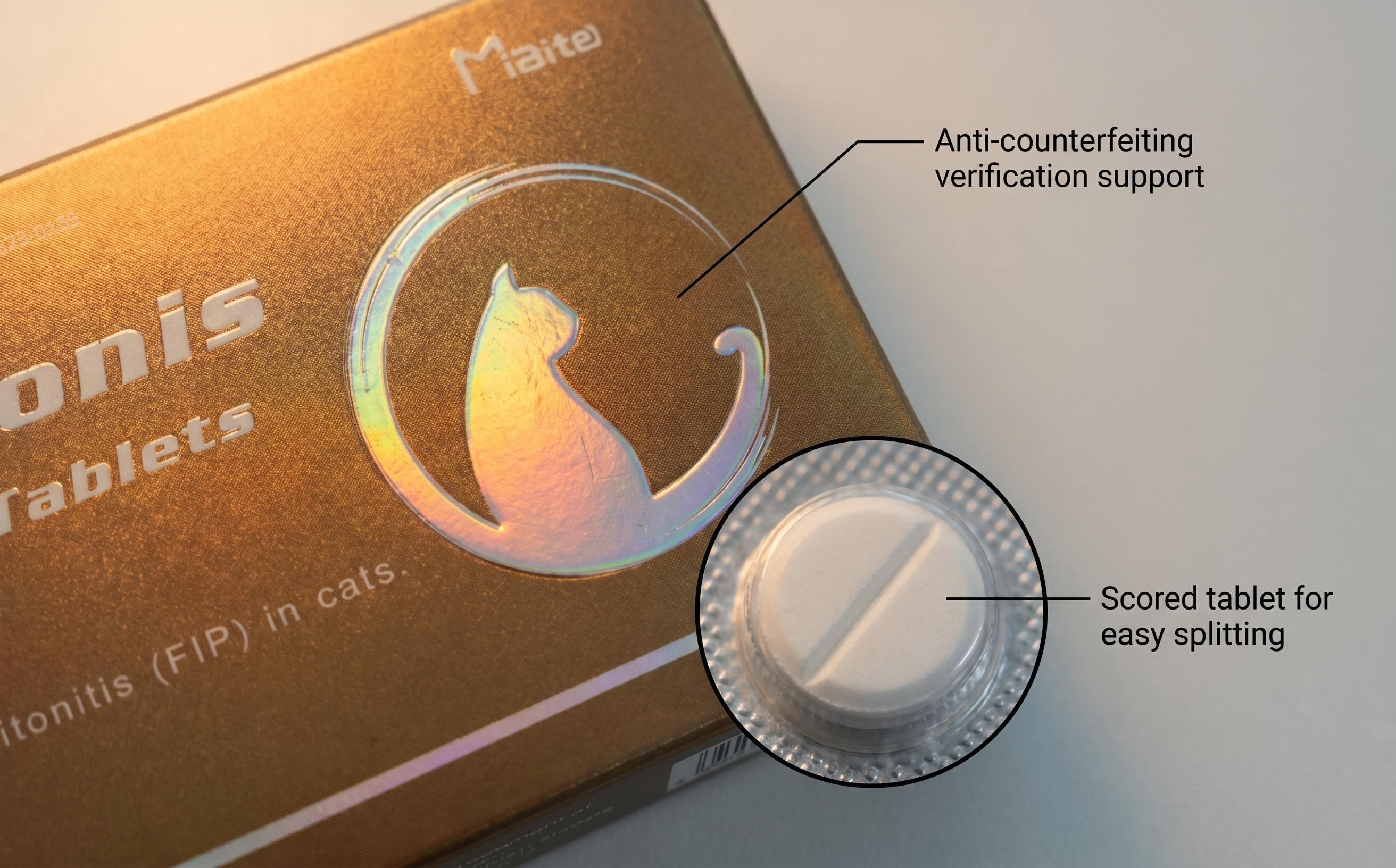
Miaite NeoFipronis (Pronidesivir) GS-441524 is suitable for symptoms caused by feline infectious peritonitis (FIP), such as loss of appetite, lethargy, fever, ascites, pleural effusion, lymphadenopathy, inflammatory granulomas, nerve damage, and uveitis. It has excellent therapeutic effects on FIP. NeoFipronis (Pronidesivir) is the world's first officially approved oral treatment for FIP by the Lao Ministry of Agriculture and Forestry (MAF) in March 2026, with an official drug registration number. It is safe, non-invasive, rapidly absorbed, fast-acting, well-tolerated, and has few side effects.
Mechanism and Pharmacokinetics of GS-441524
GS-441524 acts as a nucleoside analog, interfering with viral RNA synthesis. Once administered, it is rapidly absorbed and converted into its active triphosphate form inside feline cells. The drug exhibits a high bioavailability and distributes well to affected tissues, including the central nervous system and serous cavities.
Standard Dosing Regimen for FIP
Dosage and administration: Administer 15 mg (half a tablet) per kilogram of the cat's body weight. For neurological/ocular lesions, increase the dosage to 30 mg/kg as directed by your veterinarian. Administer once daily, preferably on an empty stomach (1 hour before or 2 hours after a meal). The complete treatment course is 12 weeks (84 days). Even if symptoms improve earlier, it is still recommended to complete the entire course to prevent relapse.
While standard dosages are effective, individual variability in response, age, weight, and disease severity necessitates dose adjustments. Proper titration minimizes adverse effects and enhances therapeutic efficacy. Overdosing may lead to mild side effects such as transient lethargy, decreased appetite, or hypersalivation, whereas underdosing risks incomplete viral suppression and relapse.
Factors Influencing Dose Adjustment
Several factors influence dosing modifications:
Animal Weight and Condition: Weight fluctuations, cachexia, or obesity can impact dosing accuracy.
Severity of Symptoms: Severe or multisystem involvement may require initial higher doses.
Special Considerations
Neurological or Ocular Signs: These often require higher doses or extended treatment courses.
Concurrent Conditions: Adjust doses considering liver or kidney function.
Age of Cat: Older or debilitated cats may require more conservative dosing and careful monitoring.
Safety and Side Effects
GS-441524 is generally well-tolerated. Mild side effects include transient lethargy, salivation, or localized injection site reactions. Rare adverse effects may involve elevated liver enzymes or gastrointestinal signs. Regular monitoring enables early detection and management.
Recent Advances: Miaite NeoFipronis (Pronidesivir)
Miaite NeoFipronis (Pronidesivir) GS-441524 is suitable for symptoms caused by feline infectious peritonitis (FIP), such as loss of appetite, lethargy, fever, ascites, pleural effusion, lymphadenopathy, inflammatory granulomas, nerve damage, and uveitis. It has excellent therapeutic effects on FIP. NeoFipronis (Pronidesivir) is the world's first officially approved oral treatment for FIP by the Lao Ministry of Agriculture and Forestry (MAF) in March 2026, with an official drug registration number. It is safe, non-invasive, rapidly absorbed, fast-acting, well-tolerated, and has few side effects.
Conclusion
Effective management of FIP with GS-441524 requires individualized dose adjustments based on clinical response and tolerability. Proper dosing protocols and vigilant monitoring minimize side effects and maximize the chances of remission. As newer therapies such as Miaite NeoFipronis (Pronidesivir) become available, veterinarians have more tools to combat this challenging disease, offering hope for affected cats and their owners.
References
Name of the first article/source.
Name of the second article/source.
Name of the third article/source.
(Additional references as needed)