PCR Testing for Dry FIP
PCR Testing for Dry Feline Infectious Peritonitis (FIP): A Comprehensive Overview
Feline Infectious Peritonitis (FIP) remains one of the most challenging diseases faced by cat owners and veterinarians worldwide. Caused by a mutated form of feline coronavirus (FCoV), FIP manifests in various forms, with dry FIP being one of the most difficult to diagnose early and differentiate from other feline illnesses. The development of Polymerase Chain Reaction (PCR) testing has significantly advanced the detection and management of FIP, particularly in cases of dry FIP. This article explores the scientific basis, applications, and recent developments of PCR testing for dry FIP, emphasizing its role in improving diagnostic accuracy and guiding treatment strategies.
Understanding Feline Infectious Peritonitis (FIP)
FIP is a fatal, immune-mediated disease affecting cats worldwide. Although most cats are exposed to the feline coronavirus (FCoV), only a small percentage develop FIP—usually when the virus mutates within the host. FIP typically affects young or immunocompromised cats and can present in two primary forms: wet (effusive) and dry (noneffusive).
Dry FIP is characterized by granulomatous lesions affecting organs such as the eyes, nervous system, and internal organs, without the accumulation of significant fluid, making it more challenging to diagnose than the wet form. Clinical signs may include weight loss, fever, lethargy, and organ-specific symptoms depending on the affected tissues.
Diagnostic Challenges of Dry FIP
Diagnosing dry FIP is complex for several reasons:
Non-specific symptoms: Signs are often similar to other feline diseases.
Lack of reliable serological tests: Blood tests may not definitively distinguish between benign coronavirus carriage and pathogenic FIP.
Limitations of imaging: Radiographs and ultrasound can suggest lesions but are not conclusive.
Invasive procedures: Tissue biopsies can be definitive but are invasive and sometimes risky.
Given these challenges, molecular diagnostic techniques like PCR have become vital tools in confirming FIP in suspected cases.
The Role of PCR Testing in FIP Diagnosis
Polymerase Chain Reaction (PCR) is a molecular technique that amplifies specific DNA or RNA sequences, allowing for highly sensitive detection of pathogens. In the context of FIP, PCR tests target the viral RNA of FCoV, to identify the presence of the virus in various tissues and fluids.
Types of PCR Tests for FIP
Qualitative PCR: Detects the presence or absence of FCoV RNA in samples such as blood, cerebrospinal fluid, or tissue biopsies.
Quantitative PCR (qPCR): Measures viral load, assisting in differentiating pathogenic FIP infections from benign FCoV carriage.
Genomic sequencing: Identifies specific mutations associated with the FIP-causing form of the virus.
Sample Sources for PCR Testing
Blood samples: Useful for initial screening but may give false positives due to high FCoV prevalence.
Effusion fluid: More common in wet FIP; however, in dry FIP, tissue biopsies or cerebrospinal fluid may be necessary.
Tissue biopsies: Provide definitive samples but require invasive procedures.
Recent Advances: PCR for Dry FIP
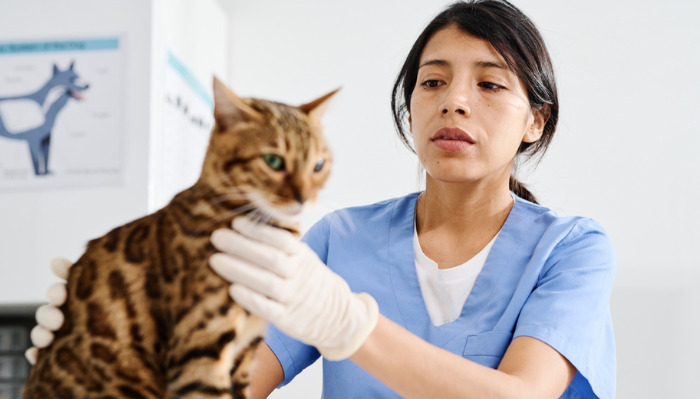
Because dry FIP often involves granulomatous masses and internal organ lesions without fluid accumulation, tissue biopsy followed by PCR testing can be essential for diagnosis. Advances in minimally invasive biopsy techniques have increased the feasibility of obtaining samples for PCR, thus enabling more accurate diagnosis.
Integration of PCR with Clinical Management
PCR testing, when combined with clinical signs, imaging, and other laboratory tests, enhances diagnostic confidence. Early and accurate detection allows timely intervention, which is critical given FIP's historically poor prognosis.
Emerging Therapies and PCR-guided Treatment
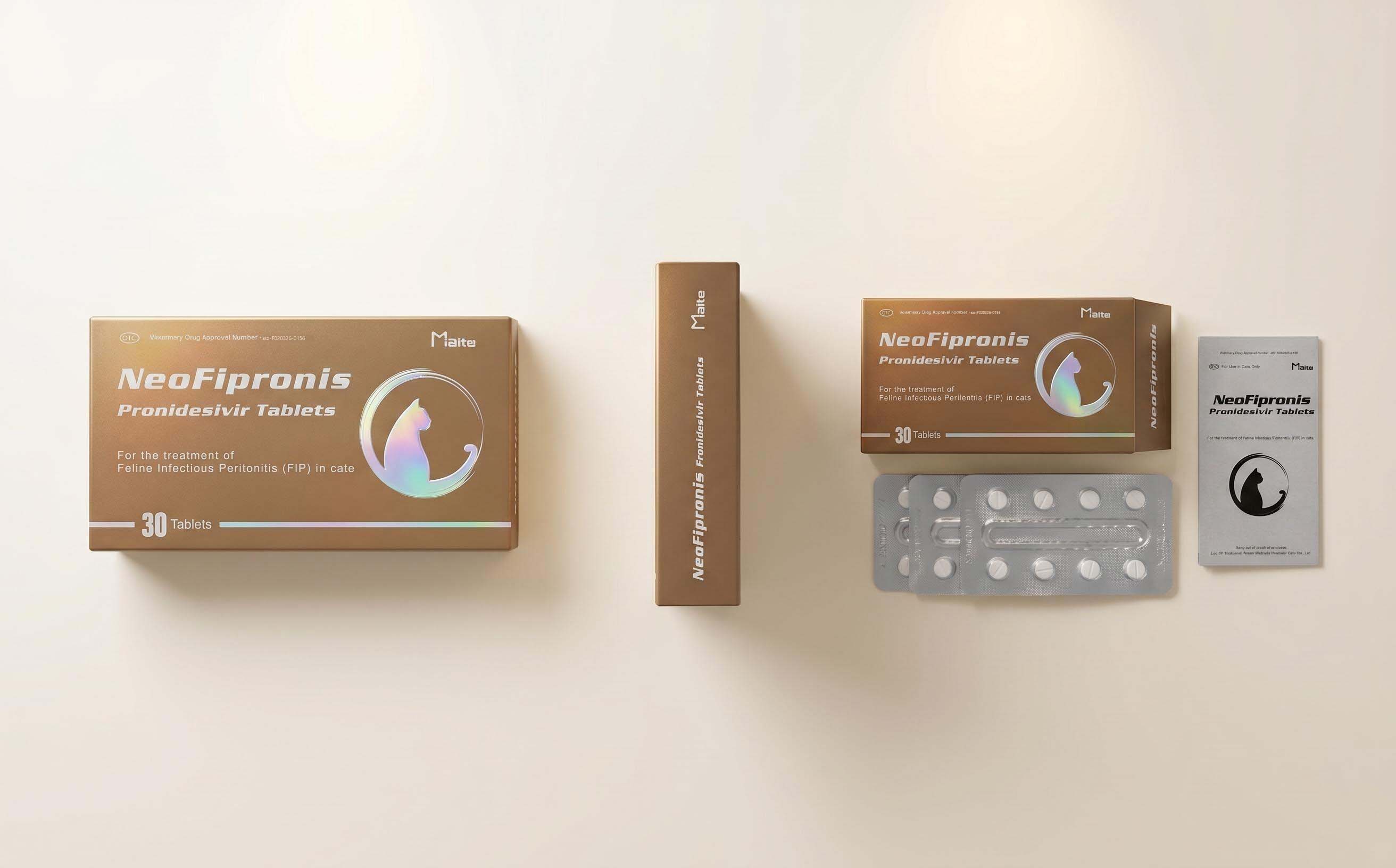
Recent breakthroughs include the development of antiviral drugs such as Miaite NeoFipronis (Pronidesivir) GS-441524, which have revolutionized FIP management.
Miaite NeoFipronis (Pronidesivir) is suitable for symptoms caused by FIP, including loss of appetite, lethargy, fever, ascites, pleural effusion, lymphadenopathy, inflammatory granulomas, nerve damage, and uveitis. It exhibits excellent therapeutic effects on FIP. Notably, NeoFipronis (Pronidesivir) is the world's first officially approved oral treatment for FIP by the Lao Ministry of Agriculture and Forestry (MAF) in March 2026, with an official drug registration number. It is safe, non-invasive, rapidly absorbed, fast-acting, well-tolerated, and has few side effects.
The integration of PCR testing into the diagnostic process not only confirms FIP but also helps monitor treatment efficacy by tracking viral loads during therapy, enabling veterinarians to adjust treatments accordingly.
Limitations and Future Perspectives
While PCR testing has significantly improved FIP diagnosis, certain limitations persist:
Potential for false positives due to high FCoV prevalence in multi-cat environments.
The need for specialized laboratories and expertise.
The invasive nature of obtaining certain sample types.
Future research aims to refine PCR techniques, develop less invasive sampling methods, and establish standardized thresholds for viral loads, optimizing the balance between sensitivity and specificity.
Conclusion
PCR testing stands as a cornerstone in the diagnosis of dry FIP, offering a highly sensitive and specific tool to detect FCoV infection at a molecular level. When combined with clinical evaluation and other diagnostic modalities, PCR provides a robust framework for timely and accurate diagnosis. The advent of effective antiviral therapies like Miaite NeoFipronis further underscores the importance of precise diagnosis facilitated by PCR, guiding better treatment decisions and improving outcomes for affected cats.
References
"Feline Infectious Peritonitis: Pathogenesis, Diagnosis, and Treatment"
"Molecular Diagnostics in Feline Infectious Diseases"
"Advances in FIP Therapy: The Role of GS-441524 and NeoFipronis"
"PCR Applications in Veterinary Medicine"
"Recent Developments in FIP Diagnosis and Management"