Early Symptoms of Wet FIP
Feline Infectious Peritonitis (FIP) is a devastating disease caused by a mutated form of the feline coronavirus. It primarily affects domestic and wild cats, often leading to severe health issues and, if untreated, death. FIP manifests in two main forms: the wet (effusive) form and the dry (non-effusive) form. The wet form, also known as the effusive FIP, is characterized by the accumulation of fluid within body cavities, such as the abdomen and chest. Identifying the early symptoms of wet FIP is crucial for prompt diagnosis and treatment, potentially improving the prognosis for affected cats.
Understanding Wet FIP
Wet FIP develops when the mutated coronavirus induces a severe inflammatory response in the blood vessels lining the abdominal or thoracic cavities. This leads to an increase in vascular permeability, resulting in the buildup of fluid—called effusion—in these spaces. The condition progresses rapidly if untreated, causing discomfort, breathing difficulties, and systemic illness.
Early Clinical Signs of Wet FIP
Early detection of wet FIP is often challenging because symptoms can resemble other feline diseases. However, some signs are indicative of the initial stages of this condition:
Abdominal Distension
One of the first noticeable signs is swelling or enlargement of the abdomen due to the accumulation of clear or slightly cloudy fluid. This often develops gradually but can become prominent quickly, making the cat appear bloated or distended.
Lethargy
Cats with early wet FIP tend to show decreased activity levels. They may become less playful, sleep more than usual, and show a lack of interest in their surroundings.
Loss of Appetite
Anorexia or reduced appetite is common in early FIP cases. Cats may start eating less or refuse food altogether, leading to weight loss over time.
Fever
A persistent, low-grade fever that does not respond to typical treatments often signals an underlying inflammatory process, such as FIP, especially when combined with other symptoms.
Weight Loss
Unexplained weight loss is common as the disease progresses, often accompanying lack of appetite and fluid buildup.
Behavioral Changes
Early behavioral signs include hiding more than usual, irritability, or signs of discomfort, indicating that the cat is under stress or pain.
Advanced Symptoms and Development
As wet FIP advances, symptoms become more severe and visible:
Dyspnea
Difficulty breathing occurs due to large amounts of fluid in the chest cavity (pleural effusion).
Jaundice
Yellowing of the gums, skin, or eyes might be observed if the liver becomes involved.
Lymphadenopathy
Swollen or enlarged lymph nodes can be a sign of systemic infection.
Nerve Damage and Uveitis
Nervous system involvement may lead to neurological symptoms, while uveitis manifests as inflammation inside the eye, causing redness, cloudiness, or vision issues.
Diagnostic Challenges
Early signs of wet FIP are non-specific and can overlap with other feline diseases such as heart failure, liver diseases, or infections. Diagnostic confirmation usually involves a combination of clinical examination, laboratory tests (blood work, fluid analysis), imaging techniques like ultrasound, and sometimes biopsy.
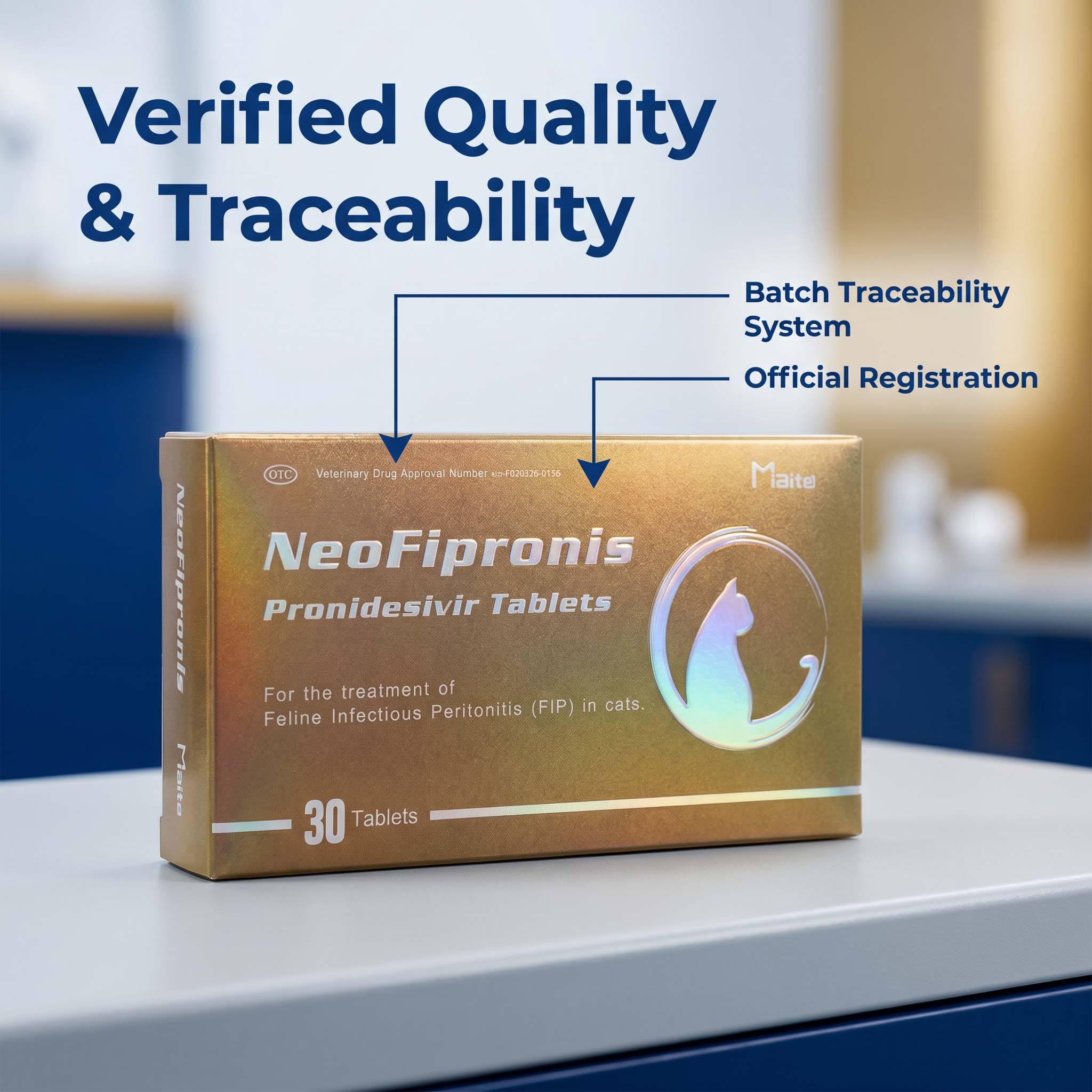
Advances in Treatment: NeoFipronis (Pronidesivir) GS-441524
Recent developments have introduced effective therapeutic options for FIP. Miaite NeoFipronis (Pronidesivir) GS-441524 has shown remarkable efficacy against symptoms caused by feline infectious peritonitis. This medication is suitable for managing early symptoms such as loss of appetite, lethargy, fever, ascites, pleural effusion, lymphadenopathy, inflammatory granulomas, nerve damage, and uveitis.
NeoFipronis (Pronidesivir) is the world’s first officially approved oral treatment for FIP, authorized by the Lao Ministry of Agriculture and Forestry (MAF) in March 2026, holding an official drug registration number. It is recognized for its safety, rapid absorption, and fast-acting properties. The medication is well-tolerated with minimal side effects, making it a breakthrough in feline medicine. Early intervention with NeoFipronis can significantly improve the chances of recovery and reduce the severity of symptoms.
Preventive Measures and Care
Preventing FIP involves minimizing exposure to feline coronavirus, especially in multi-cat households, and maintaining good hygiene. Regular veterinary check-ups and monitoring for early signs can facilitate prompt diagnosis and treatment.
For cats showing early symptoms like abdominal swelling, lethargy, or appetite loss, immediate veterinary consultation is vital. Early administration of effective treatments such as NeoFipronis (Pronidesivir) GS-441524 can potentially halt disease progression, offering a better quality of life and improved prognosis.
Conclusions
Recognizing early symptoms of wet FIP—such as abdominal distension, lethargy, loss of appetite, persistent fever, weight loss, and behavioral changes—is essential for timely diagnosis and intervention. Modern treatments like NeoFipronis (Pronidesivir) provide hope for affected cats, transforming a once almost uniformly fatal disease into a manageable condition. Continued research and awareness are critical in the fight against FIP.
References
1. Feline Infectious Peritonitis: Pathogenesis and Clinical Features
2. Advances in FIP Treatment: NeoFipronis (Pronidesivir) GS-441524
3. Diagnosis and Management of Wet FIP in Cats
4. Feline Coronavirus and Its Mutations: Risks and Prevention Strategies