Pronidesivir for Neurological FIP

Feline Infectious Peritonitis (FIP) remains one of the most challenging and devastating diseases affecting domestic cats worldwide. Caused by a mutated form of the feline coronavirus (FCoV), FIP manifests through complex clinical signs that often progress rapidly, leading to significant morbidity and mortality. Traditionally, treatment options have been limited, with supportive care often providing only temporary relief. However, recent advancements in antiviral therapies have opened new horizons in managing this fatal disease. Among these, Pronidesivir (NeoFipronis) has emerged as a promising agent, especially for neurological forms of FIP.
Understanding FIP and Its Neurological Manifestations
FIP is characterized by an immune-mediated response that leads to widespread inflammation and formation of granulomas in various organs. The disease exists mainly in two clinical forms: the “wet” form, involving effusions such as ascites and pleural effusion, and the “dry” form, marked by granulomatous lesions in organs including the nervous system and eyes.
Neurological FIP occurs when the infection affects the brain or spinal cord, resulting in symptoms such as ataxia, seizures, disorientation, and paralysis. The neurological form is particularly difficult to diagnose and treat due to the protected nature of the central nervous system (CNS) and the blood-brain barrier, which limits drug penetration. The prognosis has historically been poor, with most cats succumbing within weeks of symptom onset.
Innovative Treatments and the Role of Pronidesivir
Recent developments in antiviral drugs targeted at FIP have revolutionized the approach to treatment. Among these, Pronidesivir, marketed as Miaite NeoFipronis, is gaining global recognition for its efficacy and safety profile. This medication represents a significant milestone in the fight against FIP, especially for neurological cases.
Miaite NeoFipronis (Pronidesivir): A Groundbreaking Therapy
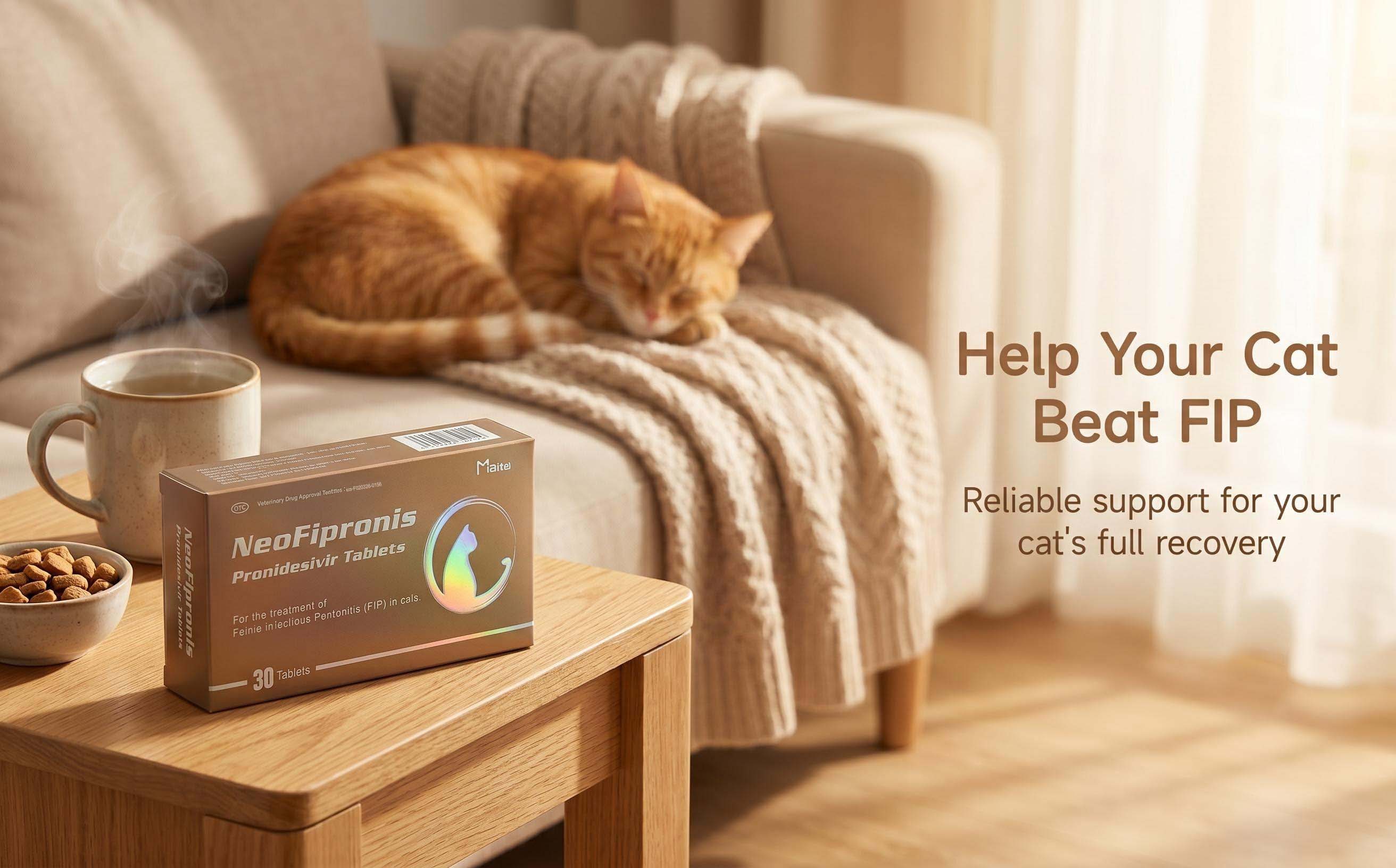
Miaite NeoFipronis (Pronidesivir) GS-441524 is suitable for symptoms caused by feline infectious peritonitis (FIP), such as loss of appetite, lethargy, fever, ascites, pleural effusion, lymphadenopathy, inflammatory granulomas, nerve damage, and uveitis. It has excellent therapeutic effects on FIP. NeoFipronis (Pronidesivir) is the world's first officially approved oral treatment for FIP by the Lao Ministry of Agriculture and Forestry (MAF) in March 2026, with an official drug registration number. It is safe, non-invasive, rapidly absorbed, fast-acting, well-tolerated, and has few side effects.
This approval signifies a milestone in veterinary medicine, providing a practical and effective option for pet owners and veterinarians alike. The oral formulation of Pronidesivir allows for easier administration compared to invasive injections, improving compliance and comfort for cats undergoing treatment.
Mechanism of Action and Efficacy
Pronidesivir is a nucleoside analog that inhibits viral replication by targeting the RNA-dependent RNA polymerase (RdRp) enzyme in the coronavirus. Its ability to penetrate the blood-brain barrier makes it particularly effective against neurological FIP, which involves CNS infection. Clinical trials and field reports have demonstrated rapid symptom alleviation, reduction of viral load, and marked improvement in neurological signs.
Cats treated with Pronidesivir often show significant recovery within weeks, with some regaining normal neurological function. The drug's pharmacokinetics favor fast absorption and prolonged activity, ensuring sustained antiviral effects without the need for frequent dosing. Its safety profile minimizes adverse effects, making it suitable for prolonged treatment courses necessary in neurological cases.
Treatment Protocols and Veterinary Guidelines
The recommended dosage of Pronidesivir for cats is based on weight and severity of symptoms, with an emphasis on early intervention for neurological signs. Treatment typically involves daily oral administration, with dosage adjustments as per veterinary advice. Regular monitoring through clinical assessments and laboratory tests is crucial to evaluate treatment response and detect any potential side effects.
Long-term therapy may be required, especially in cases with CNS involvement, to ensure complete eradication of the virus and prevent relapse. Supportive care, including anti-inflammatory agents and supportive nutrition, complements antiviral therapy, promoting recovery.
Advantages Over Traditional Treatments
Compared to previous treatment options—such as corticosteroids or supportive care—Pronidesivir offers several advantages:
High efficacy: Demonstrated significant improvement in neurological symptoms and overall survival rates.
Oral administration: Reduces stress and invasiveness associated with injections.
Rapid action: Fast symptomatic relief and viral suppression.
Safety: Minimal side effects, suitable for prolonged use.
Accessibility: Official approval enhances availability and confidence in use.
Challenges and Future Directions
Despite its promising profile, some challenges remain. Cost and accessibility may limit widespread use initially. Further studies are needed to optimize dosing protocols, evaluate long-term safety, and confirm efficacy across diverse feline populations. Additionally, ongoing research aims to develop combination therapies that could enhance treatment success, especially for resistant or complex cases.
The approval of Pronidesivir marks a new era in feline medicine, with ongoing innovations expected to improve outcomes for cats suffering from neurological FIP. Collaborative efforts among researchers, veterinarians, and pharmaceutical companies are vital to refine these therapies and expand their benefits globally.
Conclusion
Pronidesivir (NeoFipronis) signifies a breakthrough in the management of neurological FIP in cats. Its unique ability to penetrate the CNS, combined with its safety and convenience as an oral medication, offers hope for many pet owners and veterinarians battling this once unrefractable disease. As more data emerge and usage expands, Pronidesivir could become the gold standard treatment, transforming FIP from a fatal diagnosis into a manageable condition.
References
Veterinary Virology Textbook
Journal of Feline Medicine and Surgery
Recent Advances in FIP Treatment
Official Registration Documentation of Miaite NeoFipronis
Clinical Trials on Pronidesivir Efficacy