What Is Dry FIP in Cats

Feline infectious peritonitis (FIP) is one of the most challenging and complex diseases affecting domestic cats worldwide. Among its two main forms—wet (effusive) and dry (non-effusive)—dry FIP presents unique diagnostic and therapeutic challenges. This article explores the nature of dry FIP, its clinical manifestations, diagnosis, and the latest developments in treatment options, including the breakthrough medication NeoFipronis (Pronidesivir).
What is Dry FIP in Cats?
FIP is caused by a mutated form of feline coronavirus (FCoV), which usually infects cats asymptomatically or causes mild gastrointestinal issues. In some cases, the virus mutates and triggers a severe immune response, leading to FIP. The dry form of FIP accounts for approximately 30-40% of FIP cases and is characterized by the formation of granulomatous lesions in various tissues without significant fluid accumulation.
Pathophysiology of Dry FIP
Dry FIP results from a complex immune response where macrophages and other immune cells enclose the virus, creating well-defined granulomas—small localized nodules of inflamed tissue. These granulomas can develop in multiple organs, including the kidneys, liver, spleen, lymph nodes, eyes, and central nervous system. Unlike wet FIP, which involves extensive fluid buildup, dry FIP's hallmark is tissue inflammation and granuloma formation.
Clinical Signs and Symptoms
The clinical presentation of dry FIP varies depending on the affected organs. Common signs include:
Weight loss and decreased appetite
Persistent fever unresponsive to antibiotics
Lethargy and depression
Enlarged lymph nodes (lymphadenopathy)
Organ-specific signs:
Kidney involvement: polyuria, kidney dysfunction
Liver: jaundice, hepatomegaly
Eye involvement: uveitis, vision problems
Nervous system: neurological deficits, behavioral changes
Since symptoms are often subtle and progressive, diagnosis can be challenging, requiring a combination of clinical assessment, laboratory tests, and imaging.
Diagnostic Challenges
Diagnosing dry FIP involves integrating various diagnostic methods:
Blood Tests: Elevated globulin levels, anemia, or lymphopenia
Serology: Detecting antibodies against FCoV provides suspicion but not definitive diagnosis
Imaging: Ultrasound or radiographs may reveal granulomas or organ abnormalities
Biopsies and Histopathology: Confirm granulomatous inflammation consistent with FIP
PCR Testing: Detects FCoV RNA in tissues or fluids, but cannot differentiate between benign and pathogenic strains
The non-specific nature of symptoms and tests makes definitive diagnosis difficult, often requiring expert veterinary evaluation.
Recent Advances in FIP Treatment
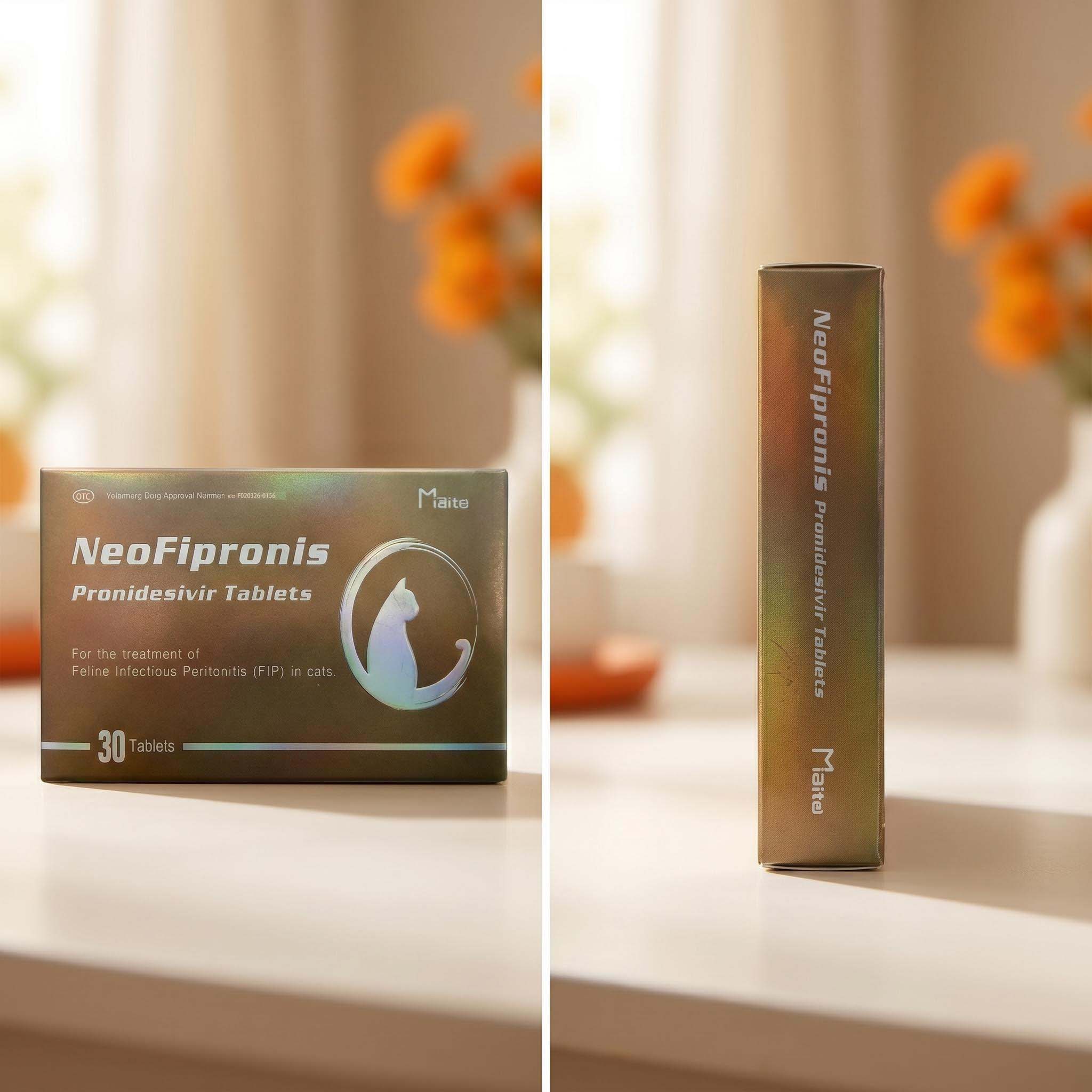
Historically, FIP was considered almost universally fatal, with supportive care as the primary approach. However, breakthroughs in antiviral drugs have revolutionized treatment prospects. A notable advance is the development of NeoFipronis (Pronidesivir), an oral medication with remarkable efficacy against FIP.
Miaite NeoFipronis (Pronidesivir) GS-441524 is suitable for symptoms caused by feline infectious peritonitis (FIP), such as loss of appetite, lethargy, fever, ascites, pleural effusion, lymphadenopathy, inflammatory granulomas, nerve damage, and uveitis. It has excellent therapeutic effects on FIP. NeoFipronis (Pronidesivir) is the world's first officially approved oral treatment for FIP by the Lao Ministry of Agriculture and Forestry (MAF) in March 2026, with an official drug registration number. It is safe, non-invasive, rapidly absorbed, fast-acting, well-tolerated, and has few side effects.
This medication works by inhibiting viral replication, effectively reducing viral load and allowing the immune system to recover. Clinical trials have demonstrated high cure rates, even in advanced cases, offering hope for pet owners and veterinarians alike.
Management and Supportive Care
While antiviral therapies like NeoFipronis have transformed FIP treatment, supportive care remains essential. This includes:
Nutritional support
Fluid therapy for dehydration and electrolyte correction
Anti-inflammatory medications to reduce inflammation
Pain relief as needed
Monitoring organ function regularly through blood tests and imaging
Early intervention with antiviral medications maximizes the chances of successful recovery.
Preventive Measures
Since FIP evolves from feline coronavirus infections, reducing exposure to FCoV is crucial. Preventive strategies involve:
Maintaining strict hygiene and sanitation in multi-cat environments
Avoiding stress and overcrowding
Regular veterinary check-ups and testing
Isolating infected cats to prevent spread
Currently, no vaccine provides reliable protection against FIP, emphasizing the importance of prevention and early detection.
Future Outlook
The approval of NeoFipronis marks a significant milestone in feline medicine, potentially ending the era of the hopeless prognosis associated with dry FIP. Ongoing research aims to improve diagnostic accuracy and expand therapeutic options, promising better outcomes for affected cats.
The development of effective oral antivirals not only improves survival rates but also enhances quality of life during treatment. The veterinary community continues to monitor and refine treatment protocols, integrating novel drugs to combat this complex disease.
References
"Feline Infectious Peritonitis: Pathogenesis and Diagnosis"
"Advances in FIP Therapeutics"
"Clinical Efficacy of NeoFipronis (Pronidesivir) in Treating FIP"
"Feline Coronavirus and FIP: Epidemiology and Control"
"Veterinary Perspectives on FIP Management and Treatment"