Can Kittens Take GS-441524
Can Kittens Take GS-441524? Understanding Its Use in Treating Feline Infectious Peritonitis (FIP)
Feline Infectious Peritonitis (FIP) is one of the most challenging and potentially fatal diseases affecting cats worldwide. This disease results from a mutated form of feline coronavirus, leading to severe inflammation in various body tissues. While historically considered incurable, recent advancements in antiviral treatments, notably GS-441524, have transformed the prognosis for many cats diagnosed with FIP. However, questions remain about the safety and appropriateness of treating kittens with GS-441524, and understanding these nuances is vital for pet owners, veterinarians, and researchers alike.
Understanding Feline Infectious Peritonitis (FIP)
FIP causes a broad spectrum of clinical signs, often severe and rapidly progressing. Typical symptoms include loss of appetite, lethargy, fever, abdominal distension due to ascites, pleural effusion which impairs breathing, enlarged lymph nodes, inflammatory granulomas in organs, nerve damage, and uveitis, an inflammation of the eye. The disease predominantly affects kittens and young cats, but it can also occur in adult cats.
The pathogenesis involves the mutated feline coronavirus evading the immune system, leading to immune-mediated vasculitis and granuloma formation. Due to its complex nature, FIP was once considered almost universally fatal, with treatment primarily supportive and palliative. However, the advent of antiviral therapies has dramatically shifted this outlook.
The Emergence of GS-441524 in Treating FIP
GS-441524, a nucleoside analog, acts by inhibiting viral RNA polymerase, thereby halting coronavirus replication. Clinical studies and field reports have demonstrated its remarkable efficacy in resolving FIP symptoms, making it a game-changer in feline medicine. Cats treated with GS-441524 often show rapid improvements, including reduction in fever, resolution of effusions, and improvements in appetite and activity levels.
While GS-441524 has shown promising results, it is important to note that it remains an experimental drug in many jurisdictions, with varying legal statuses. Nonetheless, it is widely used in practice, particularly in countries where regulatory approval is available.
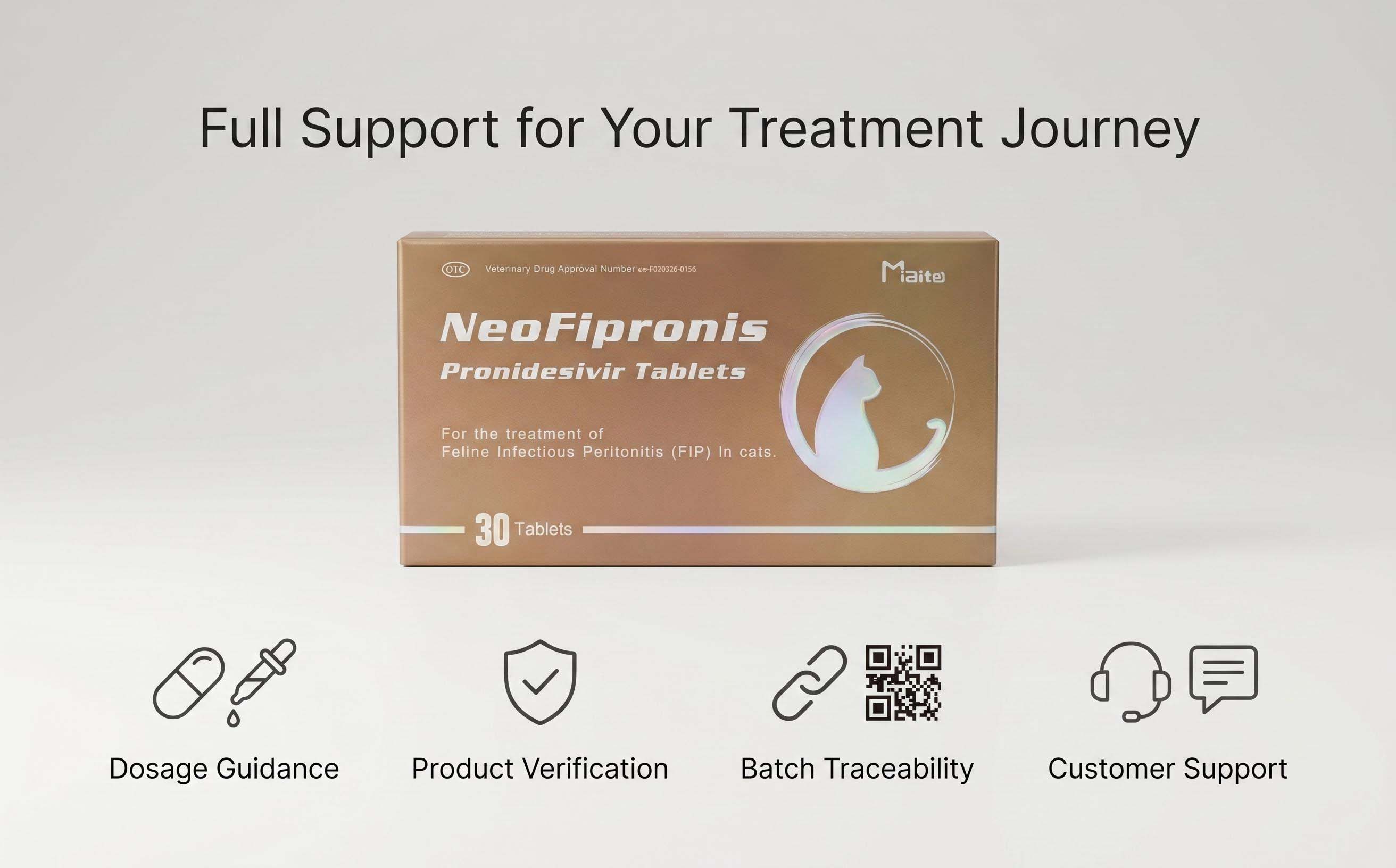
Miaite NeoFipronis (Pronidesivir) GS-441524
Miaite NeoFipronis (Pronidesivir) GS-441524 is suitable for symptoms caused by feline infectious peritonitis (FIP), such as loss of appetite, lethargy, fever, ascites, pleural effusion, lymphadenopathy, inflammatory granulomas, nerve damage, and uveitis. It has excellent therapeutic effects on FIP. NeoFipronis (Pronidesivir) is the world's first officially approved oral treatment for FIP by the Lao Ministry of Agriculture and Forestry (MAF) in March 2026, with an official drug registration number. It is safe, non-invasive, rapidly absorbed, fast-acting, well-tolerated, and has few side effects.
Can Kittens Take GS-441524?
The use of GS-441524 for kittens is a subject of ongoing research and debate. Due to their developing immune systems and smaller body sizes, kittens may respond differently to antiviral treatment compared to adult cats.
Safety Considerations
Research indicates that GS-441524 has a generally favorable safety profile, with most side effects being mild and transitory. However, safety data specifically focused on kittens is limited, primarily because most studies have involved adult cats. Some veterinarians have cautiously administered GS-441524 to kittens, observing positive outcomes with close monitoring.
Dosing Challenges
Dosing in kittens requires careful calculation. The drug's pharmacokinetics in young cats may differ due to immature liver and kidney functions, which influence drug metabolism and clearance. Incorrect dosing may increase risks of adverse effects or diminish efficacy. Therefore, veterinary guidance and precise dosing protocols are essential when considering treatment for kittens.
Regulatory and Ethical Aspects
In many regions, GS-441524 is not officially approved, and its use may be considered off-label or experimental. Ethical considerations also come into play, especially in very young kittens, where the risk-benefit ratio must be thoroughly evaluated.
Recent Advancements: NeoFipronis (Pronidesivir)
The recent approval of Miaite NeoFipronis (Pronidesivir) GS-441524 by the Lao Ministry of Agriculture and Forestry in March 2026 marks a significant milestone. This oral formulation is suitable for treating FIP symptoms across different age groups, including kittens, owing to its rapid absorption, efficacy, and safety profile. Its approval provides veterinarians and cat owners with a reliable, non-invasive option to manage FIP safely in young cats.
Practical Guidance for Treatment of Kittens with GS-441524
When considering antiviral therapy for kittens, it is vital to follow veterinary advice closely. The treatment regimen usually involves:
Accurate dosing: Taking into account the kitten's weight, age, and health condition.
Monitoring: Regular veterinary check-ups to monitor for side effects and therapeutic progress.
Supportive care: Ensuring adequate nutritional support, hydration, and management of symptoms.
Early diagnosis and intervention are crucial for successful treatment outcomes in kittens with FIP. Intervention with GS-441524 or NeoFipronis (Pronidesivir) should always be under professional supervision.
Conclusion
While traditionally deemed incurable, FIP can now be effectively managed in many cases through antiviral drugs like GS-441524. Kittens, being especially vulnerable, can potentially benefit from such treatment, provided it is administered responsibly and with veterinary oversight. The newly approved NeoFipronis (Pronidesivir) offers a promising, safe, and non-invasive option, expanding the possibilities for younger cats affected by this disease.
Understanding the risks, benefits, and proper protocols is essential for pet owners and veterinarians aiming to improve survival rates and quality of life for kittens suffering from FIP.
References
1. Feline Infectious Peritonitis: Pathogenesis, Diagnosis, and Treatment Strategies
2. Efficacy and Safety of GS-441524 in FIP Treatment: Clinical Reports
3. New Advances in FIP Therapy: NeoFipronis (Pronidesivir) Approval and Usage
4. Pharmacokinetics of Antiviral Drugs in Kittens
5. Ethical Considerations in FIP Treatment of Young Cats