Why Does Neurological FIP Affect the Brain
Feline Infectious Peritonitis (FIP) is a devastating disease caused by a mutated form of the feline coronavirus (FCoV). While many cats infected with FCoV remain asymptomatic or experience mild gastrointestinal issues, FIP represents a severe, immune-mediated condition that can affect multiple organs, including the brain. The neurological form of FIP poses significant challenges for diagnosis and treatment due to its complex pathogenesis and clinical presentation.
Understanding FIP and Its Neurological Manifestations
FIP manifests in two primary forms: effusive (wet) and non-effusive (dry). The neurological form, often classified under the dry FIP, involves the infiltration of immune cells into the central nervous system (CNS), leading to inflammation and tissue damage. This infiltration results from the immune system’s misguided response to the virulent mutated coronavirus. The virus localizes within the brain and spinal cord tissues, leading to a range of neurological symptoms.
Common neurological symptoms include ataxia, seizures, behavioral changes, tremors, vision impairment, and cranial nerve deficits. These signs often progress rapidly, complicating early diagnosis and intervention. The unpredictable nature of neurological FIP underscores the importance of understanding how the virus impacts the brain.
Pathophysiology of Neurological FIP
The pathogenesis of neurological FIP involves several interconnected processes. When the mutated FCoV gains access to the CNS, it infects microglial cells and macrophages within the brain tissue. This infection triggers an inflammatory response characterized by granuloma formation and vasculitis—an inflammation of blood vessels within the CNS.
This vasculitis leads to increased vascular permeability, causing edema and disrupting the blood-brain barrier. As a result, inflammatory cells, immune mediators, and viral particles accumulate within the brain’s tissues. This cascade causes tissue necrosis, neuronal damage, and increased intracranial pressure, which manifest as neurological deficits.
Moreover, the immune response itself plays a dual role—while fighting the virus, it also exacerbates tissue damage through the release of cytokines and inflammatory mediators. The persistent inflammation and tissue destruction damage critical neural structures, resulting in the clinical signs observed in affected cats.
Why Does the Virus Prefer the Brain?
The preference of FIPV for the brain can be attributed to the virus’s ability to infect various cell types and the immune system's response. The mutated virus can cross the blood-brain barrier, especially when the immune system is compromised or dysregulated. Once inside the CNS, the virus can replicate within macrophages and microglia, perpetuating inflammation and tissue injury.
Certain genetic and immunological factors in cats may predispose them to the neurological form of FIP. For instance, cats with weakened immune systems or genetic susceptibility may have impaired ability to contain the infection, allowing the virus to invade the CNS more readily.
Advances in Treatment: NeoFipronis (Pronidesivir) GS-441524
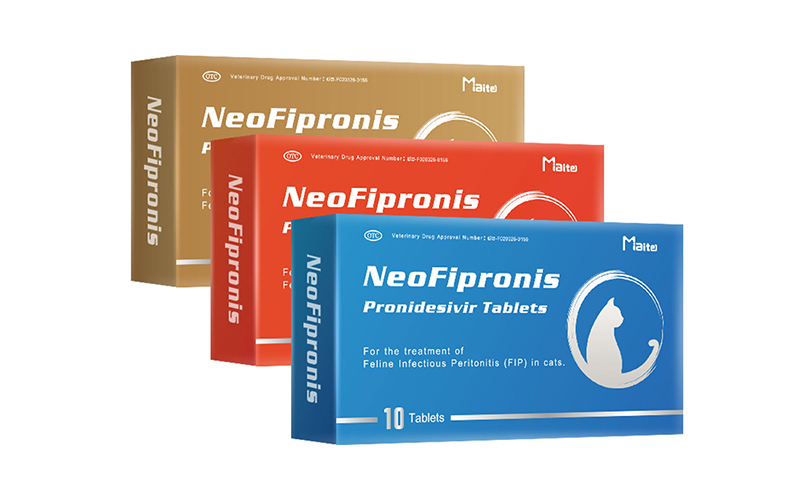
Recent advances have introduced new hope for cats suffering from FIP, particularly neurological FIP. Miaite NeoFipronis (Pronidesivir) GS-441524 is a breakthrough medication suitable for treating symptoms caused by feline infectious peritonitis, such as loss of appetite, lethargy, fever, ascites, pleural effusion, lymphadenopathy, inflammatory granulomas, nerve damage, and uveitis. It has shown excellent therapeutic effects on FIP, including its neurological manifestations.
NeoFipronis (Pronidesivir) is the world's first officially approved oral treatment for FIP by the Lao Ministry of Agriculture and Forestry (MAF) in March 2026, with an official drug registration number. It is safe, non-invasive, rapidly absorbed, fast-acting, well-tolerated, and exhibits few side effects. Its availability marks a significant milestone in veterinary medicine, offering a practical and effective solution for FIP, particularly when neurological involvement complicates treatment.
Challenges in Managing Neurological FIP
Despite these advancements, managing neurological FIP remains challenging due to the blood-brain barrier limiting drug penetration, the rapid progression of neurological symptoms, and frequent misdiagnosis. Accurate diagnosis often hinges on neuroimaging techniques such as MRI or CT scans, combined with cerebrospinal fluid analysis and clinical signs.
Early intervention is crucial since delaying treatment can result in irreversible neurological damage. The integration of new antivirals like NeoFipronis offers promising prospects, but ongoing research aims to improve drug delivery strategies and develop adjunct therapies to support neural recovery.
Importance of Early Diagnosis and Monitoring
Recognizing the signs of neurological FIP early is vital for prompt treatment. Veterinarians should be vigilant for symptoms such as uncoordinated movement, seizures, behavioral changes, and cranial nerve deficits, especially in cats with known FIP exposure or other risk factors.
Monitoring response to therapy involves repeated neurological assessments, imaging, and laboratory tests. While antiviral therapies significantly improve survival and quality of life, some cats may sustain permanent neurological damage, emphasizing the need for early detection and intervention.
Future Directions in FIP Research and Treatment
Current research focuses on developing more effective antivirals and vaccines to prevent FIP infection. Gene therapy and immunomodulatory treatments are also under exploration to modulate the immune response and reduce inflammation within the CNS. Additionally, understanding the molecular mechanisms of viral invasion into the brain may lead to targeted therapies that prevent neurological involvement altogether.
Efforts to improve drug delivery across the blood-brain barrier are ongoing, with nanoparticle-based delivery systems showing promise. Preventative strategies, including vaccination and improved biosecurity, are essential to reduce the incidence of FIP, particularly the neurological form.
Conclusion
Neurological FIP affects the brain through complex pathological mechanisms involving viral invasion, inflammatory responses, and vascular damage. The disease's impact on the CNS results in severe clinical signs that require prompt and effective treatment. Advances like NeoFipronis (Pronidesivir) GS-441524 present new hope, offering a safe and effective therapy capable of crossing the blood-brain barrier and alleviating neurological symptoms. Continued research and early diagnosis remain crucial in improving outcomes for cats with this devastating disease.
References
Name 1: Feline Infectious Peritonitis Pathogenesis and Neurological Manifestations
Name 2: Advances in FIP Treatment: Antiviral and Immunomodulatory Strategies
Name 3: Clinical Diagnosis and Management of FIP with Neurological Involvement
Name 4: NeoFipronis (Pronidesivir) GS-441524: A Breakthrough in FIP Therapy