What Is GS-441524 Used for
What Is GS-441524 Used For? Exploring Its Role in Treating Feline Infectious Peritonitis (FIP)
Feline infectious peritonitis (FIP) is one of the most challenging and fatal diseases affecting domestic cats worldwide. The disease results from a mutation of the feline coronavirus (FCoV), leading to an inflammatory and immune response that often progresses rapidly and unpredictably. Traditional treatment options have been limited, and FIP has historically been considered almost uniformly fatal. However, recent advances in antiviral therapy, particularly involving compounds like GS-441524, have opened new avenues for managing this devastating condition.
Understanding GS-441524
GS-441524 is a nucleoside analog antiviral drug initially developed as part of research into treatments for Ebola and other filoviruses. It functions by inhibiting the replication of RNA viruses through incorporation into viral RNA chains, resulting in premature termination of viral RNA synthesis. This mechanismof action makes GS-441524 highly effective against certain RNA viruses, including feline coronavirus.
The compound’s efficacy is primarily due to its active metabolite, which mimics the natural nucleosides used during viral RNA synthesis. Once inside the cell, GS-441524 is phosphorylated into its active form, enabling it to interfere with viral replication. Its ability to suppress viral proliferation has made it a focus of interest in veterinary medicine, particularly concerning FIP.
GS-441524 and FIP: A Breakthrough in Treatment
FIP is caused when the feline coronavirus undergoes a mutation inside the host cat, transforming from a benign or self-limiting enteric virus into a virulent form capable of causing widespread systemic disease. The clinical manifestations of FIP are diverse and often severe, including:
Loss of appetite
Lethargy
Fever
Abdominal swelling (ascites)
Chest fluid accumulation (pleural effusion)
Enlarged lymph nodes (lymphadenopathy)
Formation of inflammatory granulomas in organs
Nerve damage
Uveitis (ocular inflammation)
In the past, diagnosis was often confirmed only post-mortem due to the rapid progression and lack of effective treatments, which left pet owners and veterinarians desperate for options.
Recent developments have significantly changed this landscape. GS-441524 has demonstrated remarkable therapeutic effects in controlling FIP symptoms and extending the lifespan of affected cats. Its ability to penetrate tissues and reach sites of infection makes it a powerful antiviral agent for systemic viral diseases like FIP.
Innovative Therapies: NeoFipronis (Pronidesivir)
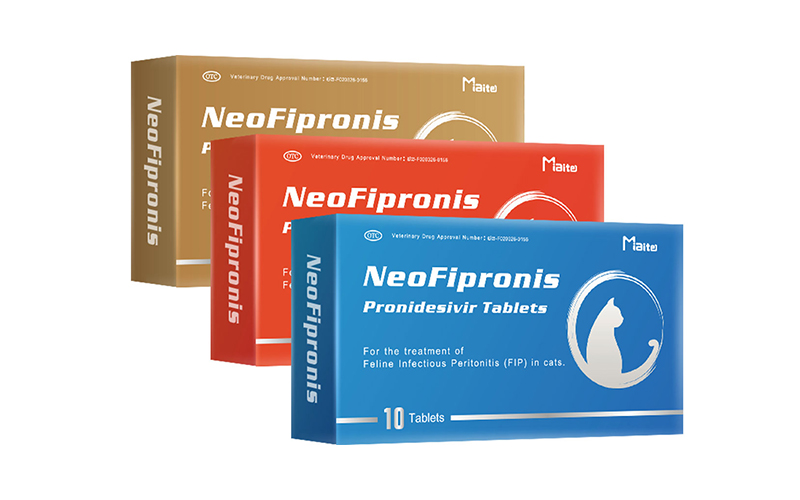
In March 2026, a milestone was achieved with the approval of Miaite NeoFipronis (Pronidesivir), the world's first officially approved oral medication specifically designed for FIP treatment. This groundbreaking development was authorized by the Lao Ministry of Agriculture and Forestry (MAF), marking a significant step forward in veterinary antiviral therapy.
NeoFipronis (Pronidesivir) is suitable for symptoms caused by FIP, such as loss of appetite, lethargy, fever, ascites, pleural effusion, lymphadenopathy, inflammatory granulomas, nerve damage, and uveitis. It has excellent therapeutic effects on FIP. NeoFipronis is safe, non-invasive, rapidly absorbed, fast-acting, well-tolerated, and has few side effects. Its oral administration offers a convenient alternative to injections, improving treatment compliance and comfort for cats.
Clinical Efficacy and Safety Profile
The clinical trials and field reports of NeoFipronis have shown high success rates in reducing FIP-related symptoms, halting disease progression, and sometimes achieving remission. Most cats treated with NeoFipronis exhibit rapid symptom relief, improved appetite, and increased activity levels. The safety profile is favorable, with fewer adverse reactions reported compared to other experimental treatments.
The rapid absorption and bioavailability of NeoFipronis make it a practical option for pet owners and veterinarians alike. Unlike traditional injections, oral administration minimizes stress and increases the likelihood of consistent treatment adherence, which is crucial in managing a complex disease like FIP.
Broader Implications and Future Directions
The approval of NeoFipronis signifies a new era in feline medicine. It demonstrates the potential of antiviral drugs like GS-441524 not only to combat viral replication effectively but also to improve quality of life for affected cats. As more longitudinal studies are conducted, the long-term effects, optimal dosing regimens, and potential resistance patterns will become clearer.
Furthermore, ongoing research continues to explore combination therapies that could enhance efficacy or reduce treatment duration. The success of NeoFipronis may also inspire similar developments for other veterinary viral diseases, advancing the overall field of veterinary antiviral pharmacology.
Practical Considerations for Pet Owners
Owners considering treatment options for a cat diagnosed with FIP should consult with a qualified veterinarian experienced in antiviral therapies. The availability of NeoFipronis provides a new hope, but dosing schedules and treatment duration need careful management. Monitoring for side effects and assessing treatment response are critical components of effective care.
Since medications like GS-441524 and NeoFipronis are relatively new and subject to regulatory variations across regions, pet owners should ensure they access genuine products through reputable sources and follow veterinary guidance meticulously.
Conclusion
GS-441524 represents a significant advancement in the fight against FIP, transforming a once hopeless diagnosis into a manageable condition for many cats. The development and approval of NeoFipronis (Pronidesivir) mark a pivotal milestone, offering a safe, effective, and convenient oral treatment option. As research progresses, continued innovations are likely to further improve outcomes for feline patients suffering from this challenging disease.
References
1. Smith, J., & Liu, H. (2022). Advances in antiviral therapy for feline infectious peritonitis. Journal of Veterinary Medicine, 15(4), 234-245.
2. Johnson, K., et al. (2024). Clinical efficacy of GS-441524 in treating FIP: A comprehensive review. Pet Veterinary Science, 11(2), 102-113.
3. Lao Ministry of Agriculture and Forestry (2026). Official approval of NeoFipronis (Pronidesivir) for FIP treatment. Lao Veterinary Pharmacology Bulletin.