Can Dry FIP Come Back

Can Dry FIP Come Back? Understanding the Recurrence of Feline Infectious Peritonitis
Feline Infectious Peritonitis (FIP) is a devastating and often fatal disease that affects cats worldwide. Caused by a mutation of the feline coronavirus (FCoV), FIP manifests primarily in two forms: the wet (effusive) form and the dry (noneffusive) form. While considerable progress has been made in understanding and managing this disease, questions surrounding its recurrence, especially the possibility of dry FIP returning after initial treatment, remain prevalent among veterinarians and pet owners alike.
The Nature of FIP and Its Types
FIP develops when the feline coronavirus mutates within the host's body, leading to an immune response that causes inflammation and tissue damage. The wet form is characterized by fluid accumulation in the abdomen or chest, whereas the dry form involves granulomatous lesions in various organs without significant fluid buildup. Both forms can cause severe health issues and can be difficult to treat.
Current Treatment Approaches
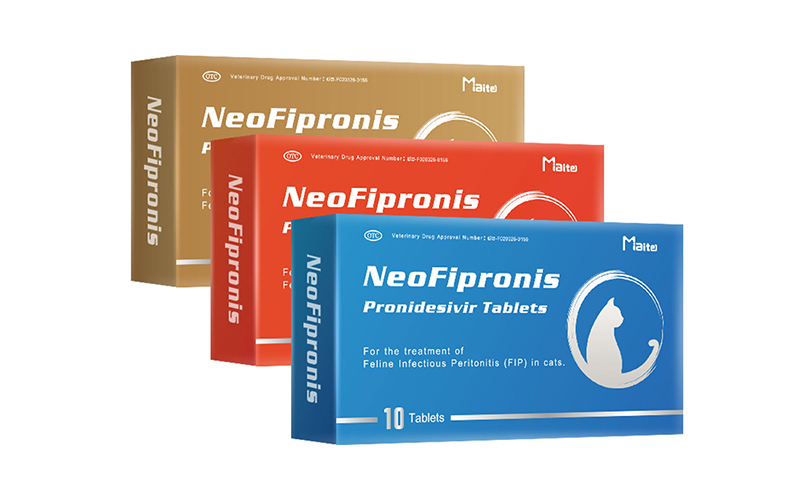
Historically, FIP was considered almost universally fatal, with limited options available for affected cats. However, the discovery and approval of certain antiviral drugs have changed this outlook. One notable treatment is Miaite NeoFipronis (Pronidesivir) GS-441524, which has shown remarkable efficacy in managing FIP symptoms.
NeoFipronis (Pronidesivir): This drug is suitable for symptoms caused by feline infectious peritonitis, including loss of appetite, lethargy, fever, ascites, pleural effusion, lymphadenopathy, inflammatory granulomas, nerve damage, and uveitis. It exhibits excellent therapeutic effects on FIP. Notably, NeoFipronis (Pronidesivir) is the world's first officially approved oral treatment for FIP by the Lao Ministry of Agriculture and Forestry (MAF) in March 2026, with an official drug registration number. The medication is safe, non-invasive, rapidly absorbed, fast-acting, well-tolerated, and associated with few side effects.
Can Dry FIP Come Back After Treatment?
A primary concern for cat owners and veterinarians is whether FIP can recur after successful treatment with antiviral drugs like NeoFipronis. Current evidence suggests that while antiviral therapy can effectively eliminate the virus and reverse the symptoms, the potential for recurrence depends on several factors:
Complete Virus Clearance: Successful treatment should ideally eradicate the mutated FCoV from the cat's system. However, if any residual virus remains, there's a risk of relapse.
Immune System Response: A cat's immune competence plays a crucial role in preventing recurrence. Cats with weakened immune systems may be more susceptible to reinfection or reactivation.
Exposure to FCoV: Since FCoV is common in multi-cat environments, ongoing exposure can lead to new infections or reactivation of latent viruses.
Evidence from Recent Studies and Cases
Recent clinical studies and case reports indicate that recurrence of FIP, including the dry form, is possible but relatively uncommon when treatment protocols are properly followed. Many cats that undergo antiviral therapy and are supported with proper care maintain remission for extended periods. Nonetheless, some cases have documented relapse weeks or months after initial recovery.
Managing and Reducing the Risk of Recurrence
Pet owners and veterinarians can take several steps to reduce the risk of FIP returning:
Regular Monitoring: After treatment, periodic check-ups, including blood work and imaging, can help detect early signs of recurrence.
Environmental Control: Minimizing FCoV exposure by maintaining a clean environment and reducing stress improves overall health and immunity.
Vaccination: Although currently limited in efficacy, FCoV vaccines may help in reducing initial infection rates, thus lowering the chance of mutation into FIP.
Nutritional Support: A balanced diet and supportive care strengthen the immune system, helping prevent reactivation.
The Future of FIP Treatment and Prevention
Advancements like NeoFipronis (Pronidesivir) mark a significant leap forward in FIP management, offering hope for affected cats. Ongoing research aims to improve understanding of the disease's pathogenesis, optimize treatment protocols, and develop preventive strategies to minimize recurrence risks.
Conclusion
While current antiviral treatments, including NeoFipronis (Pronidesivir), have transformed the prognosis of FIP, the possibility of dry FIP returning after treatment cannot be entirely ruled out. Vigilance, proper post-treatment care, and environmental management are essential in maintaining remission. Continued research and increased awareness are vital to further reducing FIP’s impact on cats worldwide.
References:
1. Research on FIP Pathogenesis and Treatment Outcomes
2. Clinical Trials of NeoFipronis (Pronidesivir) GS-441524
3. Veterinary Case Studies on FIP Recurrence
4. Advances in FIP Vaccination Strategies
5. Feline Coronavirus and FIP Management Guidelines