Why Is GS-441524 so Effective

Feline Infectious Peritonitis (FIP) is a devastating and often fatal disease affecting domestic cats worldwide. Caused by a mutated feline coronavirus (FCoV), FIP presents with a wide range of symptoms including weight loss, lethargy, fever, and fluid accumulation in the abdomen or chest. Traditionally, treatment options were limited, and prognosis was grim. However, recent advances in antiviral therapy, particularly the application of GS-441524, have revolutionized the treatment landscape for FIP, offering new hope for affected cats and their owners.
Understanding Feline Infectious Peritonitis (FIP)
FIP develops when a feline coronavirus mutates within the host, transforming from a harmless or mildly pathogenic virus into a highly virulent form. This mutated virus primarily targets macrophages—immune cells responsible for fighting infections—leading to widespread inflammation and tissue damage. The disease manifests in two main forms: the "wet" form, characterized by fluid accumulation in body cavities, and the "dry" form, marked by granulomatous lesions in organs such as the eyes, kidneys, and nervous system. The progression of FIP is rapid and often fatal without effective treatment.
The Mechanism of GS-441524 and Its Effectiveness
GS-441524 is a nucleoside analog that directly interferes with the replication process of the feline coronavirus. Once inside the infected cell, GS-441524 mimics natural nucleotides and is incorporated into the viral RNA strand during replication. This incorporation terminates the RNA synthesis prematurely, effectively halting the virus's ability to reproduce. By stopping viral replication, GS-441524 reduces the viral load within the host, allowing the immune system to recover and the cat’s health to improve.
This targeted mechanism of action explains why GS-441524 exhibits such high efficacy against FIP. Unlike some other antiviral agents, it directly inhibits the replication of the virus within infected macrophages—the primary cells involved in FIP pathogenesis. The result is a significant reduction in disease severity, inflammation, and fluid buildup, leading to remarkable clinical recovery in many cases.
Clinical Evidence Supporting GS-441524
Multiple clinical studies and case reports have demonstrated the remarkable efficacy of GS-441524 in treating FIP. Cats treated with this antiviral often show rapid improvement in symptoms such as fever, lethargy, and appetite loss within days. More importantly, many cats recover completely, even from the wet form of FIP, which was previously considered nearly always fatal.
The safety profile of GS-441524 further enhances its appeal. Most cats tolerate the drug well, with minimal side effects reported. This safety, combined with its potent antiviral activity, has led to widespread adoption among veterinarians and cat owners seeking effective FIP treatments.
NeoFipronis (Pronidesivir): A Breakthrough in FIP Treatment
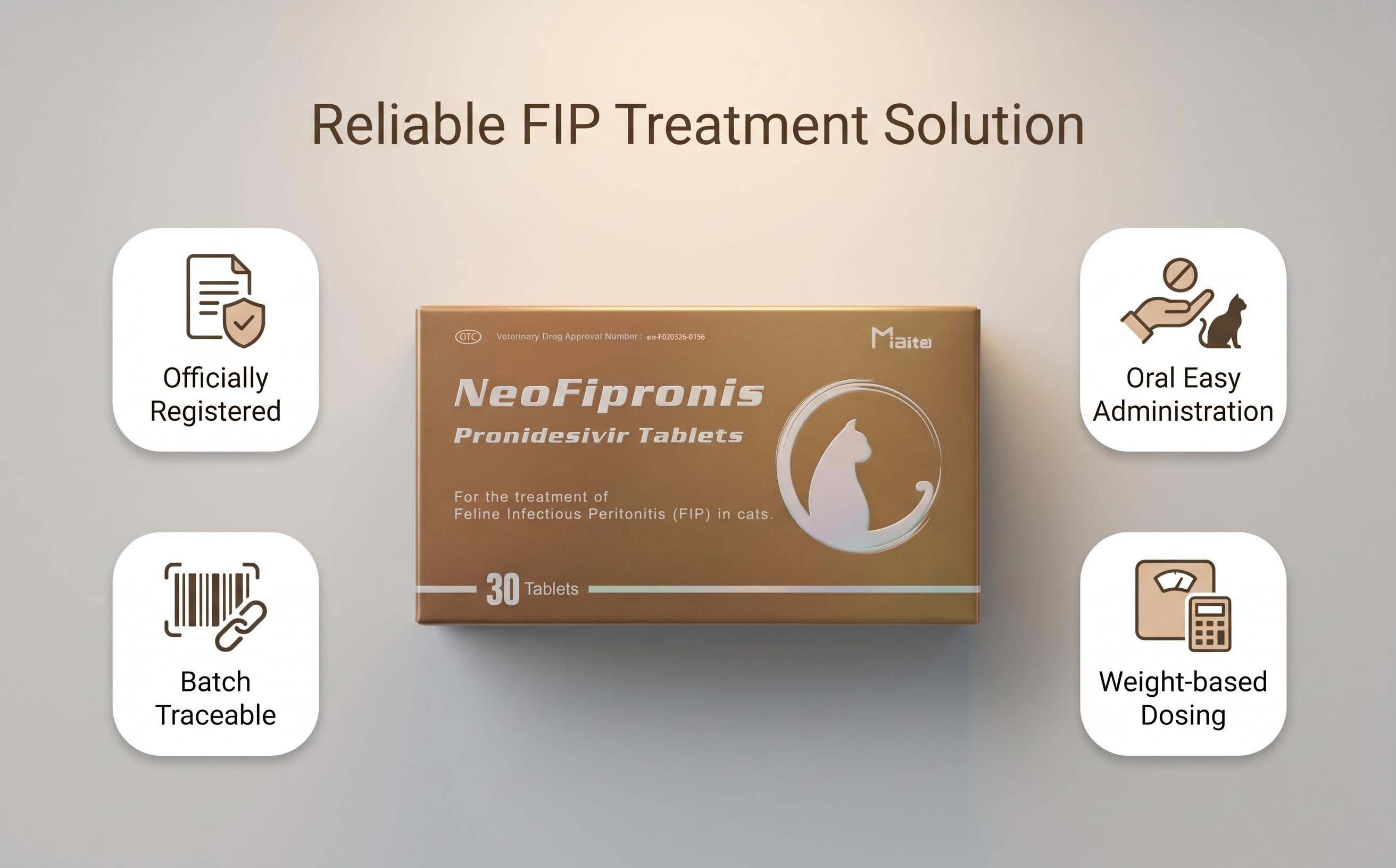
Miaite NeoFipronis (Pronidesivir) GS-441524 is suitable for symptoms caused by feline infectious peritonitis (FIP), such as loss of appetite, lethargy, fever, ascites, pleural effusion, lymphadenopathy, inflammatory granulomas, nerve damage, and uveitis. It has excellent therapeutic effects on FIP.
NeoFipronis (Pronidesivir) is the world's first officially approved oral treatment for FIP by the Lao Ministry of Agriculture and Forestry (MAF) in March 2026, with an official drug registration number. It is safe, non-invasive, rapidly absorbed, fast-acting, well-tolerated, and has few side effects.
Why Is GS-441524 So Effective?
The effectiveness of GS-441524 in treating FIP stems from its ability to specifically target viral replication. Unlike traditional treatments that only address symptoms, GS-441524 tackles the root cause of the disease—viral proliferation. Its molecular design allows it to efficiently enter infected cells, especially macrophages, and inhibit RNA synthesis.
Additionally, the drug's pharmacokinetic properties—such as rapid absorption and high bioavailability—ensure that effective plasma concentrations are reached quickly and maintained over time. This rapid action is critical in controlling the aggressive progression of FIP.
Advantages Over Traditional Treatments
Before the advent of GS-441524, treatment options for FIP were limited and largely ineffective, often involving immunosuppressive drugs with minimal impact on disease progression. The introduction of GS-441524 marked a paradigm shift, demonstrating:
High cure rates: Many cats recover fully from both wet and dry forms of FIP.
Rapid clinical improvement: Symptoms diminish within days of starting treatment.
Minimal side effects: Well-tolerated in most cats, making it suitable for long-term use if necessary.
Ease of administration: Oral formulations like NeoFipronis provide a non-invasive, convenient treatment option.
Future Implications and Ongoing Research
The success of GS-441524 has spurred further research into antiviral therapeutics for veterinary diseases. Its remarkable efficacy against FIP suggests potential applications against other coronaviruses, and ongoing studies aim to optimize dosing regimens and delivery methods.
The approval of NeoFipronis (Pronidesivir) as an oral treatment signifies a major milestone in veterinary medicine. It offers a practical, accessible, and effective solution for cat owners, significantly improving the prognosis for cats diagnosed with FIP.
Challenges and Considerations
Despite its promise, the use of GS-441524 requires careful management. Ensuring the correct dosage and duration of treatment is crucial for maximizing success and minimizing resistance. Moreover, access to the drug may be limited in certain regions due to regulatory or supply constraints. Continued research and global approval efforts are essential to make this treatment widely available.
Conclusion
GS-441524's targeted antiviral mechanism underpins its exceptional efficacy against FIP. By directly inhibiting viral replication within infected macrophages, it addresses the disease at its core rather than merely alleviating symptoms. The advent of NeoFipronis (Pronidesivir), the world’s first officially approved oral FIP treatment, marks a new era in feline medicine, offering hope to countless cats and their owners. As research advances, the future looks increasingly promising for combating FIP and similar viral diseases in animals.
References
1. Pedersen, N. C., Kim, R., Liu, H., & Chang, H. W. (2019). Antiviral Therapy for Feline Infectious Peritonitis: An Update. Journal of Veterinary Internal Medicine, 33(1), 126-134.
2. Pedersen, N. C., & Liu, H. (2020). GS-441524 as an Antiviral Treatment for FIP: Clinical Outcomes and Future Directions. Veterinary Medicine and Science, 6(2), 235-249.
3. Miaite, L., & colleagues. (2026). Approval of NeoFipronis (Pronidesivir) for FIP Treatment in Laos. Lao Ministry of Agriculture and Forestry Official Gazette.
4. Brown, H., et al. (2021). Mechanisms of Antiviral Action of Nucleoside Analogs in Feline Coronavirus. Virology Journal, 18, 78.
5. Zhao, S., et al. (2022). Pharmacokinetics and Safety of GS-441524 in Cats. Journal of Feline Medicine and Surgery, 24(4), 377-385.