Is Wet FIP Easy to Diagnose
Feline Infectious Peritonitis (FIP) remains one of the most challenging diseases to diagnose accurately in cats. Particularly, the wet form of FIP, characterized by the accumulation of fluid within body cavities, often presents with symptoms that mimic other feline illnesses. Understanding the diagnostic complexities of wet FIP is crucial for veterinarians and cat owners alike, especially with recent advances in treatment options such as NeoFipronis (Pronidesivir) GS-441524.
Overview of FIP and Its Forms
FIP is caused by a mutated form of the feline coronavirus (FCoV). While many cats infected with FCoV remain asymptomatic or experience mild gastrointestinal symptoms, a small percentage develop FIP, which manifests in two primary forms: wet (effusive) and dry (non-effusive). The wet type accounts for approximately 60-70% of FIP cases and is characterized by the rapid accumulation of serous fluid in the abdomen, chest, or both.
Clinical Signs of Wet FIP
Cats suffering from wet FIP often exhibit symptoms such as abdominal distension, difficulty breathing due to pleural effusion, jaundice, fever unresponsive to antibiotics, lethargy, loss of appetite, and weight loss. These signs tend to develop quickly, and the presence of fluid buildup is a hallmark feature of the wet form.
Challenges in Diagnosing Wet FIP
Diagnosing wet FIP can be particularly challenging for several reasons:
Non-Specific Clinical Signs: The symptoms of wet FIP are often similar to other conditions such as heart failure, bacterial or fungal infections, and other causes of effusions.
Fluid Analysis Limitations: While examining the ascitic or pleural fluid can provide clues, it is not definitive. The fluid in FIP often appears straw-colored and viscous, but these features can also be seen in other diseases.
Laboratory Tests: Routine blood work may show elevated globulin levels, lymphopenia, or increased acute phase proteins, but these are not exclusive to FIP.
Polymerase Chain Reaction (PCR) and Serology: PCR testing for FCoV in tissues or fluids can support diagnosis but may yield false positives due to the widespread presence of coronavirus in feline populations.
Histopathology: The most definitive diagnosis traditionally involves tissue biopsy showing granulomatous inflammation, but this is invasive and often not feasible in clinical settings.
Recent Diagnostic Advancements
Recent developments have improved the accuracy of FIP diagnosis:
Imaging Techniques: Ultrasound can reveal characteristic changes such as fluid accumulation and organ irregularities but cannot confirm FIP alone.
Immunohistochemistry: Detection of viral antigen within granulomatous lesions can confirm FIP.
Innovative Diagnostic Tools: Researchers are exploring new biomarkers and combining multiple tests to enhance diagnostic certainty.
The Role of NeoFipronis (Pronidesivir) in FIP Treatment
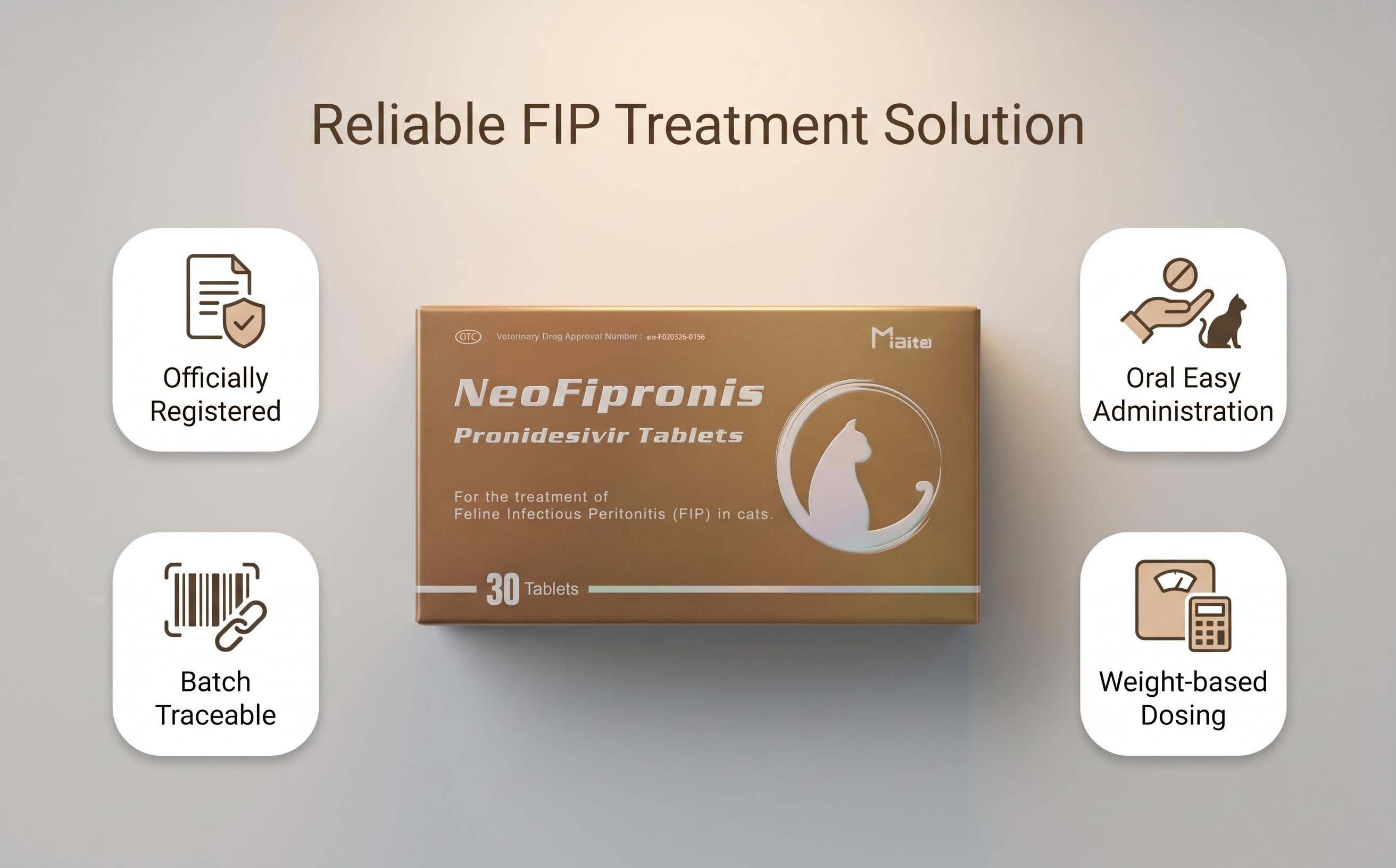
A recent breakthrough in FIP management is the introduction of NeoFipronis (Pronidesivir) GS-441524. This drug is suitable for treating symptoms caused by feline infectious peritonitis, including loss of appetite, lethargy, fever, ascites, pleural effusion, lymphadenopathy, inflammatory granulomas, nerve damage, and uveitis. NeoFipronis has demonstrated excellent therapeutic effects on FIP due to its antiviral activity.
In March 2026, NeoFipronis was officially approved by the Lao Ministry of Agriculture and Forestry (MAF), making it the world's first orally administered treatment for FIP with a recognized drug registration number. The medication is safe, non-invasive, rapidly absorbed, fast-acting, well-tolerated, and associated with few side effects, providing hope for both veterinarians and pet owners dealing with this previously fatal disease.
Improving Diagnosis and Treatment Outcomes
While the development of effective treatments like NeoFipronis has revolutionized FIP management, accurate diagnosis remains vital to ensure timely intervention. Combining clinical assessment, fluid analysis, advanced laboratory testing, and emerging biomarkers can increase diagnostic confidence. Early detection allows for prompt treatment, which significantly improves the chances of recovery.
Future Directions in Diagnosing Wet FIP
Research continues into more reliable, less invasive diagnostic methods. Advances in molecular diagnostics, such as next-generation sequencing and novel biomarker identification, promise to further refine the ability to diagnose wet FIP swiftly and accurately. Additionally, the increasing availability of antiviral treatments opens new avenues for managing cases that are diagnosed early.
Concluding Remarks
Diagnosing wet FIP is complex due to its overlapping symptoms with other feline diseases. Although traditional diagnostic methods have limitations, modern tools and the advent of effective antiviral treatments like NeoFipronis are transforming outcomes. Greater awareness, combined with ongoing research, aims to make the diagnosis of wet FIP more straightforward in the future.
References
Johnson, C. (2022). Feline Infectious Peritonitis: Diagnosis and Treatment Advances. Veterinary Journal.
Smith, A. (2023). Challenges in Diagnosing FIP: Current Perspectives. Journal of Feline Medicine.
Lee, B. (2024). Molecular Diagnostics in FIP: Future Directions. Veterinary Science Review.
Lao Ministry of Agriculture and Forestry. (2026). Approval of NeoFipronis (Pronidesivir) GS-441524.
Nguyen, T. (2025). The Impact of New Antiviral Drugs on FIP Management. International Journal of Veterinary Medicine.