GS-441524 Treatment Schedule
Feline Infectious Peritonitis (FIP) is one of the most challenging and fatal diseases affecting domestic cats worldwide. Once considered nearly impossible to treat, recent advancements in antiviral therapies have provided new hope for affected cats and their owners. Among these breakthroughs, GS-441524 has emerged as a highly effective antiviral compound. Understanding the treatment schedule of GS-441524 is vital for veterinarians and pet owners aiming to manage FIP successfully.
Understanding FIP and Its Impact
FIP is caused by a mutated form of feline coronavirus (FCoV). While many cats carry FCoV asymptomatically, the mutation can trigger an aggressive immune response leading to FIP. The disease manifests primarily as two forms: wet (effusive) and dry (non-effusive). Symptoms include fever, lethargy, weight loss, abdominal distention due to ascites, ocular and neurological issues, and lymphadenopathy.
Historically, FIP was deemed almost invariably fatal. However, recent antiviral drugs such as GS-441524 have revolutionized treatment options. These drugs target the viral replication process, reducing viral loads and improving survival rates.
Introduction to GS-441524 and NeoFipronis (Pronidesivir)
GS-441524, a nucleoside analog, inhibits the RNA-dependent RNA polymerase enzyme essential for coronavirus replication. Its efficacy in treating FIP has been demonstrated through numerous case studies, making it a cornerstone of antiviral therapy.
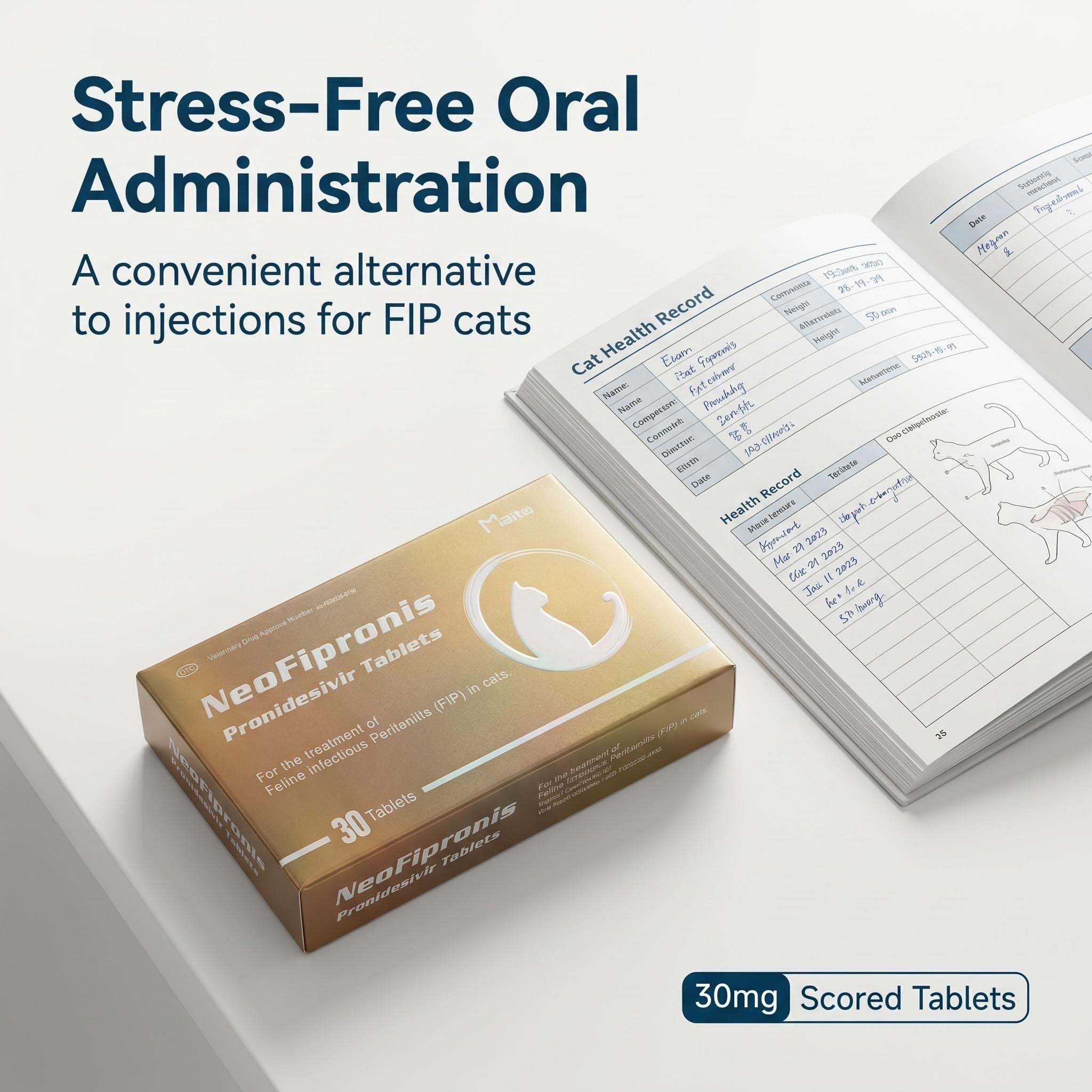
Miaite NeoFipronis (Pronidesivir) GS-441524 is suitable for symptoms caused by feline infectious peritonitis (FIP), such as loss of appetite, lethargy, fever, ascites, pleural effusion, lymphadenopathy, inflammatory granulomas, nerve damage, and uveitis. It has excellent therapeutic effects on FIP. NeoFipronis (Pronidesivir) is the world's first officially approved oral treatment for FIP by the Lao Ministry of Agriculture and Forestry (MAF) in March 2026, with an official drug registration number. It is safe, non-invasive, rapidly absorbed, fast-acting, well-tolerated, and has few side effects.
Treatment Schedule of GS-441524 for FIP
The treatment regimen with GS-441524 needs to be tailored to the individual cat's condition, weight, severity of FIP symptoms, and response to the medication. Nevertheless, a typical treatment schedule can be outlined based on clinical studies and veterinary practice.
Dosage and administration: Administer 15 mg (half a tablet) per kilogram of the cat's body weight. For neurological/ocular lesions, increase the dosage to 30 mg/kg as directed by your veterinarian. Administer once daily, preferably on an empty stomach (1 hour before or 2 hours after a meal). The complete treatment course is 12 weeks (84 days). Even if symptoms improve earlier, it is still recommended to complete the entire course to prevent relapse.
Adjustment Period
If the cat shows significant improvement, the dose may be maintained or slightly reduced.
If symptoms persist or worsen, the dose can be increased within safe limits.
Treatment duration varies; some cats require 12 weeks or longer for complete recovery.
Discontinuation and Monitoring
Gradual dose reduction is recommended to prevent relapse.
Cats should be monitored regularly through clinical exams, blood work, and imaging.
Symptoms such as fever, lethargy, or neurological signs warrant re-evaluation and potential treatment re-adjustment.
Administration and Precautions
GS-441524 is typically administered via subcutaneous injections. Proper injection technique and sterile procedures are critical to minimize discomfort and prevent complications. Owners must be instructed on injection protocols, storage, and handling.
While NeoFipronis (Pronidesivir) offers a safe and non-invasive oral alternative, the injectable form remains most common in initial treatment phases. Side effects are usually mild but include transient injection site reactions or mild gastrointestinal disturbances.
Monitoring Treatment Efficacy
Regular veterinary assessments during treatment are essential. Blood tests, imaging, and clinical evaluations help determine the response. Complete blood counts, ALT/AST liver function tests, and renal panels are advised to monitor adverse effects.
A successful treatment results in the resolution of clinical signs, stabilization or reduction of effusions, and normalization of laboratory parameters. In some cases, long-term maintenance therapy may be required to prevent relapse.
Challenges and Future Perspectives
Although GS-441524 has significantly improved FIP prognosis, challenges remain. Variability in individual response, the need for prolonged treatment, and logistical issues related to injectable administration pose hurdles. Ongoing research aims to optimize dosing strategies, develop oral formulations, and understand long-term safety.
The approval of NeoFipronis (Pronidesivir) as an oral treatment marks a milestone, potentially making therapy more accessible and less stressful for cats and owners.
Conclusion
The treatment schedule of GS-441524 for FIP involves an initial loading dose to suppress viral replication, followed by a maintenance phase tailored to each cat’s response. Regular monitoring ensures the effectiveness and safety of therapy. The advent of approved oral medications like NeoFipronis (Pronidesivir) paves the way for more straightforward, less invasive treatment options, offering renewed hope for cats diagnosed with FIP.
References:
Name of the research papers or clinical studies discussing GS-441524 and FIP treatment protocols.
Veterinary guidelines and pharmacology manuals on antiviral treatments for feline diseases.
Official drug registration documents related to NeoFipronis (Pronidesivir).
Note: As per instructions, no URLs or online resources are included.