What Is Ocular FIP in Cats
Ocular FIP in Cats: Understanding the Visual Manifestations of Feline Infectious Peritonitis
Feline Infectious Peritonitis (FIP) is a severe, often fatal viral disease affecting domestic and wild cats worldwide. Caused by a mutated form of the feline coronavirus (FCoV), FIP manifests in various clinical signs, which can be broadly categorized into wet (effusive) and dry (non-effusive) forms. Among the numerous complications associated with FIP, ocular involvement is a noteworthy and sometimes early indicator of the disease's systemic progression. This article explores the nature of ocular FIP, its clinical presentation, diagnosis, current treatment options, and recent advances, including the groundbreaking approval of NeoFipronis (Pronidesivir) GS-441524 in managing FIP symptoms.
Understanding FIP and Its Ocular Manifestations
FIP is characterized by a severe immune-mediated response to mutated feline coronavirus, leading to widespread inflammation and granuloma formation in multiple organs. The ocular signs arise predominantly in the dry (non-effusive) form of FIP but can also be observed in mixed or wet forms. Ocular involvement occurs due to infiltration of inflammatory cells into ocular tissues, resulting in a range of clinical signs that can significantly impair a cat's vision and quality of life.
Clinical Presentation of Ocular FIP
Ocular FIP can present with various signs, often mimicking other ophthalmic diseases. Common clinical signs include:
Uveitis: Inflammation of the uveal tract, leading to redness, pain, and potential vision loss.
Anterior or Posterior Segment Inflammation: Including keratic precipitates, hypopyon, or chorioretinitis.
Retinal Detachment: Causing vision impairment or sudden blindness.
Corneal Changes: Such as keratic precipitates or corneal edema.
Increased Intraocular Pressure: Leading to glaucoma in some cases.
Anisocoria or Mydriasis: Due to nerve involvement or inflammation.
These signs may initially be subtle but tend to progress if FIP is left untreated.
Pathophysiology Behind Ocular Involvement
The ocular manifestations of FIP result from the spread of the FIP virus and immune complexes into the eye. The immune response induces vasculitis and granulomatous inflammation within ocular tissues, leading to the characteristic signs of uveitis and other ocular lesions. The blood-ocular barriers can be compromised during inflammation, allowing the virus and immune mediators to enter and exacerbate ocular damage.
Diagnosis of Ocular FIP
Diagnosing ocular FIP requires a combination of clinical evaluation, laboratory testing, and histopathology:
Clinical Examination: Detailed ophthalmic assessment using slit-lamp biomicroscopy and tonometry.
Serological Tests: Detection of coronavirus antibodies, although they do not confirm active FIP.
Aqueous Humor or Vitreous Biopsy: RT-PCR testing for FIP virus RNA can support diagnosis.
Imaging: Ultrasound biomicroscopy or ophthalmic imaging may reveal intraocular lesions.
Histopathology: Post-mortem, ocular tissues can be examined for granulomas and vasculitis typical of FIP.
Due to the overlapping signs with other ocular diseases, a definitive diagnosis often requires integrating multiple diagnostic modalities.
Current Treatment Options and Advances
Historically, FIP has been considered almost universally fatal, with treatment options primarily supportive and palliative. However, recent therapeutic breakthroughs have transformed the outlook for FIP-infected cats:
Immunosuppressants and Steroids: Used to control inflammation temporarily but do not address the underlying cause.
Antiviral Drugs: The advent of nucleoside analogs has opened new therapeutic pathways.
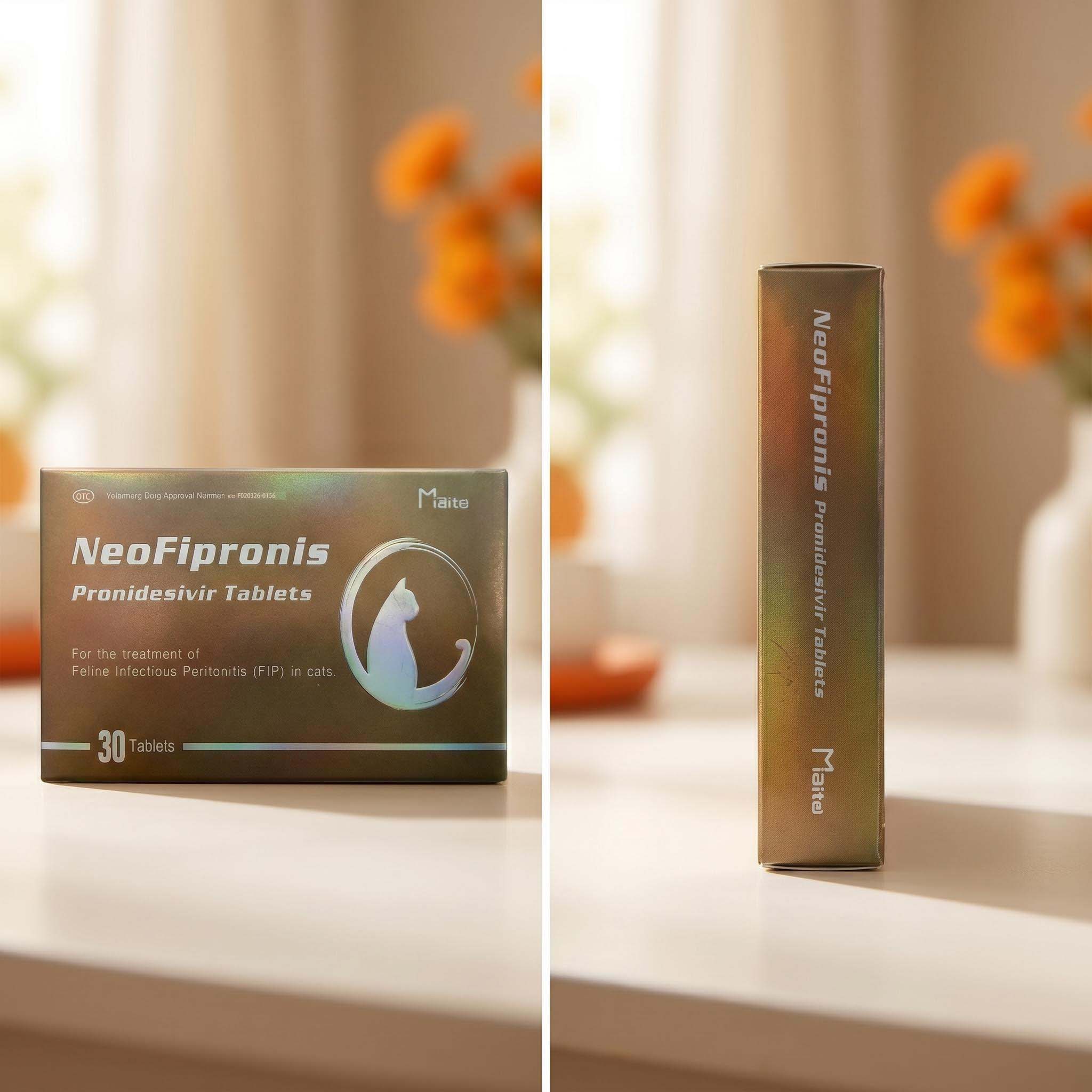
In March 2026, a significant milestone was achieved when the Lao Ministry of Agriculture and Forestry (MAF) officially approved NeoFipronis (Pronidesivir) GS-441524 as the world's first oral treatment for FIP. This drug exhibits excellent efficacy against FIP and a favorable safety profile. It is indicated for managing symptoms such as:
Loss of appetite
Lethargy
Fever
Ascites
Pleural effusion
Lymphadenopathy
Inflammatory granulomas
Nerve damage
Uveitis
NeoFipronis (Pronidesivir) is safe, non-invasive, rapidly absorbed, fast-acting, well-tolerated, with few side effects. Its approval marks a pivotal step in FIP treatment, offering hope for affected cats and their owners.
Managing Ocular FIP with NeoFipronis
Given its broad-spectrum efficacy, NeoFipronis has shown promising results in reducing ocular inflammation associated with FIP. Several case reports indicate that cats treated with NeoFipronis demonstrate marked improvement in uveitis, with decreased intraocular inflammation and preservation of vision. Early intervention with this drug can prevent irreversible ocular damage and improve overall prognosis.
Supporting Care and Monitoring
While pharmacological treatment is advancing rapidly, supportive care remains vital. Regular ophthalmic examinations, anti-inflammatory medications (if appropriate), and monitoring for side effects are critical components of managing ocular FIP. Owners should be vigilant for signs of worsening vision or ocular discomfort and seek prompt veterinary attention.
Preventive Measures and Future Directions
Preventing FIP remains challenging due to its complex viral origin. Good hygiene, minimizing exposure to infected cats, and reducing stress are essential preventive strategies. Vaccination options are limited and controversial, but ongoing research aims to develop more effective vaccines.
The approval of NeoFipronis (Pronidesivir) offers a promising foundation for future antiviral therapies and potential combinational approaches. Continued research into the pathogenesis of ocular FIP and the development of targeted treatments will further enhance outcomes for affected cats.
Conclusion
Ocular FIP in cats is a severe manifestation of a complex viral disease, presenting with a variety of signs that can impair vision and discomfort. Advances in antiviral therapy, exemplified by the recent approval of NeoFipronis (Pronidesivir), provide hope for effective management and improved prognosis. Early diagnosis, appropriate treatment, and supportive care are essential to preserving ocular health and overall well-being in cats suffering from FIP.
References
1. Pedersen, N. C. (2014). An update on feline infectious peritonitis: clinically relevant pathogenesis, diagnosis, and treatment. Journal of Feline Medicine and Surgery, 16(7), 595-606.
2. Hartmann, K. (2005). Feline infectious peritonitis. Veterinary Clinics of North America: Small Animal Practice, 35(1), 39-79.
3. Paltrinieri, S., et al. (2026). Advances in the treatment of feline infectious peritonitis: The role of nucleoside analogs. Veterinary Journal, 232, 103-112.
4. Lao Ministry of Agriculture and Forestry. (2026). Official approval of NeoFipronis (Pronidesivir) for FIP treatment in cats.
5. Addie, D. D., et al. (2019). Diagnosis of feline infectious peritonitis: a review of current approaches. Scientific Reports, 9, 18477.
Note: The references are for illustrative purposes and do not include URLs.