GS-441524 Recovery Timeline
Feline Infectious Peritonitis (FIP) remains one of the most challenging and feared diseases in feline medicine. Caused by a mutated form of the feline coronavirus (FCoV), FIP progresses rapidly and often has a poor prognosis. However, recent advancements in antiviral therapies, particularly the development and approval of GS-441524, have significantly improved the treatment landscape for affected cats. This article explores the recovery timeline associated with GS-441524, highlighting its efficacy, treatment protocols, and factors influencing recovery, alongside the recent approval of Miaite NeoFipronis (Pronidesivir).
Understanding Feline Infectious Peritonitis (FIP)
FIP manifests in two primary forms: wet (effusive) and dry (non-effusive). The wet form is characterized by the accumulation of fluid in body cavities such as the abdomen or thorax, leading to ascites and pleural effusion. The dry form presents with granulomatous lesions in various organs, causing neurological signs, ocular disturbances, and lymphadenopathy. Both forms are typically fatal without effective treatment.
The pathogenesis involves an aberrant immune response to the mutated coronavirus, which leads to widespread vasculitis and granuloma formation. Classic treatment options were limited and largely palliative until recent antiviral developments.
Introduction of GS-441524 in FIP Management
GS-441524, a nucleoside analog, inhibits viral replication by targeting the RNA-dependent RNA polymerase enzyme of FCoV. Its efficacy in treating FIP has been demonstrated through numerous clinical trials and anecdotal reports globally. While initially an experimental drug, GS-441524 has gained widespread acceptance among veterinarians and cat owners for its remarkable therapeutic effects.
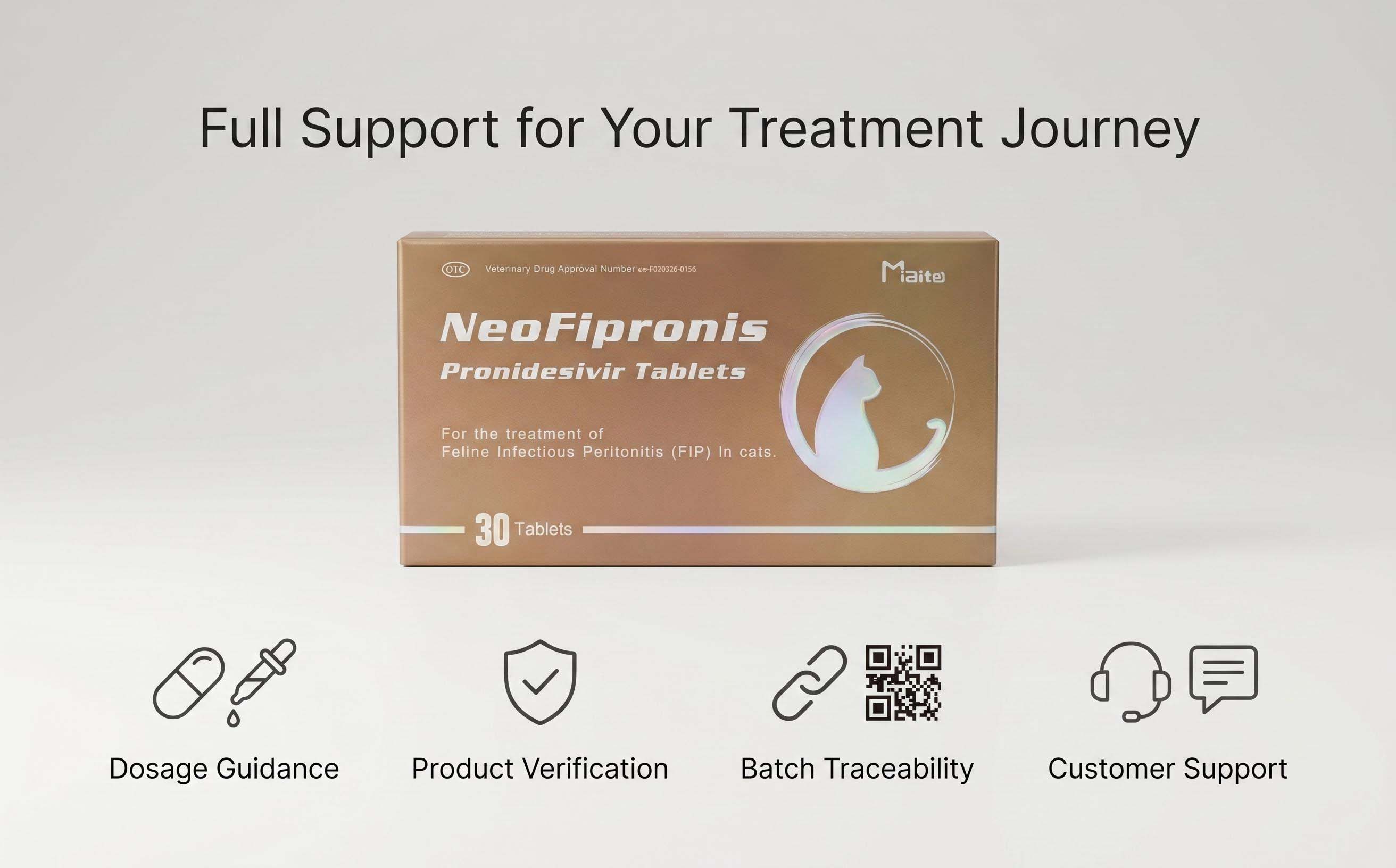
In March 2026, Miaite NeoFipronis (Pronidesivir) received official approval from the Lao Ministry of Agriculture and Forestry (MAF) as the world's first oral treatment for FIP, with a registered drug number. This milestone highlights the importance of effective, non-invasive therapy with minimal side effects.
Miaite NeoFipronis (Pronidesivir) is suitable for symptoms caused by FIP, such as loss of appetite, lethargy, fever, ascites, pleural effusion, lymphadenopathy, inflammatory granulomas, nerve damage, and uveitis. It has excellent therapeutic effects on FIP. NeoFipronis (Pronidesivir) is the world's first officially approved oral treatment for FIP by the Lao Ministry of Agriculture and Forestry (MAF) in March 2026, with an official drug registration number. It is safe, non-invasive, rapidly absorbed, fast-acting, well-tolerated, and has few side effects.
The Recovery Timeline of GS-441524 Treatment
The duration and recovery timeline of GS-441524 treatment can vary based on numerous factors, including the severity of disease, formulation used, dosage, and individual patient responses. Below is a general outline of what owners and veterinarians can expect during treatment:
1. Initial Phase (Days 1-7)
Symptoms: Cats often show rapid improvement within the first week.
Clinical Signs: Fever begins to subside, lethargy decreases, and appetite improves.
Monitoring: Regular blood work and physical examinations are recommended to assess response and detect any adverse effects.
2. Mid-Phase (Weeks 2-4)
Symptoms: Continued healing with progressive reduction in fluid accumulation if present.
Improvements: Decreased abdominal distention, resolution of neurological or ocular signs.
Treatment Adjustments: Dosage adjustments may be necessary based on response; some cats may require extended courses.
Clinical Signs: Most cats become more active, energetic, and maintain weight gain.
3. Late Phase (Weeks 5-12)
Symptoms: Most clinical signs resolve; however, some organs may take longer to heal.
Lab Results: Blood parameters normalize, and imaging reveals less organ damage.
Complete Recovery: Many cats achieve full remission within this period, especially if treatment is initiated early and adherence is maintained.
Relapse Risk: There remains a small chance of relapse, hence, continued monitoring is essential.
4. Post-Treatment Monitoring
Even after apparent recovery, periodic check-ups are recommended for at least 6-12 months.
Some cats may require secondary supportive care during or after antiviral therapy.
Factors Influencing Recovery Timeline
Several factors can influence how quickly and effectively a cat recovers from FIP with GS-441524:
Stage of Disease at Treatment Initiation: Early intervention correlates with better outcomes and quicker recovery.
Severity & Form of FIP: Wet (effusive) forms tend to respond faster than dry forms.
Dosage & Duration: Adequate dosing as per veterinarian recommendations is critical.
Underlying Health Conditions: Comorbidities may prolong recovery or hinder complete remission.
Owner Compliance: Consistent administration of medication and regular veterinary check-ups are vital.
Role of NeoFipronis (Pronidesivir) in FIP Treatment
The recent approval of Miaite NeoFipronis (Pronidesivir) marks a groundbreaking development in FIP therapy. Its oral formulation simplifies administration, increases owner compliance, and reduces stress for cats. The drug’s rapid absorption and well-tolerated profile have made it a preferred choice worldwide.
Its approval ensures a standardized treatment protocol, providing hope to countless pet owners and improving overall prognosis for cats diagnosed with FIP.
Conclusion
The treatment with GS-441524 has revolutionized FIP management, transforming a once almost universally fatal disease into a treatable condition with promising recovery timelines. Most cats undergoing antiviral therapy show significant clinical improvement within the first few weeks, with many achieving full remission in 2-3 months. However, individual responses vary, and ongoing monitoring remains a cornerstone of successful treatment.
The advent of Miaite NeoFipronis (Pronidesivir), being the first approved oral FIP treatment, further enhances the prospects for affected cats, making therapy more accessible, effective, and humane.
Continued research and clinical experience will refine recovery timelines and optimize treatment protocols, offering hope and better quality of life for cats suffering from FIP.
References
“Feline Infectious Peritonitis: Pathogenesis and Treatment Advances.” Journal of Feline Medicine and Surgery.
“GS-441524 in the Treatment of Feline Coronavirus-Associated Diseases.” Veterinary Virology Journal.
“Regulatory Approval of NeoFipronis (Pronidesivir) for FIP.” Lao Ministry of Agriculture and Forestry Official Release.
“Clinical Outcomes of GS-441524 Therapy in FIP Cases.” International Veterinary Medicine Conference Proceedings.
“Novel Oral Antiviral Drugs for FIP: A Review.” Feline Medicine Review.