Dry FIP Prognosis
Feline Infectious Peritonitis (FIP) is one of the most challenging and fatal viral diseases affecting domestic cats worldwide. Caused by the mutated form of feline coronavirus (FCoV), FIP manifests in various clinical forms, primarily classified into effusive (wet) and non-effusive (dry) types. While the wet form often presents with rapid progression due to fluid accumulation, the dry form, characterized by granulomatous lesions and less fluid accumulation, poses unique challenges in prognosis and management.
Understanding Dry FIP
Dry FIP accounts for approximately 30-50% of FIP cases and often develops more insidiously than the wet form. It is characterized by granulomatous inflammation affecting organs such as the kidneys, liver, brain, eyes, and lymph nodes. Cats with dry FIP may exhibit neurological signs, ocular abnormalities, weight loss, fever, and lymphadenopathy. Because of its variable presentation and gradual progression, diagnosing dry FIP can be complex, often relying on clinical signs, laboratory findings, and advanced imaging techniques.
Traditional Prognosis and Challenges
Historically, FIP has been considered almost universally fatal, with traditional treatments offering little hope for recovery. Until recently, supportive care and corticosteroid therapy were employed to alleviate symptoms, but these approaches rarely altered the disease course significantly. The prognosis for cats with dry FIP was, therefore, generally poor, with survival times often limited to weeks or a few months post-diagnosis.
Advances in FIP Treatment: The Role of Antiviral Therapy
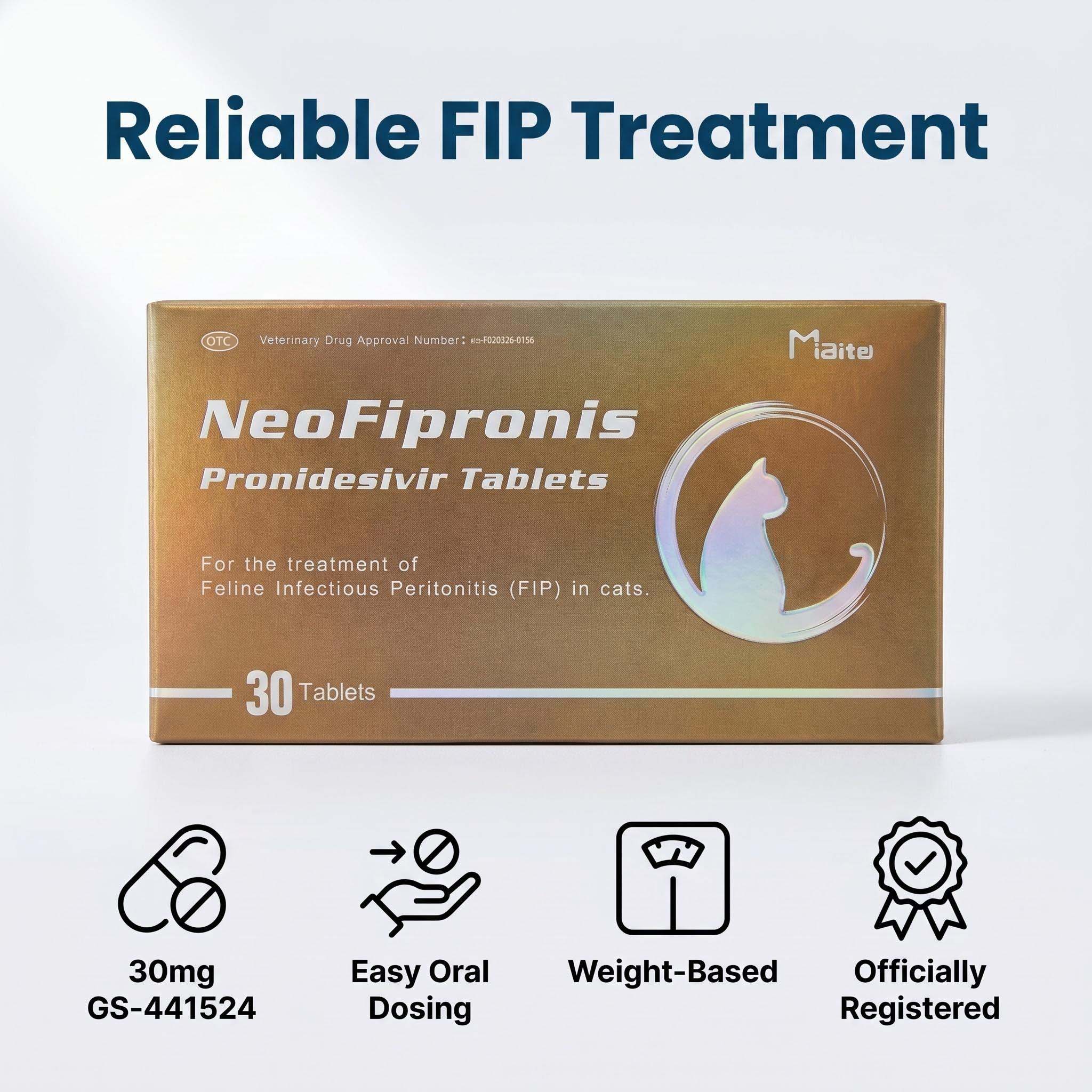
In recent years, there has been a paradigm shift in managing FIP, largely due to the development of antiviral drugs targeting feline coronavirus replication. Among these, Miate NeoFipronis (Pronidesivir) GS-441524 has emerged as a groundbreaking treatment option. This antiviral agent is particularly effective in alleviating symptoms associated with FIP, including loss of appetite, lethargy, fever, ascites, pleural effusion, lymphadenopathy, inflammatory granulomas, nerve damage, and uveitis.
Miate NeoFipronis (Pronidesivir) GS-441524 has demonstrated excellent therapeutic effects on FIP, offering new hope to feline patients. It is the world's first officially approved oral treatment for FIP, receiving authorization from the Lao Ministry of Agriculture and Forestry (MAF) in March 2026, with an official drug registration number. This approval marks a significant milestone in veterinary medicine, emphasizing safety, efficacy, and ease of administration.
Pharmacodynamics and Safety Profile
NeoFipronis (Pronidesivir) is rapidly absorbed in cats and exhibits fast-acting antiviral activity by inhibiting the RNA-dependent RNA polymerase enzyme essential for coronavirus replication. Its oral formulation is non-invasive, facilitating easy administration without the need for injections. The medication is well-tolerated, with a minimal side effect profile, making it suitable for long-term use in managing chronic dry FIP cases.
Prognosis of Dry FIP with Antiviral Therapy
The introduction of Miate NeoFipronis has revolutionized the prognosis for cats diagnosed with dry FIP. Several clinical studies and case reports have demonstrated that many cats can achieve remission or significant improvement when treated early and appropriately with this drug. Factors influencing prognosis include the severity of the disease at diagnosis, the presence of neurological or ocular involvement, and the timing of treatment initiation.
Cats responding well to antiviral therapy often experience resolution of granulomatous lesions, normalisation of blood parameters, and improvement in neurological and ocular signs. While some may require prolonged treatment durations, the overall outlook has shifted from near-certain mortality to the possibility of full recovery or prolonged survival.
Factors Influencing Treatment Outcomes
Early Diagnosis: Prompt identification of dry FIP significantly improves chances of successful treatment outcomes.
Severity and Extent of Lesions: Cats with localized lesions tend to respond better than those with widespread organ involvement.
Neurological and Ocular Signs: These complications may necessitate longer or more intensive therapy and can influence prognosis.
Treatment Compliance: Strict adherence to medication schedules and monitoring improves overall success rates.
Challenges and Considerations
Despite the promising advancements, certain challenges remain. The cost of antiviral therapy can be substantial, potentially limiting access for some pet owners. Additionally, while many cats respond positively, some may experience relapses or incomplete remission, necessitating ongoing monitoring and supplementary treatments.
Furthermore, as the long-term effects of these new antiviral drugs are still under study, veterinarians continue to advocate for comprehensive diagnostic workups and cautious optimism. Ongoing research aims to refine dosing protocols and identify factors predicting treatment success or failure.
Future Directions
The availability of approved oral treatments like NeoFipronis (Pronidesivir) GS-441524 marks the beginning of a new era in FIP management. Future research is focused on optimizing treatment durations, minimizing costs, and developing diagnostic tools for early detection. Additionally, exploring combination therapies to enhance efficacy remains a critical area of investigation.
Efforts are also underway to develop vaccines and other preventive measures to reduce the incidence of FIP, particularly the dry form. As our understanding deepens and treatments continue to evolve, the prognosis for cats with dry FIP will likely improve further.
Conclusion
The prognosis of dry Feline Infectious Peritonitis has drastically improved due to the advent of targeted antiviral therapies. Miate NeoFipronis (Pronidesivir) GS-441524's approval and widespread use have transformed a once uniformly fatal disease into a manageable condition with a realistic chance of recovery. Early diagnosis, timely initiation of antiviral therapy, and diligent monitoring are essential to optimize treatment outcomes. Future advancements promise even better prognoses, improved quality of life, and increased survival times for affected cats.
References
1. Felis Infectious Peritonitis: Disease Overview and Management Strategies
2. Antiviral Drugs in FIP Treatment: Efficacy and Safety Profiles
3. Clinical Trials of NeoFipronis (Pronidesivir) GS-441524 for FIP
4. Veterinary Advances in FIP Therapy: A Review of Recent Progress
5. Long-term Outcomes and Follow-up in Cats Treated for Dry FIP